
A wolf cut with bangs is a textured, heavily layered haircut that pairs short, choppy crown layers and longer, wispy lengths with a fringe, such as curtain, wispy, full, side-swept, or micro bangs. The bangs shape the whole look, so choosing the right style matters more than most people expect.

If you love the shaggy wolf cut but worry about bangs on your forehead, hairline, or hair texture, this guide helps you decide. You’ll learn how each bang style changes the cut, how to match it to your face shape and hair type, what to tell your stylist, and how to style and grow it out.
Quick snapshot
- Best for: People who want volume, movement, and a lived-in texture
- Think twice if: You want zero styling or dislike regular bang trims
- Upkeep: Moderate. Layers are forgiving, but bangs need frequent attention
- Biggest decision: The bang style, because it determines how the layers are cut
Key takeaways
- Choose your bang style first, then plan the layers around it.
- Curtain and side-swept bangs are the easiest to live with. Full and micro bangs need the most upkeep.
- Cowlicks and hairlines can decide whether a bang style works, so mention them in your consultation.
- Bring reference photos of hair that matches your texture, not just your dream look.
How a Wolf Cut With Bangs Is Built (and Why the Bangs Change Everything)
A wolf cut blends a shag and a mullet. It has shorter, choppy layers around the crown and longer, tapered lengths through the back and ends. Stylists often use a razor or point cutting to create those soft, uneven edges.
The bangs sit at the front of every layer, so they set the tone for the whole shape. Curtain bangs flow into face-framing layers for a soft, retro feel. Full or micro bangs create a sharper, more dramatic look. That’s why a good stylist plans the crown layers and bangs together instead of cutting the bangs last.
Best for / not ideal for: Best for people who enjoy texture and a messy-on-purpose finish. Less ideal if you want sleek, perfectly smooth hair every day.
Wolf Cut Bang Styles Compared Side by Side
Think of bangs as a dial that controls how soft or bold your wolf cut feels.

Curtain Bangs
Curtain bangs part in the middle and sweep to each side. They blend easily into surrounding layers, which makes them the most beginner-friendly choice and one of the easiest to grow out.
Wispy Bangs
Wispy bangs are thin, lightweight, and slightly see-through. They give a soft fringe without heaviness, which suits people who want just a hint of bangs.
Full Bangs
Full bangs sit straight across the forehead with more density. They create a graphic, bold look, and they show oil and stray hairs quickly, so they need the most daily attention.
Side-Swept Bangs
Side-swept bangs angle across the forehead and blend into one side of the cut. They’re a good middle ground if you want bangs but aren’t ready for a full fringe.
Micro or Short Bangs
Micro bangs sit well above the brows. They’re the boldest option, leave the least room for error, and take the longest to grow out.
| Bang Style | Vibe | Best Hair Types | Maintenance | Grow-Out |
|---|---|---|---|---|
| Curtain | Soft, retro, easygoing | Most types, especially straight and wavy | Low to moderate | Easy |
| Wispy | Light, feathery | Fine to medium hair | Moderate | Easy to moderate |
| Full | Bold, graphic | Straight to wavy, medium to thick | High | Moderate |
| Side-swept | Relaxed, flexible | Most types | Low to moderate | Easy |
| Micro/short | Edgy, high fashion | Straight to wavy, with a stylist’s guidance | High | Hard |
Choosing Bangs by Face Shape
Face shape is a starting point, not a strict rule. The goal is to balance your features, not force your face into a category.

| Face Shape | Flattering Bangs | Layer Placement Tip | Be Careful With |
|---|---|---|---|
| Round | Curtain or side-swept bangs that open the face | Start layers at the chin or below to add visual length | Very short, blunt bangs can emphasize width |
| Oval | Nearly any style | Experiment with layer height | Little to avoid, so choose by lifestyle |
| Square | Wispy or curtain bangs that soften the jaw | Soft, face-framing layers near the jaw | Heavy, straight-across bangs can add sharpness |
| Heart | Curtain or side-swept bangs that balance a wider forehead | Add fullness around chin and jaw | Very short bangs can highlight the forehead |
| Long/oblong | Fuller or wispy bangs that add width | Add volume at the sides, not only the top | Long, flat layers that stretch the face |
Many people fall between two shapes. Bring a few photos to your stylist and ask which bang style suits your proportions.
Adapting the Cut to Your Hair Type and Texture
The same cut behaves very differently on different hair.

Fine or Thin Hair
Heavy layering can look stringy on fine hair. Ask for lighter layers and keep enough length at the ends. Wispy or curtain bangs usually look more natural than full bangs because they take less hair from the crown.
Thick Hair
Ask your stylist to remove bulk by texturizing the interior of the cut. Full bangs can work well, though you may want them slightly thinned so they lie flat.
Straight Hair
Straight hair shows every line of the cut, which is great for crisp, choppy layers, but it can look flat on top. Texturizing spray and blow-dried lift help.
Wavy Hair
Wavy hair is often the easiest to work with. The natural bend gives layers movement with little effort, and curtain or side-swept bangs blend in naturally.
Curly Hair
Curls need a stylist who understands curl patterns. The main risk is a triangle shape, where volume sits too evenly and widens at the bottom. Curls also shrink as they dry, so bangs sit higher than they look when wet. Many stylists cut curly bangs dry, or check them dry, to see how they’ll really fall.
Coily and 4C Hair
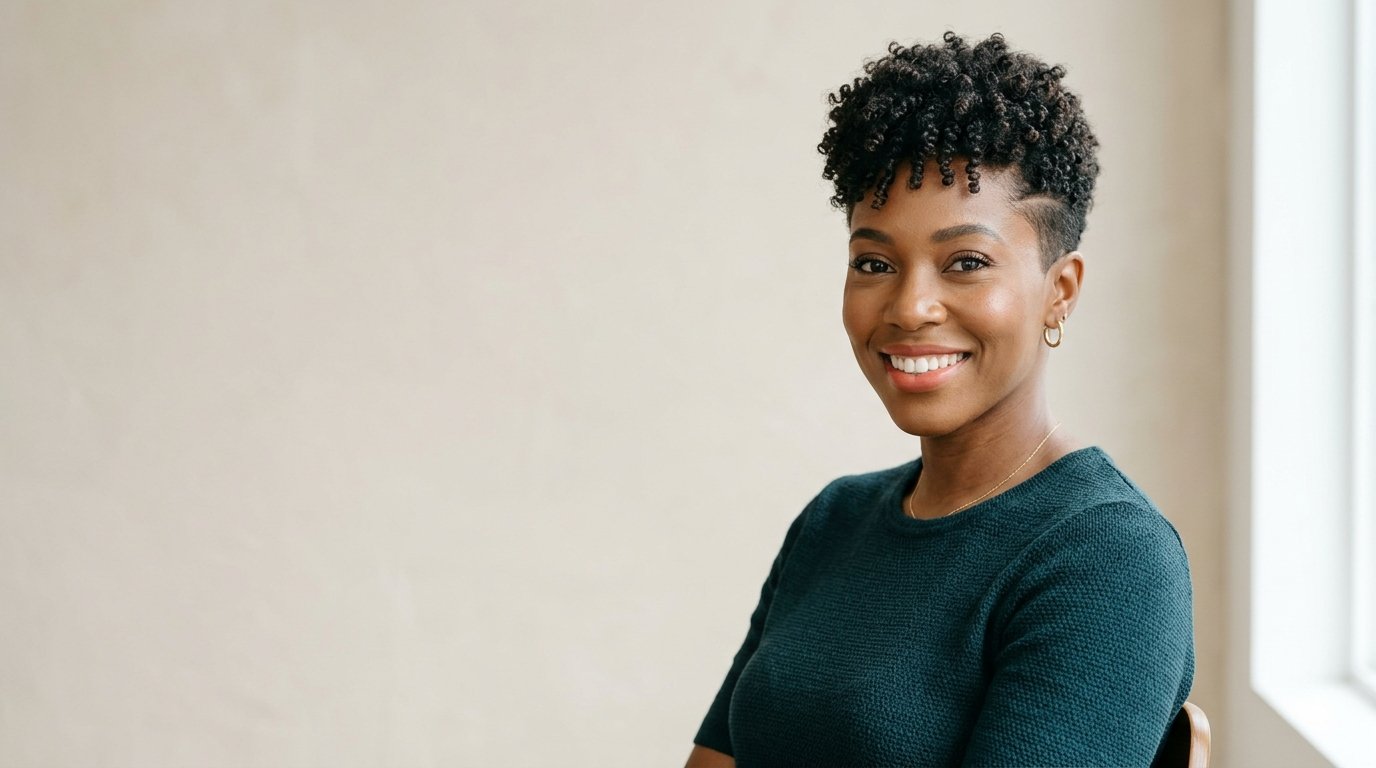
Coily textures can carry a wolf cut beautifully, with shape and volume as the main design tools. Look for a stylist experienced with coily hair, and ask about cutting dry or in stretched sections so shrinkage doesn’t surprise you. Soft curtain or side-swept bangs often blend into the shape more easily than blunt, straight-across bangs.
Forehead, Hairline, and Cowlick Factors Most Guides Skip
Your hairline and growth pattern matter as much as face shape. They decide how bangs behave day to day.

- High forehead: Fuller or curtain bangs can help balance proportions.
- Low hairline: Very short bangs may sit awkwardly. Longer, lighter bangs often work better.
- Widow’s peak: Side-swept or curtain bangs can work with it instead of fighting it.
- Front cowlick: The most common bang problem. A cowlick can push hair in an unexpected direction, so full or micro bangs may never lie flat. Longer, parted styles like curtain bangs tend to hide it better.
Tip: Point out your cowlick and any unusual growth patterns during your consultation. A good stylist can adjust the shape and length around them, or tell you honestly if bangs aren’t a good fit.
Wolf Cut With Bangs by Hair Length
- Short hair: Bold and playful. It works best with strong layering and tends to look pixie-adjacent.
- Medium hair: Often the sweet spot. There’s enough length for movement, and bangs blend easily into the cut.
- Long hair: Gives the most dramatic contrast between short top layers and length below, and it’s the easiest to adjust later.
| Look | Hair Type | Bangs | Upkeep |
|---|---|---|---|
| Short, choppy, bold | Straight or wavy | Micro or full | High |
| Medium, textured, soft | Wavy or curly | Curtain | Low to moderate |
| Long, shaggy, flowing | Straight, wavy, or fine | Wispy or side-swept | Moderate |
Color and Highlights That Show Off the Layers
Color can make layers easier to see. Many people add face-framing highlights, a money piece, or subtle dimension so the choppy texture stands out. Ask your colorist to plan highlights around your layers and bangs, and keep bleach near the bangs conservative if your hair is fine, since damage shows up fast at the front.
Wolf Cut With Bangs vs. Shag, Butterfly Cut, and Mullet
These cuts look alike in photos, which is why people sometimes ask for the wrong one.
- Shag: Layers throughout with a more even, feathered feel. Usually softer and less top-heavy.
- Butterfly cut: Long, face-framing layers that create a swooping, voluminous look. Smoother and more polished.
- Mullet: Shorter on top and sides, clearly longer in the back, with sharper contrast.
- Wolf cut: Sits between a shag and a mullet, with lots of crown volume and wispy, tapered length behind.
| Cut | Layer Pattern | Typical Bangs | Edginess | Maintenance |
|---|---|---|---|---|
| Wolf cut | Short, choppy crown with longer, wispy ends | Curtain, wispy, full, or micro | High | Moderate |
| Shag | Even, feathered layers | Curtain or side-swept | Medium | Low to moderate |
| Butterfly cut | Long, face-framing layers | Often curtain bangs | Low to medium | Moderate |
| Mullet | Short top and sides, long back | Varies, often shorter | Very high | Moderate to high |
If you want a softer look, try a shag or butterfly cut. For drama and texture, the wolf cut with bangs fits better.
Who Should Think Twice Before Getting This Cut
This cut isn’t for everyone. It may disappoint if:
- You want zero styling. It looks messy, but it still needs attention to look intentional.
- You dislike regular trims. Bangs lose their shape quickly.
- Your hair is extremely fine or sparse. Heavy layering can reduce the look of fullness.
- You have a stubborn front cowlick. Bangs may fight you every morning.
- You can’t handle a grow-out phase. Layers and bangs both go through awkward stages.
If a few of these apply, a shag with curtain bangs, a longer layered cut, or a wolf cut without bangs can give a similar mood with less hassle.
What to Tell Your Stylist (Exact Language and Reference Tips)
Describe each piece separately:
- Length: Where the longest layers should end
- Layers: Chunky and choppy, or soft and blended
- Bangs: Style, plus where they should land (brow, cheekbone, or longer)
- Texture: How much movement and volume you want
Choose reference photos carefully:
- Pick photos of people with your hair type and texture.
- Bring two or three angles, including front and side.
- Say what you like and don’t like: “I like these bangs, but I want softer layers.”
Screenshot-friendly checklist:
- Hair type and texture: ______
- Preferred length: ______
- Bang style and length: ______
- Layers: soft / choppy / heavy
- Daily styling time I’ll spend: ______
- Concerns (cowlick, thinning, growth patterns): ______
Sample script: “I’d like a wolf cut with curtain bangs. I have fine, wavy hair and I’m worried about it looking stringy. I’d like soft layers, not too choppy, and I can spend about ten minutes styling. I also have a cowlick on the right side of my hairline.”
Daily Styling for a Wolf Cut With Bangs
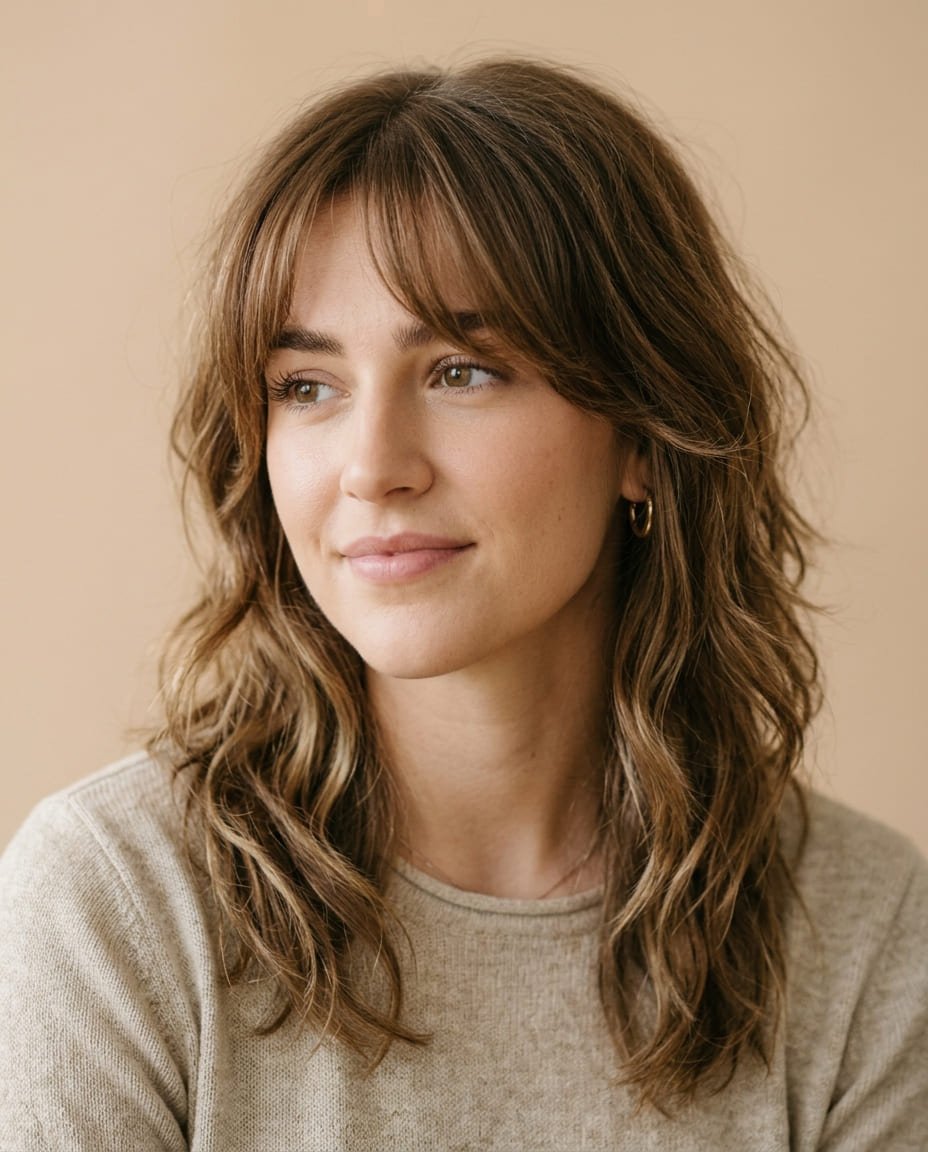
Heat Styling Routine
- Start with towel-dried hair and apply a light mousse or heat protectant.
- Blow-dry the bangs first, using a small round brush or your fingers to direct them.
- Dry the crown with your head tilted forward to build volume.
- Finish with texturizing spray, scrunching the ends and layers.
- Add a curling iron or wand to a few face-framing pieces for definition.
Air-Dry and No-Heat Routine
- Apply a lightweight styling cream or curl product to damp hair.
- Scrunch the layers and let them dry naturally.
- For wavy or curly hair, use a diffuser on low heat to speed things up.
- Style the bangs separately, since they dry differently.
Keeping Bangs From Splitting, Flattening, or Getting Oily
Bangs sit against your forehead, so they pick up oil faster than the rest of your hair.
- Rinse or wash the bangs separately between full washes.
- Keep dry shampoo on hand for midday.
- Avoid heavy creams near the forehead.
- If bangs split, dampen them and blow-dry them flat in the direction you want.
| Problem | Fix | Product Type |
|---|---|---|
| Flat crown | Blow-dry upside down or lift at the roots | Volumizing mousse or root lift spray |
| Frizzy layers | Smooth lightly and avoid over-brushing | Lightweight anti-frizz cream |
| Greasy bangs | Rinse bangs separately | Dry shampoo |
| Split bangs | Dampen and blow-dry flat | Light hold spray |
| Limp ends | Add texture | Texturizing or sea salt spray |
Upkeep, Trim Schedule, and Real Costs
A wolf cut with bangs has two maintenance tracks.
- Bangs: They lose shape faster than the rest of the cut, so expect to trim them every few weeks. Some salons offer quick bang trims between full appointments, free or for a small fee, so ask about the policy.
- Layers: The intentionally messy shape tolerates longer gaps, but plan a full shape-up every couple of months to keep layers balanced.
- Cost: Prices vary by city, salon, and stylist experience. Ask whether the price includes a wash, style, and bang trim before you book.
Simple maintenance calendar
- Daily: Style bangs and refresh with dry shampoo if needed
- Weekly: Deep condition and check for split ends
- Every few weeks: Quick bang trim
- Every couple of months: Full shape-up
Growing Out Wolf Cut Bangs and Layers Without the Awkward Phase
Hair typically grows only about half an inch per month, so grow-out takes patience. Here’s how to make it easier.
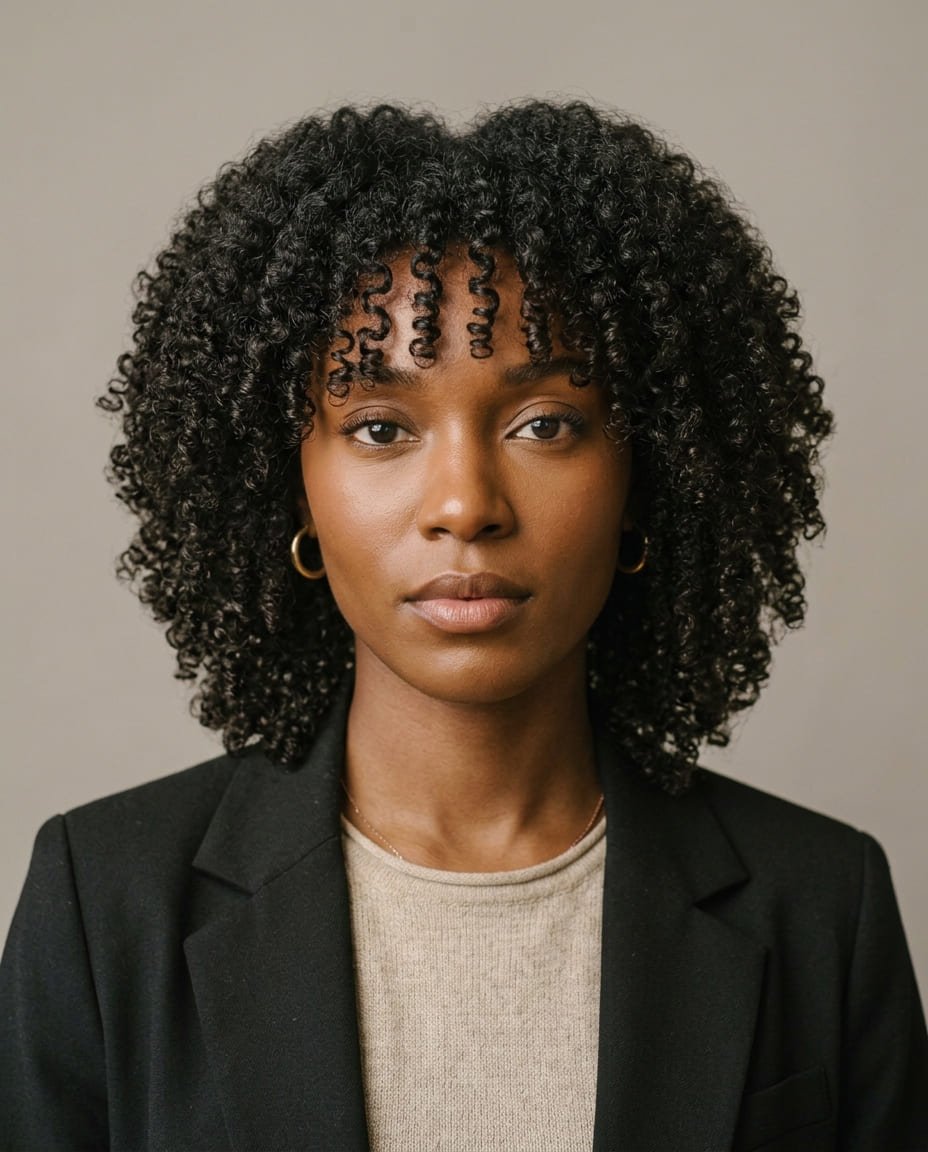
Bangs
- Let them grow into curtain-style pieces and sweep them to the sides.
- Use small clips or a headband during the in-between length.
- Ask for a trim that blends bangs into the face-framing layers instead of cutting straight across.
Layers
- Book occasional shaping trims so the cut doesn’t turn lopsided.
- Keep ends healthy, since split ends make grow-out look messier.
- Try half-up styles or a loose braid at the awkward stage.
The timeline depends on your growth rate and how short the bangs and layers were. A check-in with your stylist can save you from a hasty trim you’ll regret.
Making It Work for Different Settings (Work, School, and Weekends)
- Work: Smooth the layers with a light cream and sweep bangs to the side for a neater finish.
- School: Keep it quick. Air-dry with texturizing spray and pin back bangs if needed. Teens should talk through upkeep with a stylist and a parent before committing.
- Weekends and events: Add volume, scrunch the layers, and let the texture show.
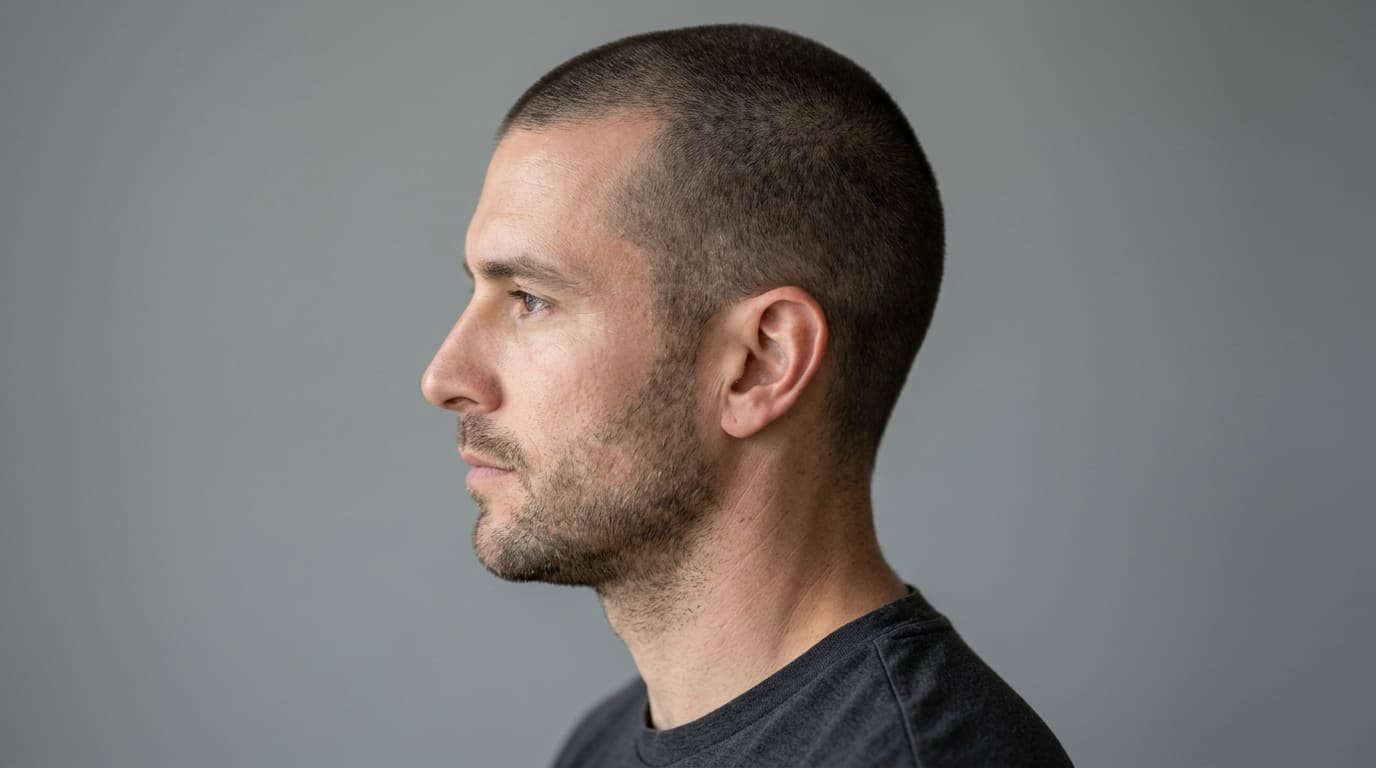
- For men and boys: The cut works with shorter lengths and strong texture on top. Ask for shorter back lengths and a bang style that suits your hairline.
The same cut can look relaxed, polished, or edgy depending on how much product and heat you use.
Wolf Cut With Bangs Questions Readers Ask Most
Is a wolf cut with bangs good for thin hair?
Yes, with adjustments. Ask for lighter layers and keep enough length at the ends so the cut doesn’t look sparse. Wispy or curtain bangs usually work better than full bangs because they use less hair from the crown.
Can curly hair pull off a wolf cut with bangs?
Yes. Curly hair gives the cut natural volume and movement. Choose a stylist who understands curl patterns and cuts with shrinkage in mind, so layers and bangs land where you want once dry.
Is a wolf cut with bangs high maintenance?
It’s moderate. Layers are forgiving, but bangs need regular trims and daily styling. If you want less effort, curtain bangs are usually the easiest choice.
What face shape suits a wolf cut with bangs?
Most face shapes can wear it with the right bangs. Round faces often suit curtain or side-swept bangs, while square faces often suit softer, wispy styles. Use face shape as a guide, then check hairline and hair texture.
What’s the difference between a wolf cut and a shag?
A shag has even, feathered layers and a softer shape. A wolf cut has shorter, choppier crown layers with longer, wispier ends, so it looks bolder and more top-heavy.
Can I cut a wolf cut with bangs at home?
It’s risky. Layers and bangs are hard to cut evenly on yourself, and mistakes grow out slowly. If you try, only refine an existing cut, or leave the shaping to a professional.
Is a wolf cut with bangs still in style?
It gained wide popularity through social media and has stayed a popular textured option because it adapts to many hair types and bang styles. Check current photos and ask yourself whether you’d still like it in a year.
Does a wolf cut with bangs work on short hair?
Yes. On short hair it looks bolder and more pixie-like, and it works best with strong layering and a stylist’s guidance on bang length.
Is a Wolf Cut With Bangs Right for You?
Choosing a wolf cut with bangs comes down to a few clear decisions. Start with the bang style, since it shapes the whole look. Then match it to your face shape, hair type, and hairline. Finally, be honest about how much time you’ll spend on styling and trims.
If you want volume, texture, and a cut with personality, this style is worth considering. If you prefer something sleeker or lower effort, a shag or longer layered cut may suit you better. Bring clear reference photos, describe each part of the cut to your stylist, and plan for upkeep before you book.
Harry is a hair and beauty content creator at HairGlowBlog, sharing practical tips on hairstyles, hair care, hair styling, and beauty trends. Her content focuses on easy hairstyle ideas, hair care routines, styling tips, and inspiration for different hair types and occasions.

Leave a Reply