
Editorial note: This guide explains standard barbering terms and clipper guard conventions in plain English. Scalp and sun advice follows the Skin Cancer Foundation and the American Academy of Dermatology. It is styling guidance, not medical advice.
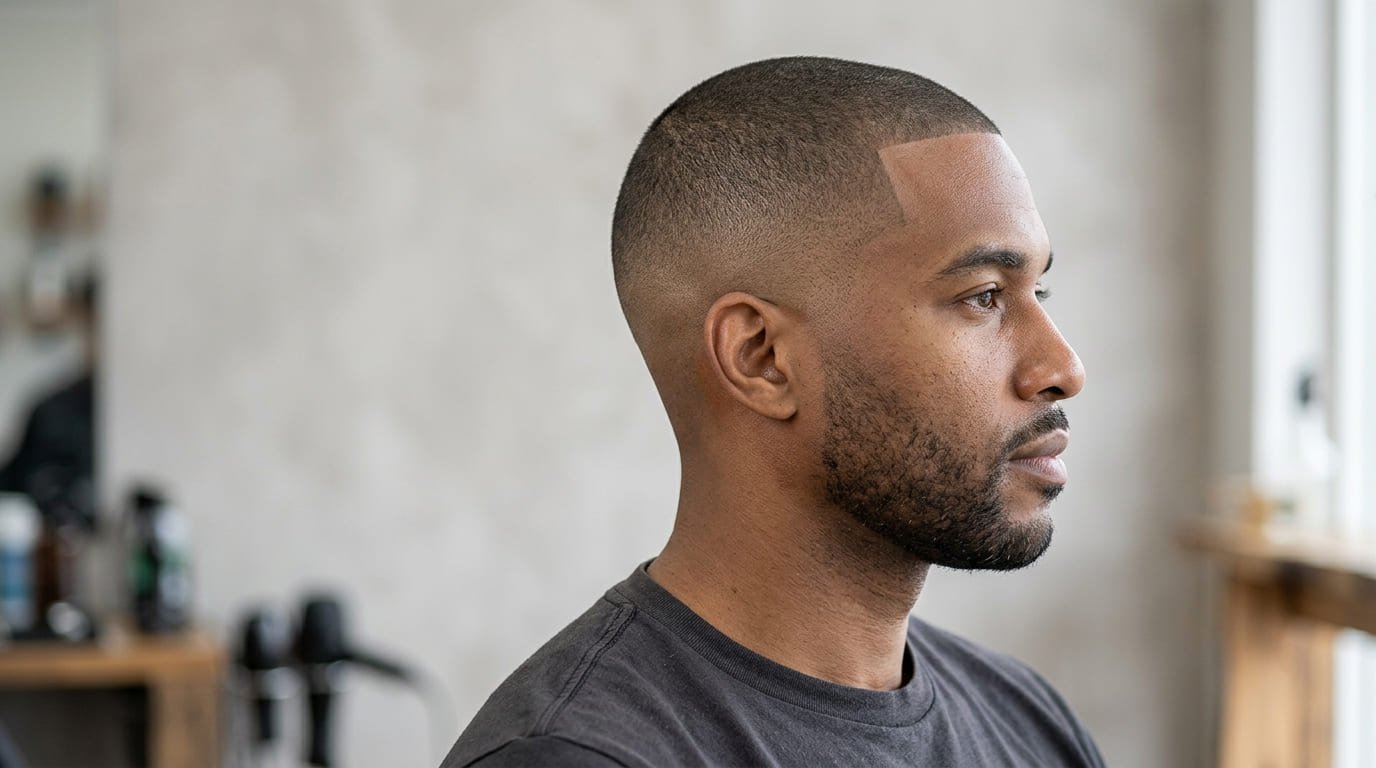
A buzz cut fade is a short clipper cut with a uniform buzzed top and sides that blend gradually from short to very short, often down to bare skin. It looks simple. But the moment you sit in the barber’s chair, you face a handful of choices: how long to leave the top, how high the fade should climb, and whether to add a line-up. Get one wrong and you can walk out with a cut that feels too harsh, too plain, or just not you.
Quick answer: To order a fade buzz cut, tell your barber four things: the fade type (low, mid, or high), the guard number on top (usually #1 to #4), how you want the neckline finished, and whether you want a line-up. Start a little longer than you think you need. You can always go shorter next time.
Key facts at a glance:
- A buzz cut fade has two separate choices: top length (guard number) and fade height (low, mid, or high).
- A regular buzz cut uses one guard length everywhere. A buzz cut fade blends from the top down to very short sides.
- Most people pick a #2 or #3 on top and fade the sides down to a #0 or skin.
- Fades look sharpest in the first one to two weeks. Many people refresh them every two to four weeks.
- A short cut leaves the scalp exposed, so sunscreen matters.
By the end of this guide, you’ll be able to pick a style and say exactly what to ask for, whether you search for a buzz cut fade, a fade buzz cut, or a buzzcut fade.
What Is a Buzz Cut Fade?
A buzz cut fade is a short, clipper-cut hairstyle where the hair on top is buzzed to one even length, while the sides and back gradually get shorter as they move down toward the neckline and ears. Sometimes the fade ends at bare skin. Sometimes it stops at a very short stubble. Either way, there’s no hard line between long and short. The length blends smoothly from one zone to the next.
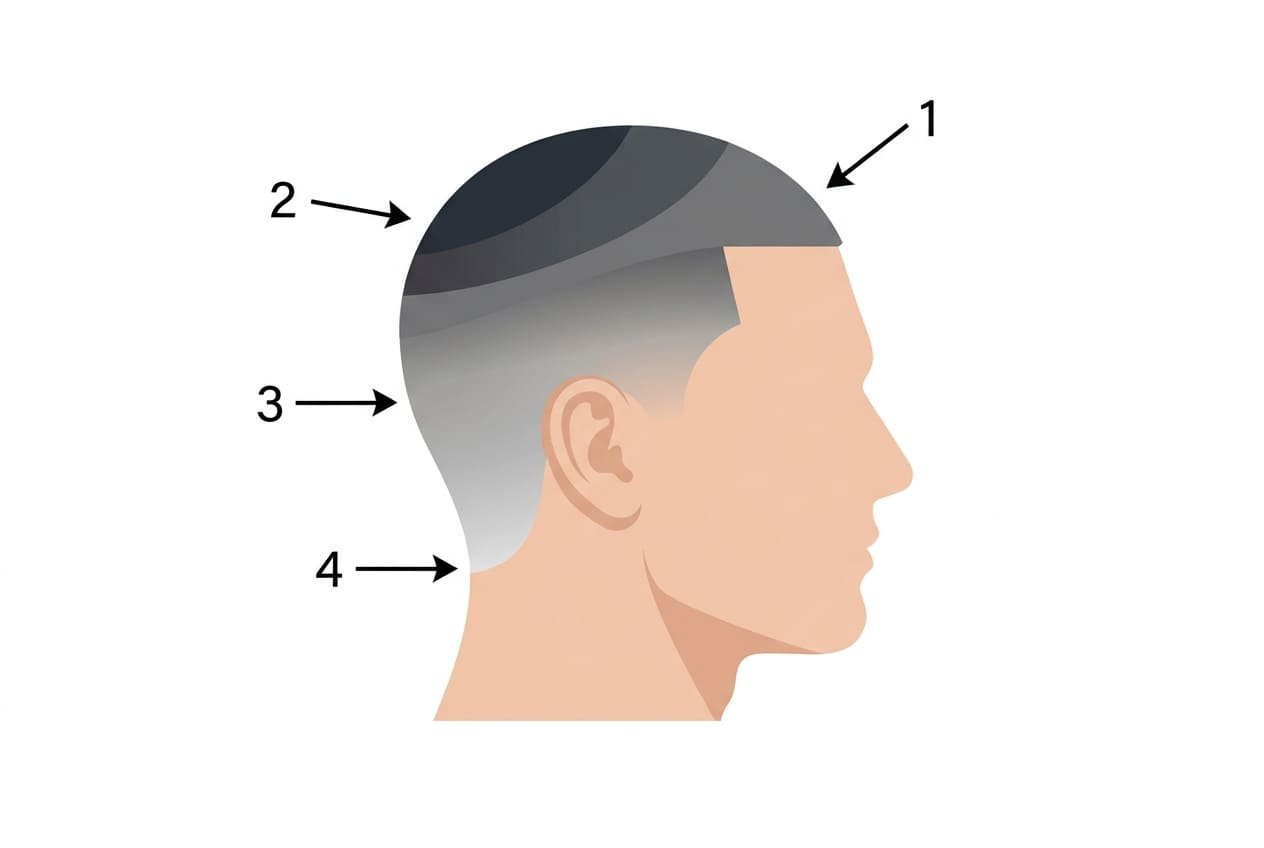
That blend is the whole point. A regular buzz cut uses one guard length all over. A buzz cut fade adds a gradient, which gives the cut more shape and a sharper, more finished look.
Think of the cut in three zones:
- The top: buzzed to a single length, usually between a #1 and a #4 guard.
- The fade zone: the transition area on the sides and back, where the length steps down gradually.
- The neckline and edges: the finished border around the ears, temples, and nape, often cleaned with a trimmer or razor.
Buzz Cut Fade vs Regular Buzz Cut vs Taper
These three get mixed up all the time, even in barbershops. Here’s how they differ in plain terms.

A regular buzz cut is uniform. One guard, same length everywhere. A taper shortens the hair gently toward the neckline and around the ears, usually staying longer and more conservative than a fade. A buzz cut fade blends from the top down to very short, often to skin, so the contrast is stronger.
| Feature | Regular Buzz Cut | Taper | Buzz Cut Fade |
|---|---|---|---|
| Length pattern | One length all over | Gradual shortening at neck and ears | Visible gradient from top to very short sides |
| Contrast | None | Subtle | Low to high, depending on the fade |
| Look | Uniform, simple | Classic, tidy | Sharp, defined, modern |
| Maintenance | Lowest | Low to moderate | Moderate to high (stays sharp for a shorter time) |
| Best for | Ultra low effort | Conservative, professional settings | People who want shape and a cleaner finish |
Buzz Cut Fade vs Crew Cut
A crew cut is usually a short style with hair on top that’s a bit longer than the sides, often tapered. A buzz cut fade keeps the top buzzed to a uniform length and puts more emphasis on the blended sides. If you like a little more length on top, a crew cut might suit you better. If you want the cleanest, shortest look overall, the fade version is the one to ask for.
The Two Choices That Define Your Cut: Top Length and Fade Height
Here’s the trick that makes ordering easier: a buzz cut fade is really two separate decisions.
- Top length. How much hair do you want left up top? This is set by the clipper guard number.
- Fade height. How high up the sides does the fade start? Low, mid, and high options change how dramatic the cut looks.
You can mix and match. A longer top with a low fade looks relaxed and subtle. A very short top with a high skin fade looks sharp and bold. Once you treat these as two dials instead of one big choice, picking a style gets much easier.
Quick decision guide: Want something subtle and easy to wear to work? Pick a slightly longer top and a low fade. Want something bold and crisp? Go shorter on top with a higher fade.
Guard Numbers Explained: How Long Should the Top Be?

Clipper guards are numbered, and the number tells you how much hair the guard leaves behind. Exact lengths can vary a little by brand, so treat the numbers below as a reliable guide, not a ruler. For precise measurements, check the guard chart that comes with your clippers.
| Guard | Approx. Length | What It Looks Like | Best For |
|---|---|---|---|
| #0 (no guard) | Close to the skin | Almost bald, very sharp | Bold, ultra-short looks |
| #1 | About 1/8 inch (3 mm) | Very short, scalp shows clearly | Clean, minimal style |
| #2 | About 1/4 inch (6 mm) | Short, soft shadow of hair | Popular all-round choice |
| #3 | About 3/8 inch (10 mm) | Short with a bit more coverage | Softer look, thinner areas |
| #4 | About 1/2 inch (13 mm) | Noticeably fuller buzz | First-timers, longer top |
If you’re new to this cut, start longer. You can always go shorter next time, but you can’t add length back. A #3 or #4 is a safer first step than a #1.
Want a deeper breakdown of one popular length? See our guide to the 4 guard buzz cut.
Buzz Cut Fade Types: Low, Mid, High, Skin, Taper, Drop & Burst
The fade type controls where the blending starts and how much contrast you get between the top and the sides. Here’s the quick overview.
| Fade Type | Where It Starts | Contrast | Best For |
|---|---|---|---|
| Low fade | Just above the ears and neckline | Subtle | Conservative, everyday looks |
| Mid fade | Around the temples | Moderate | Balanced, versatile cut |
| High fade | High on the head, near the temples or above | Strong | Bold, attention-grabbing look |
| Skin fade | Fades down to bare skin | Strong at the base | Crisp, sharp finish |
| Taper fade | Short blend around ears and neck | Gentle | Clean but understated |
| Drop fade | Curves down behind the ear | Moderate | Adding shape around the head |
| Burst fade | Curves around the ear in a semicircle | Moderate to strong | Styles with more length on top |
Low and Mid Fades
A low fade stays close to the ears and neckline. It’s the easiest to wear and the easiest to grow out, which makes it a smart starting point. A mid fade begins near the temples, so it creates a clearer step between the sides and the top without looking extreme.
High and Skin Fades

A high fade starts further up the head, which makes the contrast stand out. Pair it with a very short top and you get a sharp, modern look. A skin fade (sometimes called a bald fade) takes the sides all the way down to skin, so the finish is clean and crisp. Skin fades usually need more frequent touch-ups, since new growth shows up quickly.
Taper, Drop, and Burst Fades
These are shape-focused variations. A taper fade keeps things subtle around the ears and neck. A drop fade curves down behind the ear, which can flatter certain head shapes. A burst fade curves in a semicircle around the ear, and it works best when there’s a bit more length on top. On a very short buzz, the effect is less dramatic, so ask your barber how it will look at your length.
Buzz Cut Fade Styles to Show Your Barber
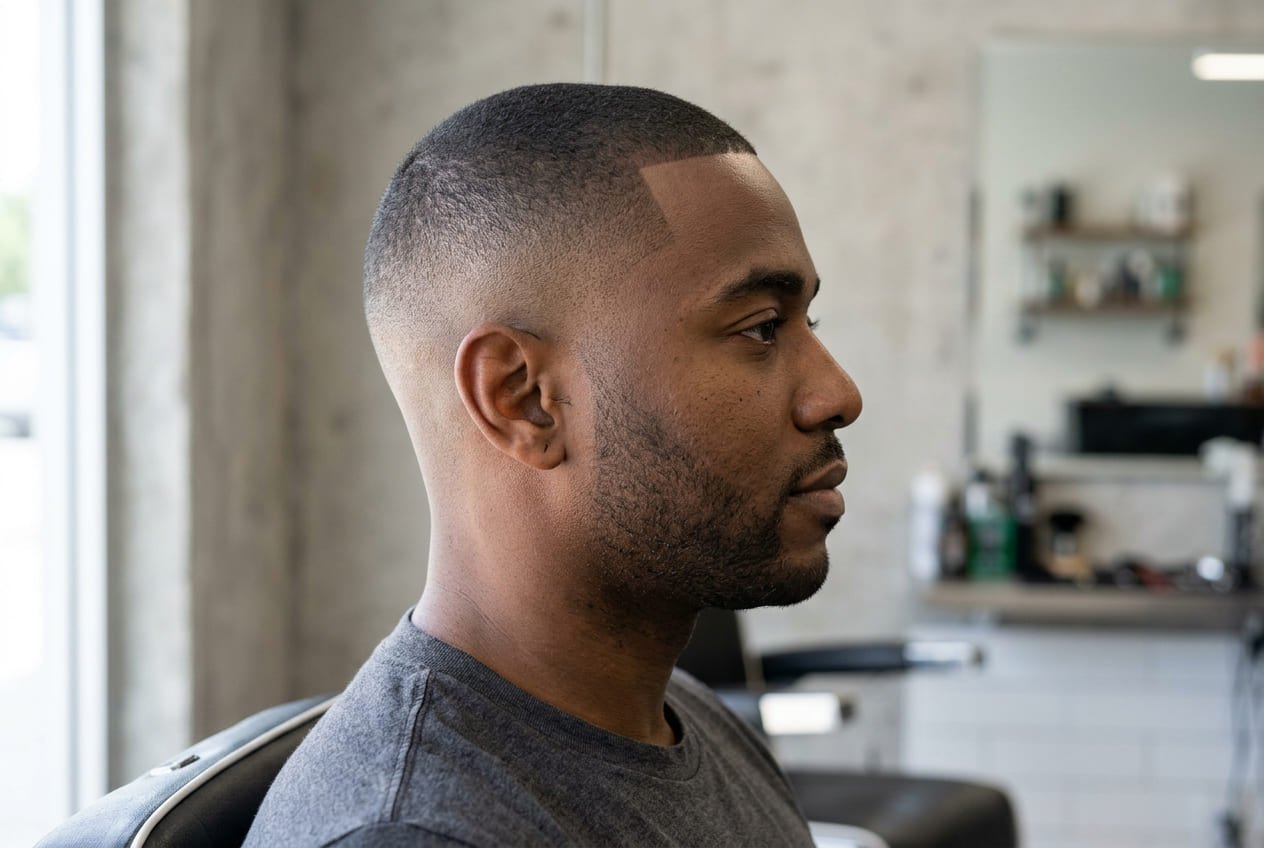
Instead of a long list of random looks, here are the main styles grouped by what you want the cut to do for you.
Clean and Professional

A low or taper fade with a #2 or #3 on top. This is the easiest choice for office jobs, interviews, and school. It looks neat without drawing attention. Best for: conservative workplaces. Maintenance: moderate.
Bold and High-Contrast
A high or skin fade with a #1 or #2 on top. The strong gap between the top and sides gives the cut a sharp, graphic look. Best for: people who want a statement cut. Maintenance: high, since the contrast fades fast.
Athletic and Low-Maintenance

A mid or low fade with a #2 or #3 on top. It handles sweat, hats, and busy mornings, and it grows out evenly. Best for: gym-goers, athletes, and anyone who wants zero styling time. Maintenance: low to moderate.
With a Line-Up, Beard, or Hard Part
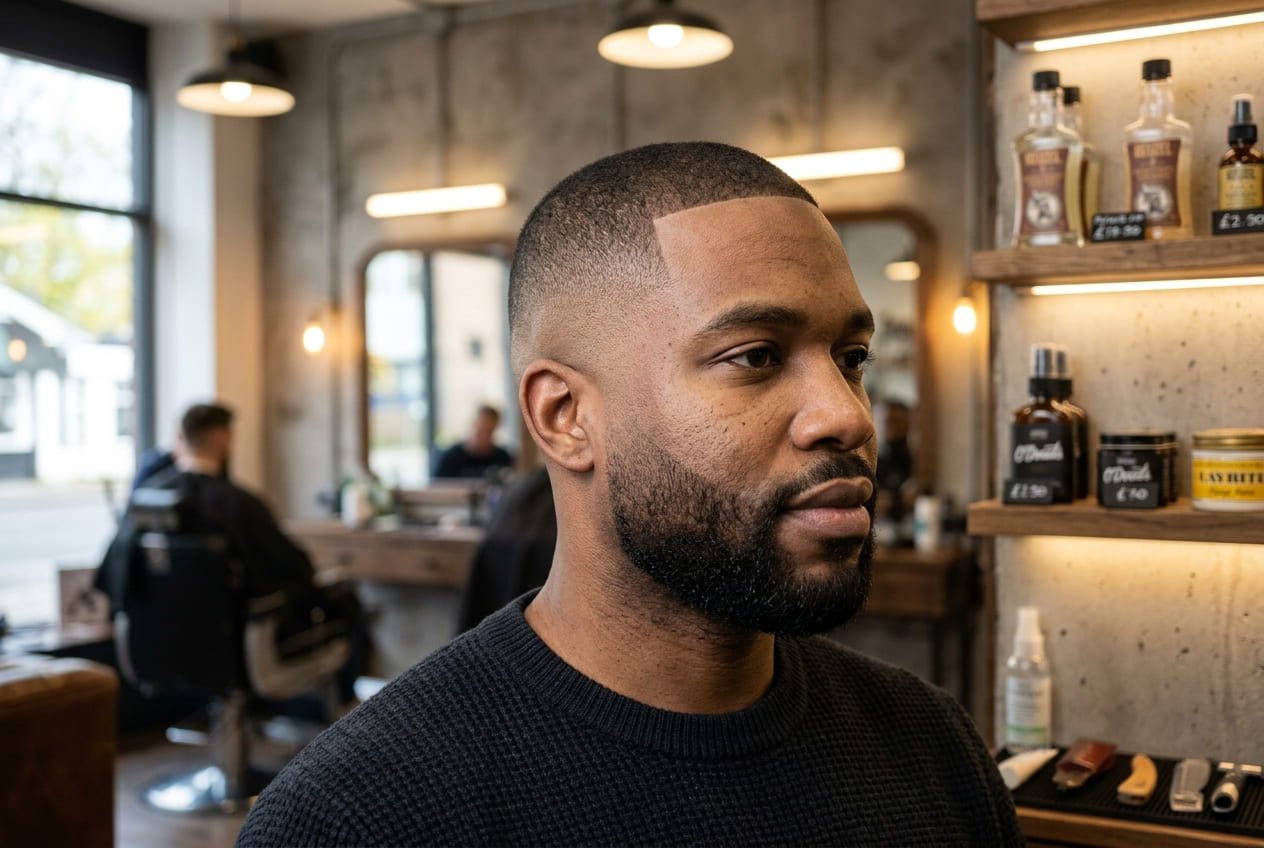
A line-up (also called an edge-up) sharpens the hairline across the forehead and temples with a trimmer. A hard part is a razor-cut line shaved into the hair for a defined detail. If you wear a beard, ask your barber to fade the sideburns into the beard so the two flow together instead of ending abruptly. Best for: a polished, finished look. Maintenance: high, because crisp lines soften quickly.
How to Choose the Right Buzz Cut Fade for Your Face, Head Shape, and Hairline
A buzz cut shows everything: your head shape, your hairline, even small bumps or scars. That’s not a reason to avoid it. It just means a little planning pays off.
Face Shape Matches
- Oval: Most fades work well, so choose based on the look you want.
- Round: A mid or high fade adds definition and creates a slightly longer-looking shape.
- Square: A low or mid fade keeps the strong jawline front and center.
- Heart: A slightly longer top with a low fade helps balance a wider forehead.
- Oblong: A low fade and a slightly longer top avoid making the face look even longer.
Receding Hairlines and Thinning Hair
Short hair can be a flattering option when the hairline is moving back, because there’s less contrast between thicker and thinner areas. A slightly longer top, like a #3 or #4, often looks softer than going very short. A skin fade can also look sharp, but it highlights the difference between top and sides, so ask your barber what will look best on you. This is a styling choice only. A haircut won’t change hair loss, and if you’re worried about thinning, a doctor or dermatologist can help.
Head Shape, Scars, Bumps, and Cowlicks
Go for a longer top the first time if you aren’t sure what your scalp looks like. A very short buzz can reveal scars, bumps, or uneven areas you never noticed. If you have a cowlick or crown swirl, a slightly longer length hides it better, and a good barber will cut with the direction of growth in mind.
| Your Feature | Fade Worth Trying | Why It Works |
|---|---|---|
| Round face | Mid or high fade | Adds definition and structure |
| Square face | Low or mid fade | Keeps a strong jawline clean |
| Receding hairline | Low or taper fade, #3 or #4 top | Softer, less stark contrast |
| Visible scars or bumps | Low fade, longer top | Less scalp exposed |
| Strong cowlick | Low fade, #3 or #4 top | Hides uneven growth patterns |
Buzz Cut Fades for Straight, Wavy, Curly, and Coily Hair
Hair texture changes how a buzz cut fade looks, even at the same guard number.
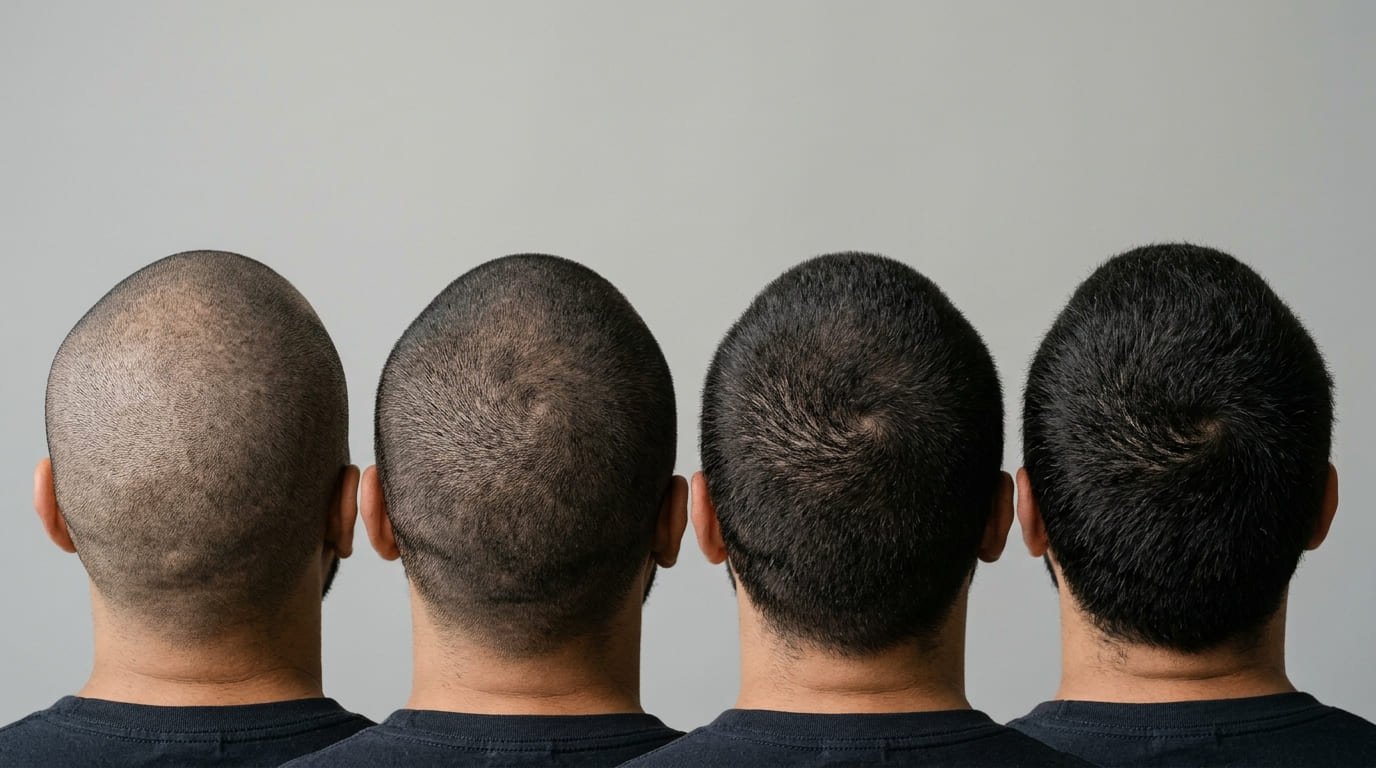
Straight hair lies flat and shows the scalp clearly at shorter lengths. It tends to show fade lines cleanly, so any uneven blending is easier to spot. Wavy hair can grow out with a little more body, which gives the top a softer, fuller look at #3 or #4. Curly hair often looks denser when buzzed, and the fade transitions can appear softer because the curl pattern adds texture. Coily hair holds a crisp fade extremely well, which is why skin fades and sharp line-ups are so popular. Coily textures can also grow in with waves on top, depending on length and brushing.
Pro tip: Tell your barber your hair type up front, and bring a photo of someone with a similar texture. The same guard number can look noticeably different from one head of hair to the next.
Women, Teens, and Men Over 40: Adapting the Look
The buzz cut fade isn’t only for one group. A few adjustments help it work for different readers.
Women who choose a buzz cut fade usually go for a slightly longer top, like a #3 or #4, and a low fade. It frames the face, highlights cheekbones and eyes, and can be paired with bold earrings or brows. A mid fade offers more edge for those who want it.
Teens often want something low-risk. A low fade with a #3 or #4 is easy to grow out and tends to look neat, though it’s worth checking your school’s dress code first. Parents and teens can bring a reference photo so everyone agrees before the clippers start.
Men over 40 might prefer a slightly longer top and a low or taper fade for a cleaner, softer look, especially with thinning or graying hair. Many find that a neat beard and a simple fade look sharp and need little daily effort.
How to Ask Your Barber for a Buzz Cut Fade
Barbers aren’t mind readers, but they’re great at following clear directions. Use this simple order: fade type, top guard, neckline, finish.
| Step | What to Say | Example |
|---|---|---|
| 1. Fade type | Name the fade and height | “A low skin fade” |
| 2. Top length | Name the guard number | “A #2 on top” |
| 3. Neckline | Say how you want it finished | “Tapered neckline” or “squared off” |
| 4. Finish | Mention extras | “Line-up on the front, clean edges around the ears” |
Sample script:
“Can I get a mid fade down to skin on the sides, with a #2 on top? I’d like a natural neckline and a light line-up in front.”
A few tips make the visit go smoother:
- Bring one or two reference photos, ideally on a head shape and hair type similar to yours.
- If you’re unsure, say so. A good barber will suggest a length and fade based on your head shape.
- Start longer than you think you want. You can always go shorter next time.
- Mention how often you plan to come in, so the barber can choose a fade that grows out well for you.
Screenshot the table above and keep it on your phone.
Maintenance, Cost, and Grow-Out Timeline
How Often to Refresh Your Fade
Fades lose their sharpness fast, because the contrast between short and shorter is easy to see. Many people notice the edges softening after a week or two and book a full refresh every two to four weeks. If you wear a skin fade or a crisp line-up, you may want to go closer to two weeks. A low taper with a longer top can stretch to three or four.
Typical Cost Range
Prices vary widely by city, shop, and barber, so there’s no single honest number. A fade usually costs more than a basic clipper cut because it takes more time and skill, and add-ons like a line-up or beard work can raise the price. To estimate your cost, check the shop’s posted prices or call two or three local shops and ask for the price of a men’s fade, then ask what a line-up or beard trim adds. Since you’ll return every few weeks, ask whether they offer discounts for regular clients.
Week-by-Week: What the Cut Looks Like as It Grows
According to the American Academy of Dermatology, scalp hair grows about half an inch per month on average, though the rate varies from person to person.
| Time | What You’ll See |
|---|---|
| Week 1 | Crisp lines, clean fade, sharpest look |
| Week 2 | Edges start to soften, skin fade begins to show stubble |
| Week 3 | Fade looks softer, top feels slightly fuller |
| Week 4+ | Fade blends away, cut reads closer to a regular buzz |
If you want to grow the cut out, ask your barber to keep the sides tapered as the top gets longer. That helps the cut look intentional instead of shaggy.
Scalp Care for Buzz Cut Fades
Short hair leaves your scalp exposed, so it needs a little attention.
- Protect from the sun. The Skin Cancer Foundation explains that hair shields the scalp from some UV rays, but you need more protection, especially where hair is thin or missing. With a buzz cut fade, that means most of your scalp. Apply sunscreen to the exposed areas and wear a hat during long stretches outdoors. See the Foundation’s advice on protecting your scalp.
- Check your scalp. The same source recommends including your scalp in monthly skin self-exams. A buzz cut makes that easy. Look for anything new, changing, or unusual.
- Moisturize. A light, non-greasy moisturizer helps prevent dryness and flaking.
- Prevent razor bumps. If you shave your own neckline, use a clean blade, shave with the direction of growth, and don’t press hard. Ask your barber about a gentler finish if you’re prone to bumps.
- Avoid ingrown hairs. Gentle cleansing and avoiding tight hats or helmets for long stretches can help.
Any scalp irritation that doesn’t improve, or any spot that looks unusual, is worth showing to a doctor or dermatologist.
Can You Do a Buzz Cut Fade at Home?
You can, but expect a learning curve. A basic one-length buzz is easy. A true fade takes practice, because you’re blending several guard lengths and checking both sides for balance.
What you’ll need: a quality clipper with guards, a trimmer for edges, and a handheld mirror so you can see the back.
Do:
- Start with a longer guard than you think you need.
- Work in small, controlled passes, and blend between guard sizes.
- Check both sides often to keep them even.
Don’t:
- Start with the shortest guard, since mistakes are hard to fix.
- Rush the neckline.
- Skip the mirror check at the back.
If you’re nervous, get your first fade from a barber and ask them to explain what they’re doing. After that, you can try maintaining it at home between visits.
Buzz Cut Fade FAQs
What is the difference between a buzz cut and a fade?
A buzz cut is cut to one length all over, while a fade blends from longer hair to shorter hair in a smooth gradient. A buzz cut fade combines both: a short, uniform top with blended sides.
Which fade is best for a buzz cut?
The best fade depends on the look you want. A low fade is subtle and easy to wear, a mid fade is balanced, and a high or skin fade is bold and sharp. Your face shape and hairline also play a part.
What number guard is a buzz cut fade?
The top is usually a #1 to #4, and the sides fade down to a #0 or bare skin. Many people choose a #2 or #3 on top.
Is a buzz cut fade good for thinning hair?
It can be a flattering option, because short hair reduces the contrast between thinner and thicker areas. A slightly longer top, like a #3 or #4, often looks softer. A haircut does not affect hair loss itself.
How often do I need a touch-up?
Most people refresh a fade every two to four weeks. Skin fades and sharp line-ups tend to need touch-ups sooner.
Does it work on curly or coily hair?
Yes. Coily hair in particular holds a crisp fade well, and curly hair gives the cut a fuller, textured look.
Can women get a buzz cut fade?
Yes. Many women choose a low or mid fade with a slightly longer top for a soft but bold look.
How much does a buzz cut fade cost?
Prices vary by city, shop, and barber, so check posted prices or call ahead. Add-ons such as a line-up or beard trim usually raise the total.
How do I prevent razor bumps after a skin fade?
Use a clean blade, shave with the direction of hair growth, and avoid pressing hard. If bumps keep coming back, ask your barber for a gentler neckline finish or see a dermatologist.
How long does it take to grow out?
Scalp hair grows about half an inch per month on average, so expect a few weeks for the fade to soften and a couple of months to reach a longer style.
Final Thoughts: Choosing Your Buzz Cut Fade with Confidence
A buzz cut fade comes down to two choices: how long you want the top and how high you want the fade. Pick those, match them to your face shape, hairline, and hair texture, and you’re most of the way there. Bring a clear script and a couple of photos, start a little longer than you think you need, and plan for a touch-up every few weeks. Protect your scalp, because short hair means more exposed skin.
Screenshot the cheat sheet above, then book your appointment. If you’re still comparing options, explore our guides on the 4 guard buzz cut, short haircuts for boys with straight hair, and the Caesar cut vs French crop for more short-hair inspiration.
Tried a buzz cut fade or planning one? Share your favorite style in the comments.

Harry is a hair and beauty content creator at HairGlowBlog, sharing practical tips on hairstyles, hair care, hair styling, and beauty trends. Her content focuses on easy hairstyle ideas, hair care routines, styling tips, and inspiration for different hair types and occasions.



Leave a Reply