
Choosing between a Caesar cut vs French crop can be confusing because both are short men’s haircuts with a forward fringe and cropped sides. They can even look nearly identical in some modern styles.
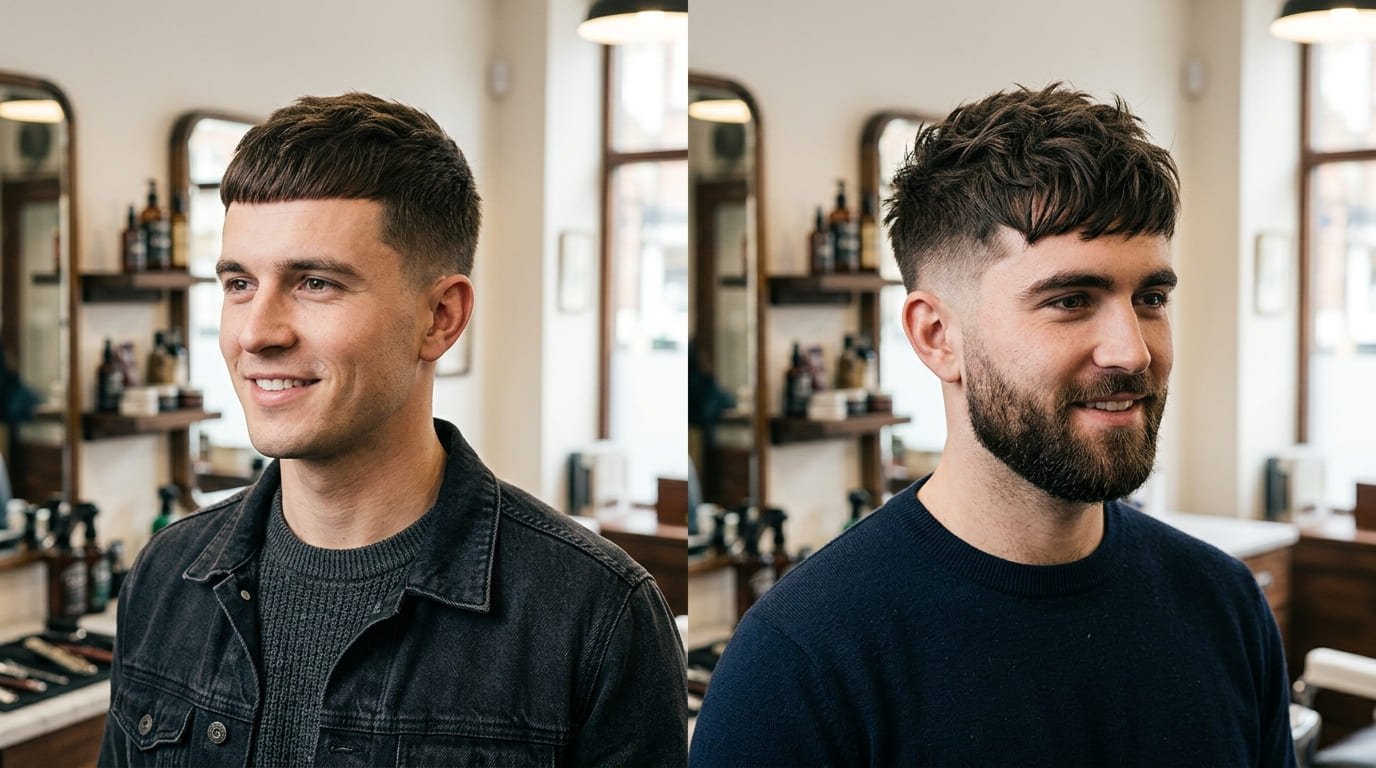
The main difference is usually how the top and fringe are shaped. A Caesar cut tends to be shorter, more compact, and structured, while a French crop typically leaves more room for texture, separation, and movement.
Neither haircut is automatically better. The right choice depends on your hair type, desired texture, face shape, hairline, styling routine, and the overall look you want.
Caesar Cut vs French Crop at a Glance
| Feature | Caesar Cut | French Crop |
|---|---|---|
| Overall look | Short, compact, structured | Textured, versatile, modern |
| Fringe | Usually short and defined | Often textured or more varied |
| Top | Generally short and controlled | Often leaves more length for texture |
| Texture | Subtle to moderate | Usually more noticeable |
| Styling | Minimal in many versions | Often benefits from styling product |
| Sides | Taper, fade, or short sides | Taper, fade, or short sides |
| Maintenance | Generally low | Low to moderate |
| Best for | A neat, compact appearance | Texture, movement, and styling flexibility |
These are general tendencies rather than strict rules. A modern Caesar can be heavily textured, while a French crop can be cut very short. Your barber can also combine elements of both.
Quick answer: Choose a Caesar cut if you prefer a shorter, more structured shape. Choose a French crop if you want more visible texture and flexibility on top.
Why the Caesar Cut and French Crop Are Often Confused
The Caesar and French crop share several characteristics:
- Short hair on top
- Hair directed toward the forehead
- A visible fringe
- Short sides and back
- Taper or fade options
- Relatively easy maintenance
That’s why searching for a Caesar cut or French crop can produce very similar haircut photos.
The distinction becomes clearer when you look at the fringe, top length, and texture.
A traditional Caesar usually has a compact shape with a short, defined fringe. A French crop generally puts more emphasis on texture and separation through the top, although its fringe can also be short and blunt.
Modern barbering has also blurred the terminology. A stylist might describe a heavily textured short crop as a French crop, textured crop, or textured Caesar depending on the details.
For that reason, a reference photo is often more reliable than the haircut name alone.
What Defines a Caesar Cut?
A Caesar cut is a short men’s hairstyle characterized by a cropped top and a short forward fringe. The overall shape is usually compact and controlled.

The haircut can be kept traditional and uniform or updated with modern techniques such as a taper, fade, or added texture.
Fringe, Top Length, and Overall Shape
The fringe is one of the easiest ways to recognize a Caesar.
It is generally:
- Short
- Forward-facing
- Close to the forehead
- Clearly defined
The top is usually kept relatively short compared with styles such as a quiff or pompadour. That gives the Caesar its compact appearance.
A modern Caesar doesn’t have to look flat or completely uniform. A barber can add texture while maintaining the short, forward shape that makes the haircut recognizable.
Modern Caesar Variations
Modern versions can include:
Classic Caesar: A short, controlled top with a defined forward fringe.
Caesar with a taper: The sides gradually become shorter toward the edges while keeping the top compact.
Caesar fade: A fade creates stronger contrast between the short sides and the top.
Textured Caesar: Texture is added to the top for separation while the characteristic short fringe remains.
The side treatment can dramatically change the overall appearance without changing the basic Caesar concept.
What Defines a French Crop?
A French crop is a short men’s haircut with a forward fringe and a top that commonly emphasizes texture, separation, and movement.

Compared with a traditional Caesar, a French crop often gives the barber more room to vary the top length and texture.
The sides may be tapered or faded, while the top can be styled forward, slightly messy, choppy, or more controlled.
Fringe, Texture, and Top Proportions
The fringe remains an important part of a French crop, but it can have more variation.
It may be:
- Blunt
- Choppy
- Textured
- Slightly longer
- Uneven or deliberately irregular
The top is often where the French crop gets its distinctive character. Rather than keeping every section equally compact, the barber can create separation and movement through the hair.
That makes the French crop especially appealing if you want a short haircut without a completely uniform finish.
Modern French Crop Variations
Common modern versions include:
Textured French crop: Uses visible separation and texture across the top.
French crop with a taper: Creates a softer transition on the sides.
French crop with a fade: Adds more contrast between the top and sides.
The same basic haircut can therefore look conservative, sharp, messy, or contemporary depending on the fringe, texture, and side treatment.
The Biggest Differences Between a Caesar and French Crop
The easiest way to compare the two is to focus on four things: fringe, texture, top-to-side proportions, and overall character.

Fringe
A traditional Caesar generally uses a shorter, more defined fringe.
A French crop can have a similarly short fringe, but it often allows more texture, irregularity, or variation.
Texture
The Caesar usually has a more compact appearance.
The French crop commonly emphasizes texture and separation, particularly across the top.
Top-to-Side Proportions
A Caesar tends to keep the top relatively short and controlled.
A French crop can retain slightly more length on top, giving the barber more flexibility with texture.
Overall Character
A Caesar often feels:
- Clean
- Compact
- Structured
- Classic
A French crop often feels:
- Textured
- Relaxed
- Contemporary
- More flexible
These aren’t fixed rules. A skilled barber can make either haircut look modern, textured, or highly structured.
Visual tip: When comparing haircut photos, look at the fringe and top texture first. The fade or taper alone doesn’t tell you whether you’re looking at a Caesar or French crop.
Caesar Cut vs French Crop for Different Hair Types
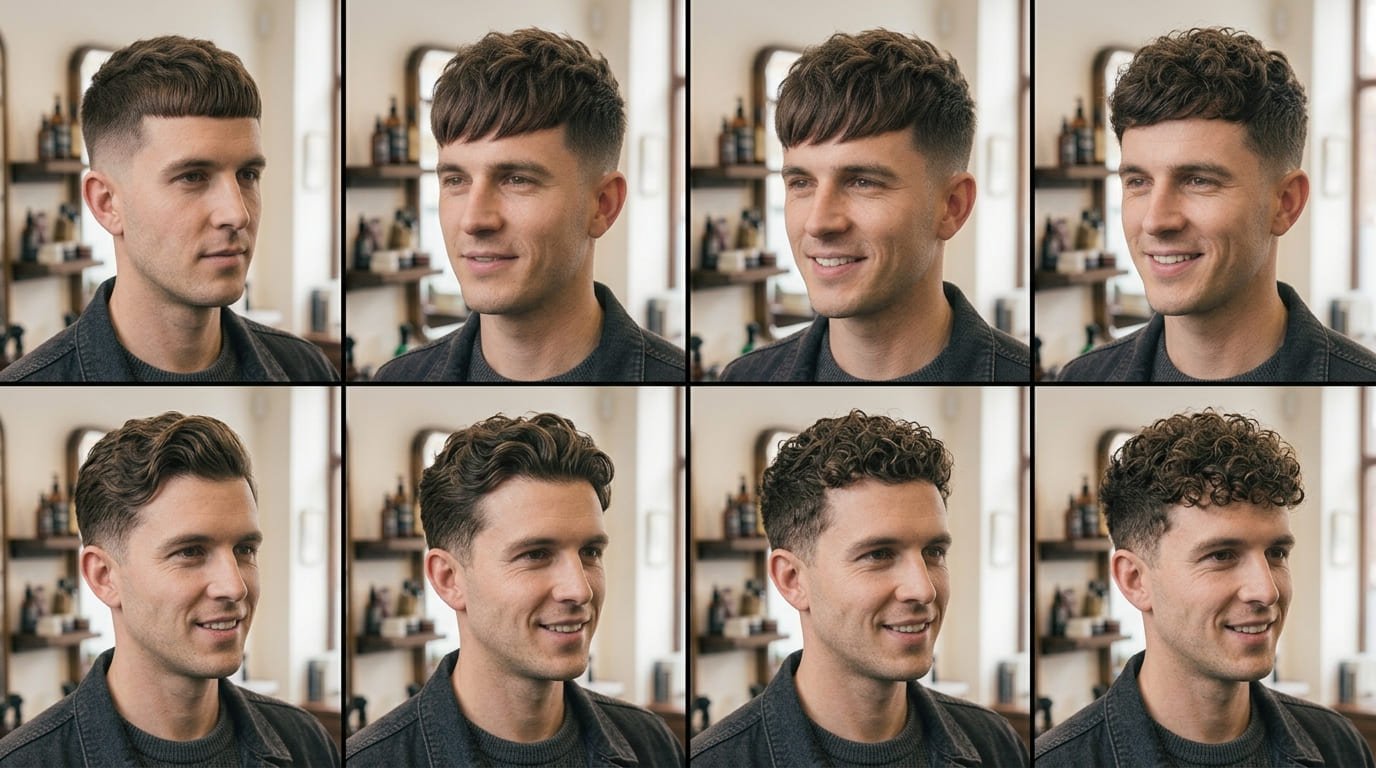
Your natural hair texture and density can affect which version works best.
Fine or Thin Hair
Both styles can work with fine hair, but the result depends heavily on density and the way the top is cut.
A shorter Caesar can create a clean, compact shape without requiring much styling. A textured French crop can also work when texture adds separation without making the hair look unnecessarily thin.
If your hair is fine, excessive thinning or over-texturizing can sometimes reduce the appearance of fullness. Your barber should adjust the amount of texture to your actual density.
Thick Hair
Thick hair can work well with either haircut.
A French crop can use natural density to create a fuller textured top, while a Caesar can use its shorter shape to keep thick hair looking controlled.
Your barber may remove some bulk or use layering and texture to prevent the top from becoming too heavy.
Straight Hair
Straight hair can make a Caesar look particularly clean because the short top and fringe hold a defined shape.
A French crop can add visual interest to straight hair through texture and separation. If your hair tends to sit flat, a small amount of suitable styling product can help create more movement.
Wavy or Curly Hair
Natural waves and curls can give a French crop plenty of movement without requiring heavy styling.
A Caesar can also work with wavy or curly hair, but the fringe and top need to be shaped according to the hair’s natural behavior.
Instead of asking for an exact length alone, tell your barber how your hair behaves when it dries.
Which Haircut Works Best for Different Face Shapes?
Face shape can help guide the decision, but it shouldn’t dictate the haircut completely.
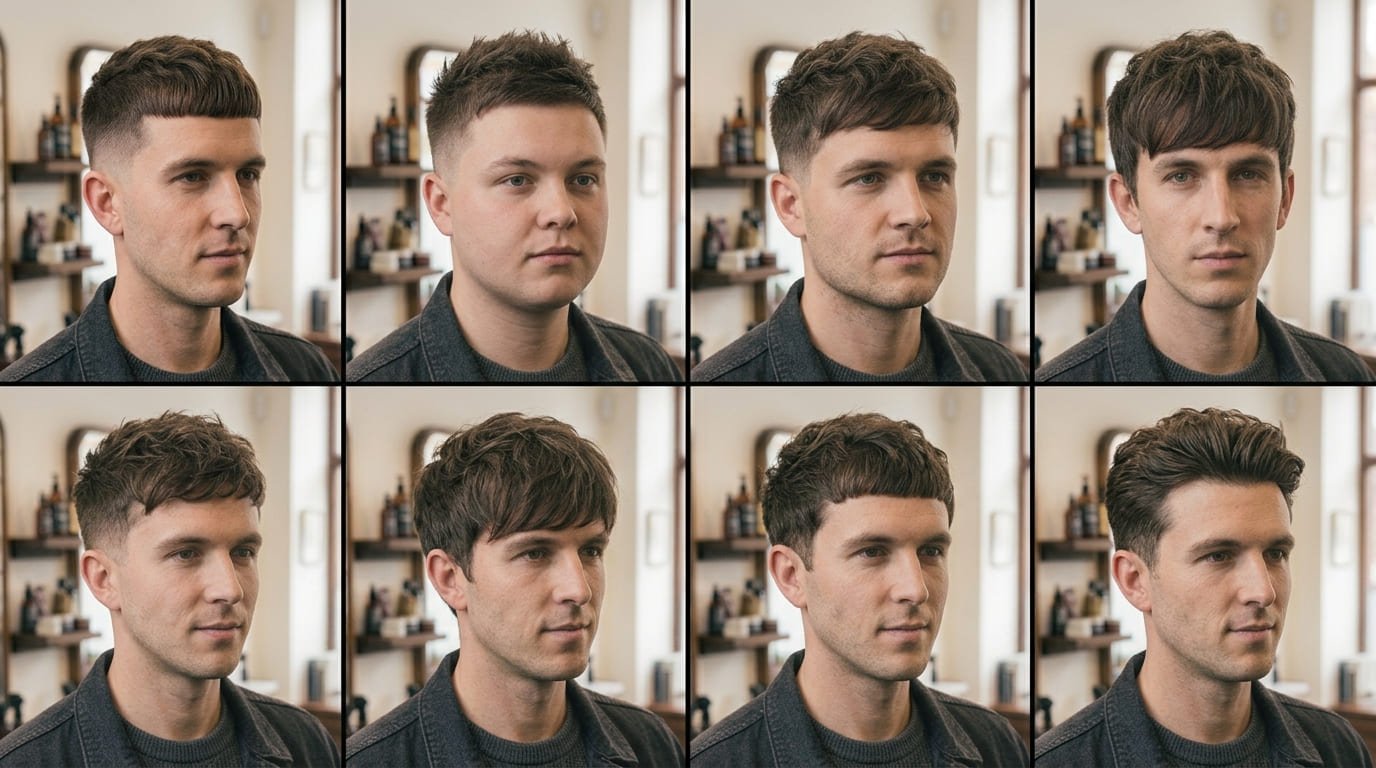
The best result usually comes from adjusting the fringe, top length, texture, and sides to balance your natural proportions.
Oval Face
An oval face is generally flexible with both styles. You can experiment with a shorter Caesar or a more textured French crop without needing major adjustments.
Round Face
A textured top or controlled shape can help create visual definition.
Your barber may adjust the top and sides rather than simply choosing one haircut based on face shape alone.
Square Face
Both hairstyles can work well with a square face.
A structured Caesar can complement strong facial angles, while a textured French crop can soften the overall appearance through movement.
Long or Rectangular Face
The fringe can be useful because it adds visual width across the forehead and can make the face appear less elongated.
The exact top length and side treatment should be adjusted to your proportions.
Heart-Shaped Face
Both cuts can work, but the fringe, top volume, and side length may need to be balanced carefully.
The goal isn’t to follow a rigid haircut rule. It’s to create a silhouette that works with your facial proportions.
Caesar vs French Crop for Receding Hairlines and Thinning Hair
If you’re dealing with a receding hairline or thinning hair, neither haircut should be treated as a guaranteed solution for hair loss.
However, both can be adapted to different hairlines.
A forward fringe can provide some visual coverage around the forehead, while a shorter overall shape can keep the haircut looking intentional as the hairline changes.
The better option depends on factors such as:
- Where the hairline is receding
- Overall hair density
- Hair texture
- Temple recession
- How your hair naturally falls
- How much styling you want to do
A textured French crop may work well when you want to use natural separation on top. A Caesar may appeal if you prefer a shorter, more controlled shape.
If your hairline is a concern, show your barber your natural hairline and explain whether you want coverage, a sharper outline, or a low-maintenance shape.
Which One Is Easier to Style and Maintain?
Both hairstyles can be relatively low maintenance, but the exact effort depends on the version you choose.
A short Caesar often needs very little daily styling. A French crop can also be easy to manage, although textured versions may look better with a small amount of styling product.
| Maintenance Factor | Caesar Cut | French Crop |
|---|---|---|
| Daily styling | Usually minimal | Minimal to moderate |
| Styling product | Often optional | Often useful for textured versions |
| Fringe upkeep | Important | Important |
| Fade/taper upkeep | Depends on side length | Depends on side length |
| Grow-out | Can lose its compact shape | May offer more styling flexibility |
One important point: low maintenance does not mean no maintenance.
If you have a tight fade or very precise fringe, you’ll usually need more frequent barber visits to keep those details sharp.
If you prefer a haircut that becomes less noticeable as it grows out, ask your barber for a softer taper and slightly more forgiving lengths.
Can You Combine Either Haircut With a Fade or Taper?
Yes. Both Caesar cuts and French crops can be paired with a fade or taper.
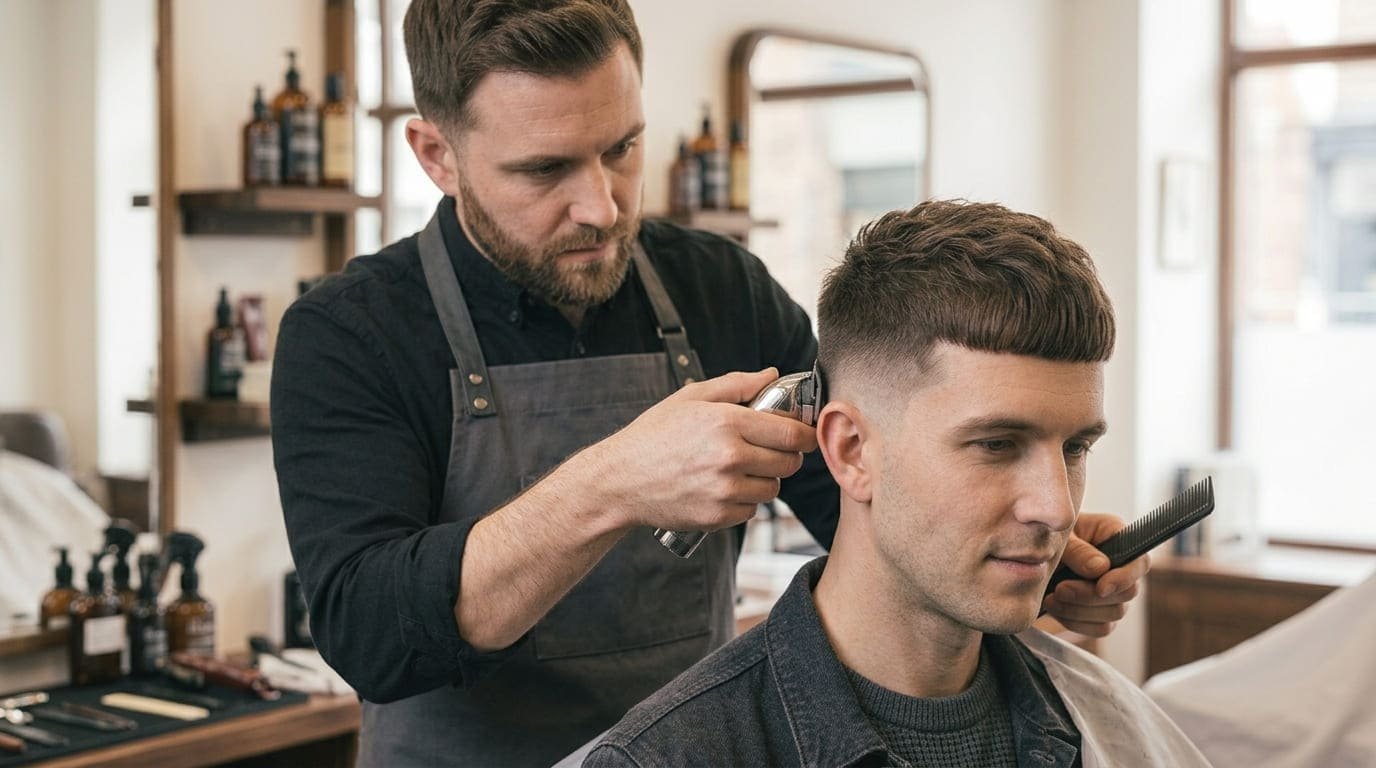
Common options include:
- Low fade
- Mid fade
- High fade
- Low taper
- Classic taper
A low taper usually creates a softer, more conservative transition.
A fade can create stronger contrast and make the haircut feel more modern.
The important thing is to describe the entire haircut rather than saying only, “I want a Caesar fade” or “I want a French crop.”
For example, tell your barber:
“I want a short textured top, a forward fringe, and a low taper with a natural transition.”
That gives the barber information about the top and sides instead of relying on a haircut label that may mean different things to different barbers.
How to Choose Between a Caesar Cut and French Crop
Use this simple decision framework.
Choose a Caesar if you want:
- A shorter overall haircut
- A compact, structured shape
- A clearly defined short fringe
- Minimal daily styling
- A classic appearance
- Less emphasis on visible texture
Choose a French crop if you want:
- More texture on top
- Greater separation and movement
- A contemporary appearance
- More flexibility in styling
- A textured or choppy fringe
- More variation in the top length
What if You Like Both?
You don’t necessarily have to choose one label.
A barber can combine the short, compact shape of a Caesar with the texture associated with a modern French crop.
If you like elements of both, show two or three reference photos and explain exactly what you like about each one.
For example:
“I like the short fringe from this Caesar, but I want the textured top from this French crop.”
That’s often more useful than asking for a haircut by name alone.
What to Tell Your Barber Before Getting the Cut
Haircut terminology isn’t perfectly standardized, so clear communication matters.
Before the haircut, discuss:
- Top length — How short or long do you want the top?
- Fringe — Short, blunt, textured, choppy, or slightly longer?
- Texture — Do you want a smooth finish or visible separation?
- Sides and back — Taper, fade, or simply short?
- Styling time — Do you want to spend time styling it every morning?
- Hairline — Are you trying to work with recession or thinning?
- Natural texture — Does your hair lie straight, wave, curl, or stick up?
Example Caesar Barber Request
“I’d like a short Caesar with a defined forward fringe and short sides. Keep the top compact, and I’d like a clean taper rather than a very dramatic fade.”
Example French Crop Barber Request
“I’d like a French crop with a textured top and forward fringe. Keep the sides tapered and leave enough length on top for some natural texture.”
These are starting points, not universal formulas. Your barber should adjust the cut based on your hair density, texture, growth pattern, and desired finish.
Caesar Cut vs French Crop vs Textured Crop
The textured crop is one reason haircut terminology can become confusing.
A textured crop generally describes a cropped haircut where texture and separation are major parts of the look. It can overlap heavily with a French crop, especially when the haircut has a forward fringe.
A modern Caesar can also include texture.
That means these labels aren’t always completely separate categories.
Think of them as descriptions that overlap:
Caesar: Short, compact shape + forward fringe
French crop: Forward fringe + textured top
Textured crop: Cropped shape + strong emphasis on texture
The exact haircut depends on the combination of those features.
If you’re showing your barber a photo, point out:
- Fringe length
- Top texture
- Top length
- Side length
- Fade or taper
- Overall silhouette
That removes much of the ambiguity surrounding haircut names.
Frequently Asked Questions About Caesar Cuts and French Crops
Is a French crop the same as a Caesar cut?
No, but they can look very similar. A traditional Caesar is generally shorter and more compact, while a French crop often emphasizes texture and movement on top. Modern versions can overlap significantly.
Which haircut is lower maintenance?
Both can be low maintenance. A short Caesar may require less daily styling, while a textured French crop can usually be managed with a small amount of product. Fade and fringe upkeep depend on the specific cut.
Which is better for thin or fine hair?
Neither is universally better. The best option depends on hair density, texture, and hairline. A barber can adjust the top length and amount of texture to avoid making fine hair appear unnecessarily sparse.
Can both haircuts have a fade?
Yes. Both Caesar cuts and French crops can be paired with low, mid, or high fades, depending on the look you want.
Which haircut is better for a receding hairline?
There is no single best choice for every receding hairline. Both can be adapted with a forward fringe and an appropriate top length. Your hairline pattern, density, and styling preference matter more than the haircut name.
Can either haircut work with curly hair?
Yes. Curly and wavy hair can work with both styles when the cut is adapted to the hair’s natural movement. A French crop can particularly emphasize natural texture.
How often should a Caesar or French crop be trimmed?
There is no universal schedule. A tight fade, taper, or precise fringe will need more frequent maintenance than a softer version. Your preferred level of sharpness and how quickly your hair grows should determine when you return to the barber.

Final Verdict: Caesar Cut or French Crop—Which Should You Choose?
The Caesar cut is usually the better choice if you want a short, compact, structured haircut with a clearly defined fringe and minimal styling.
The French crop is usually the better choice if you want more texture, movement, and flexibility on top while keeping the haircut short and manageable.
The important thing is that the two styles overlap. Modern barbering doesn’t always follow rigid definitions, and the same haircut can be described differently depending on the barber.
If you’re unsure, don’t rely on the name alone. Bring a reference photo and explain the fringe, top texture, side length, and fade or taper you want.
In the end, the best haircut is the one that works with your hair type, natural texture, face shape, hairline, and daily routine—not simply the one with the better name.

Harry is a hair and beauty content creator at HairGlowBlog, sharing practical tips on hairstyles, hair care, hair styling, and beauty trends. Her content focuses on easy hairstyle ideas, hair care routines, styling tips, and inspiration for different hair types and occasions.




Leave a Reply