

A #4 buzz cut, also called a 4 guard buzz cut, is a short, even haircut made with a #4 clipper guard. On many standard clippers, a #4 guard leaves approximately 1/2 inch (13 mm) of hair.

It is short enough to look clean and low-maintenance, but it leaves noticeably more coverage than a #1, #2, or #3 buzz cut. That makes a #4 a practical starting point if you want a buzz cut without going extremely short.
#4 Buzz Cut at a Glance

| Question | Answer |
|---|---|
| Typical #4 length | About 1/2 inch / 13 mm |
| Longer than | #1, #2, and #3 |
| Shorter than | #5 |
| Overall look | Short, neat, and evenly covered |
| Can you get a fade? | Yes |
| Can you get a taper? | Yes |
| Good first buzz cut? | Often, especially if you want more coverage |
| Does it show scalp? | It can, depending on density, color, thinning, and lighting |
| Can you cut it at home? | Yes, especially as an all-over #4 |
Clipper measurements vary by manufacturer and blade setup, so treat 1/2 inch / 13 mm as an approximate standard rather than an exact guarantee.
How Long Is a #4 Buzz Cut?
A standard #4 clipper guard commonly leaves approximately 1/2 inch (13 mm) of hair.
That makes the #4 longer than a #1, #2, or #3 while still being clearly within the short-buzz-cut range.
| Guard | Approx. Length | General Appearance |
|---|---|---|
| #1 | 1/8 inch / 3 mm | Very short and close |
| #2 | 1/4 inch / 6 mm | Short with limited coverage |
| #3 | 3/8 inch / 10 mm | Short but noticeably fuller |
| #4 | 1/2 inch / 13 mm | Short with more coverage |
| #5 | 5/8 inch / 16 mm | Longer buzz-cut appearance |
Exact measurements can differ between clipper brands, guards, and blade configurations. If the exact result matters, give your barber the guard number and a reference photo.
What Does a #4 Buzz Cut Look Like?
A #4 buzz cut usually looks short, neat, and evenly covered rather than extremely close to the scalp.

Because the hair is only about 1/2 inch long on many standard clippers, there is not much length available for styling, volume, or movement. The finished appearance therefore depends heavily on your natural:
- Hair density
- Hair color
- Hair texture
- Hairline
- Face shape
- Head shape
Dense, dark hair can make a #4 look fuller, while fine or lighter hair may show more scalp. Curly hair can also appear shorter because the hair naturally bends and contracts.
For a realistic visual reference, compare a #4 from the front, side, and back, rather than relying on one photograph.
#3 vs #4 Buzz Cut: What’s the Difference?
The difference between a #3 and #4 is only about 1/8 inch on common clipper systems, but that small difference can change the overall appearance.

| Feature | #3 Buzz Cut | #4 Buzz Cut |
|---|---|---|
| Approx. length | 3/8 inch | 1/2 inch |
| Coverage | Less | More |
| Scalp visibility | Often greater | Often lower |
| Head shape visibility | More pronounced | Slightly softer |
| First buzz cut | More drastic | More forgiving |
| Overall appearance | Tighter | Fuller |
Choose a #4 if you want a buzz cut but prefer more coverage and a less extreme change.
Choose a #3 or shorter if you specifically want a tighter, more noticeable buzz-cut appearance.
If this is your first buzz cut and you’re unsure about going very short, starting with a #4 gives you the option to remove more length later.
#4 All Over vs #4 With a Taper vs #4 With a Fade
A “#4 buzz cut” does not automatically mean that every part of the haircut must be exactly the same length.

You can keep the longer section at #4 while shaping the sides, sideburns, and neckline.
#4 All Over
A #4 all-over buzz cut uses the same guard throughout most of the haircut.
It is the simplest version and is particularly easy to maintain at home.
Choose it if you want:
- Maximum simplicity
- One consistent length
- Easy DIY maintenance
- A classic buzz-cut appearance
#4 With a Taper
A #4 with a taper keeps more length through the main section while gradually shortening the hair around areas such as the sideburns and neckline.
Compared with an all-over buzz, a taper can give the haircut a more polished finish without creating as much contrast as a fade.
#4 With a Fade
A fade creates stronger contrast between the longer #4 section and the shorter sides.
You can combine a #4 with:
- Low fade: subtle and conservative
- Mid fade: more noticeable contrast
- High fade: stronger and more dramatic sides
The #4 describes the longer section; the faded areas can be cut considerably shorter.
Does a #4 Buzz Cut Work With Different Hair Types?
Yes, a #4 can work across many hair types, but the same guard does not look identical on everyone.
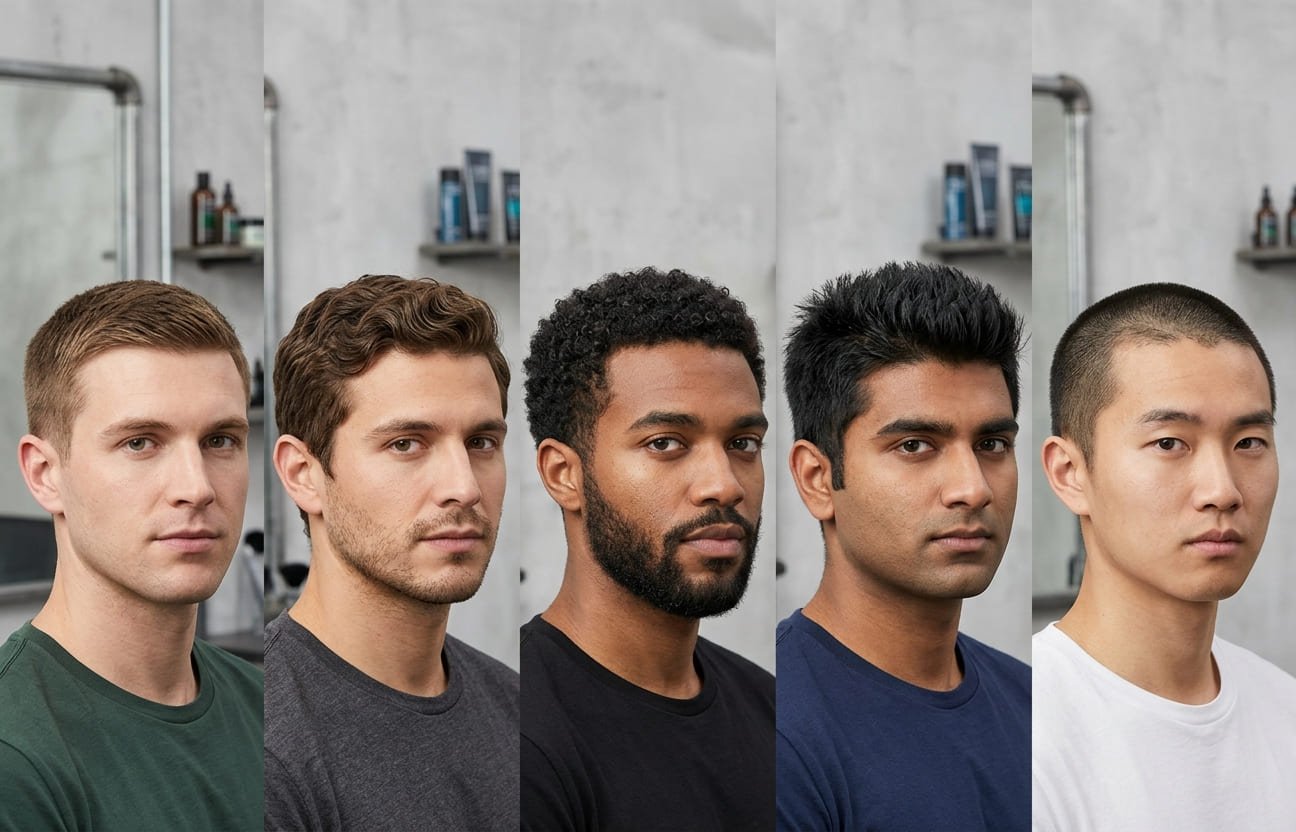
Straight Hair
Straight hair generally lies close to the scalp, making the #4 length and overall shape easy to see.
A #4 can look particularly uniform on straight hair because there is less natural curl or wave changing the silhouette.
Wavy Hair
Wavy hair can retain some natural texture even at a short length. A #4 can therefore look slightly more textured while remaining easy to manage.
Curly Hair
Curly hair can appear shorter than its stretched length because curls contract toward the scalp.
If you have tight curls, discuss the desired result with your barber rather than assuming a #4 will look identical to a straight-haired example.
Coarse or Thick Hair
Thick, coarse hair can make a #4 look especially dense and substantial.
Because more hair is visible at the same clipper length, the texture can also remain noticeable.
Fine or Thin Hair
A #4 can work with fine or thinning hair, but the result depends on where and how much density has been lost.
A uniform short cut may create a more consistent overall appearance, but it cannot restore lost density or completely conceal significant thinning.
Does a #4 Buzz Cut Suit Your Face and Head Shape?
A buzz cut removes much of the styling flexibility available with longer hair. As a result, your natural face and head shape become more visible.
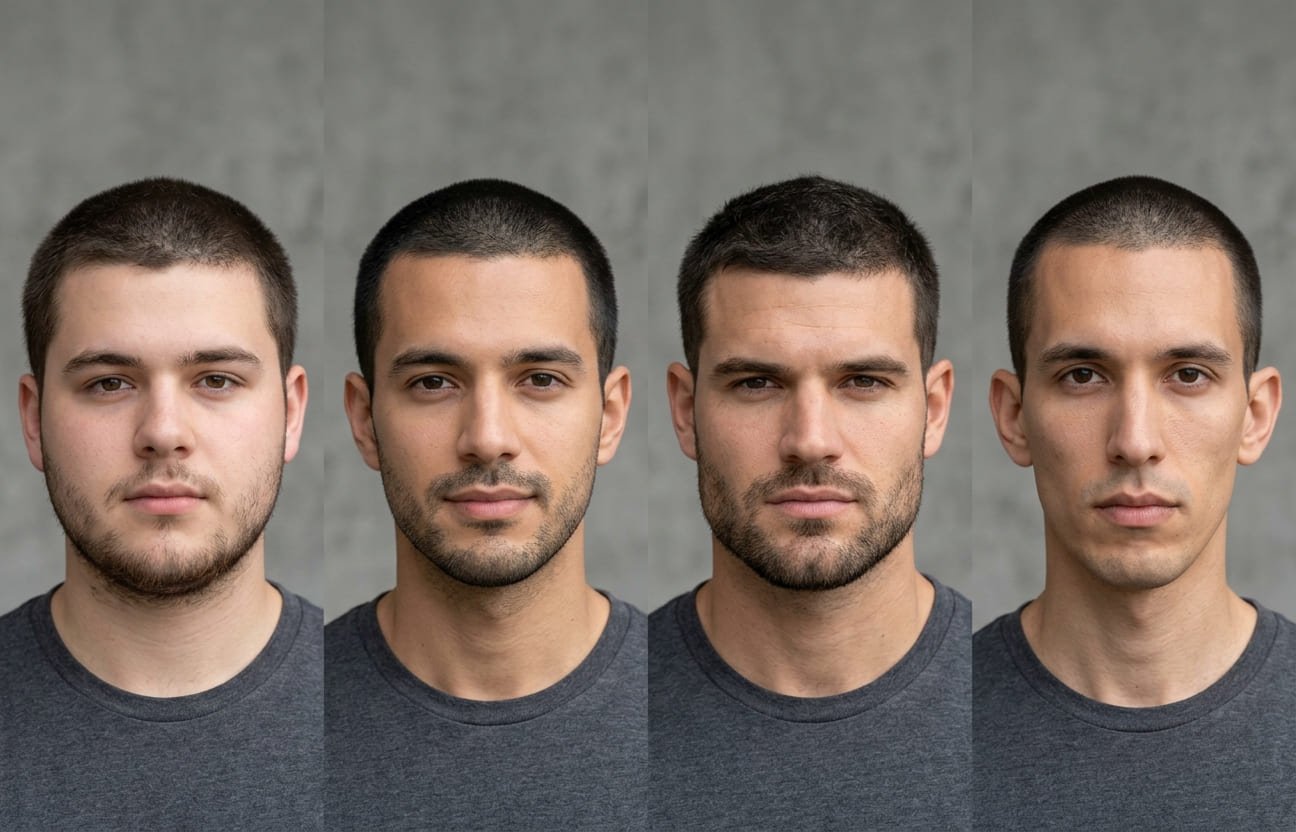
There is no single face shape that is automatically “right” or “wrong” for a #4. The important consideration is how the haircut works with your natural proportions.
| Face or Head Shape | What to Consider |
|---|---|
| Round | A taper or fade can add definition |
| Oval | Usually offers plenty of flexibility |
| Square | Short sides can emphasize the jaw and facial structure |
| Long/Oblong | Side length can help maintain visual balance |
| Uneven or prominent areas | A slightly longer, uniform cut may provide more coverage than an extremely short buzz |
If you have a prominent area, flat section, scar, or uneven contour on your scalp, discuss it with your barber before choosing an all-over buzz.
The goal is not to follow a rigid face-shape rule. It is to choose the length and side treatment that complement your actual proportions.
Is a #4 Buzz Cut Good for a Receding Hairline?
A #4 buzz cut does not hide a receding hairline, but it can make the haircut look deliberate and consistent.
Short hair makes the hairline easier to see because there is less length available to cover or blend it.
If you have a naturally high hairline, a #4 will not necessarily make it look worse. However, the hairline will remain visible.
The important point is that a #4 changes how your hair is presented; it does not change the underlying hairline.
Is a #4 Buzz Cut Good for Thinning Hair?
A #4 can be a practical option for some people with thinning hair because the short length creates a consistent overall appearance.

However, it does not restore density or completely hide significant thinning.
Scalp visibility depends on several factors, including:
- Hair density
- Hair color
- Skin tone
- Lighting
- Location of thinning
- Hair texture
If minimizing the appearance of thinning is your main goal, compare a #4 with nearby lengths such as a #3 and #5 before committing.
How Does a #4 Buzz Cut Change Your Hairline?
Short hair leaves less length to cover or blend the natural hairline.
With a receding hairline, the transition between hair and forehead may become more visible. With diffuse or crown thinning, scalp visibility can vary depending on density, color, lighting, and the location of the thinning.
A short cut can change the overall presentation, but it cannot change the underlying density or hairline.
What Should You Tell Your Barber?
Simply saying “give me a #4 buzz cut” may leave one important detail unclear: what should happen to the sides and edges?
Before the haircut begins, tell your barber whether you want:
- #4 all over
- #4 on top with a taper
- #4 on top with a low, mid, or high fade
- A tapered neckline
- A natural or cleaned-up neckline
- Natural or defined sideburns
- A line-up
- Your beard blended into the haircut
For a #4 all-over buzz
“I’d like a #4 all over, with a clean neckline and sideburns.”
For a #4 with a taper
“I’d like a #4 on top, with the sides tapered rather than keeping everything the same length.”
If the side treatment is important to you, show your barber a reference photo as well.
Can You Give Yourself a #4 Buzz Cut at Home?
Yes. A #4 all-over buzz cut is one of the simpler short hairstyles to attempt at home, provided you have reliable clippers and can properly check areas that are difficult to see.
How to Give Yourself a #4 Buzz Cut
- Start with clean, dry hair.
- Attach the #4 guard securely.
- Make sure the clipper and guard are working correctly.
- Begin in an easy-to-see area.
- Move the clippers slowly and consistently against the direction of hair growth.
- Make multiple passes from different directions.
- Use a mirror to inspect the back and sides.
- Check carefully around the ears and neckline.
- Inspect the entire haircut in good lighting.
- Remove any remaining loose hairs.
Do not assume that one pass will produce an even result. Different hair-growth directions can leave longer patches.
A fade or detailed taper is considerably harder to reproduce at home because it requires several lengths and careful blending.
For a first DIY buzz cut, an all-over #4 is much simpler than a #4 with a fade.
How Often Should You Trim a #4 Buzz Cut?
There is no single maintenance schedule that works for everyone.
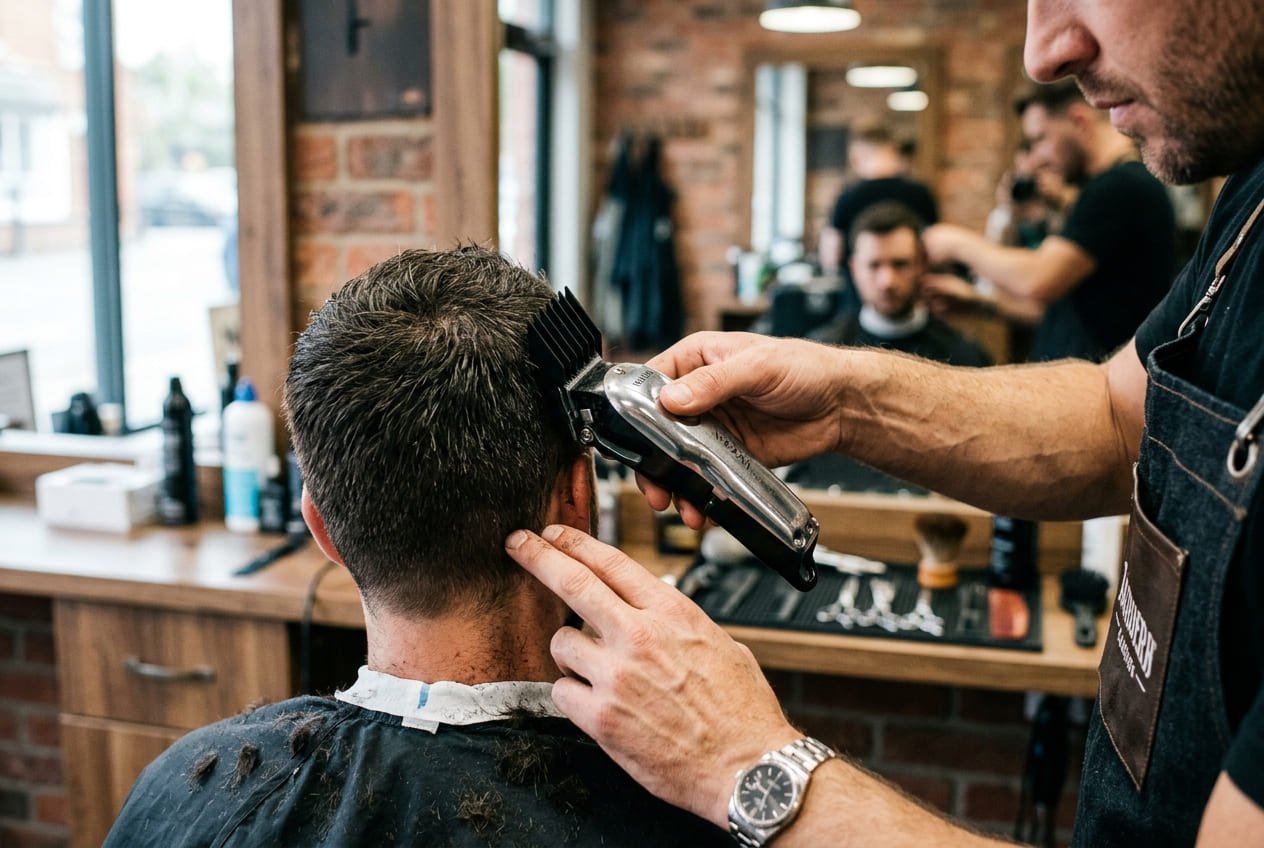
The right timing depends on how quickly your hair grows and how precise you want the haircut to remain.
Pay attention to:
- Hair growing around the ears
- Neckline growth
- Sideburns
- Uneven patches
- Fade or taper transitions
- Beard blending
An all-over #4 is generally easier to maintain than a faded #4 because you do not need to recreate a gradual transition between different lengths.
How to Maintain a #4 Buzz Cut
A #4 buzz cut is low-maintenance, not maintenance-free.
Keep the haircut looking clean by checking the neckline, sideburns, and areas around the ears regularly.
Basic hair and scalp care also matters. Keep the scalp clean, use appropriate hair products if needed, and protect exposed scalp from excessive sun exposure.
Is a #4 Buzz Cut Professional?
A #4 buzz cut can work in many professional and casual environments because it is clean, simple, and relatively conservative.
Workplace grooming standards vary, however.
For a conservative workplace, a #4 all over or #4 with a subtle taper is generally less dramatic than a high fade or highly defined line-up.
A clean neckline, tidy sideburns, and well-maintained facial hair can also make the overall haircut look more polished.
Common #4 Buzz Cut Mistakes to Avoid
1. Assuming every #4 is identical
Guard sizes and clipper systems can vary, so treat the #4 measurement as an approximate reference.
2. Ignoring head shape
A short haircut exposes more of the natural shape of the head. Check your head from multiple angles before choosing an all-over buzz.
3. Overlooking hair density and texture
A #4 on thick, dark hair can look very different from a #4 on fine, light, or thinning hair.
4. Not specifying the sides
“#4 buzz cut” does not automatically tell your barber whether you want #4 all over, tapered sides, or a fade.
5. Forgetting the neckline and sideburns
Small finishing details can make a significant difference to the polished appearance of a short haircut.
6. Attempting a complicated fade without experience
An all-over #4 is relatively straightforward. A clean fade requires more skill, tools, and control.
Frequently Asked Questions About #4 Buzz Cuts
How long is a #4 buzz cut?
A standard #4 clipper guard commonly leaves approximately 1/2 inch (13 mm) of hair, although exact measurements vary by clipper and blade system.
Is a #4 buzz cut considered short?
Yes. A #4 is a short haircut, but it is not one of the closest buzz-cut lengths. It leaves substantially more coverage than #1, #2, and #3 guards.
Does a #4 buzz cut show your scalp?
It can. Scalp visibility depends on hair density, hair color, skin tone, lighting, and thinning. A #4 generally provides more coverage than shorter buzz-cut guards.
Is a #4 good for thinning hair?
It can be a practical option for some people with thinning hair because it creates a consistent short appearance. However, it cannot restore lost density or completely conceal significant thinning.
What is the difference between a #3 and #4 buzz cut?
A #3 commonly leaves about 3/8 inch, while a #4 commonly leaves about 1/2 inch. The #4 therefore provides slightly more coverage and usually looks less close to the scalp.
Can you get a fade with a #4 buzz cut?
Yes. You can keep the longer section at #4 while the sides transition through shorter clipper lengths into a low, mid, or high fade.
Can you get a taper with a #4 buzz cut?
Yes. A #4 can be combined with a taper around the sideburns and neckline for a more subtle transition.
Is a #4 good for a first buzz cut?
For many first-time buzz-cut users, a #4 can be a comfortable starting point because it removes substantial length while leaving more coverage than shorter guards.
Can you cut a #4 buzz cut yourself?
Yes. An all-over #4 is relatively simple to do at home with reliable clippers and a securely attached guard. A fade or detailed taper is more difficult.
How often should you trim a #4 buzz cut?
Trim it whenever the growing length starts to change the appearance you want. Faster-growing hair may require more frequent maintenance.
Final Verdict: Is a #4 Buzz Cut Right for You?
A #4 buzz cut is a useful middle ground between a very close buzz and a longer hairstyle.

At approximately 1/2 inch (13 mm) on many standard clippers, it provides more coverage than #1, #2, and #3 guards while remaining short, clean, and easy to maintain.
A #4 may be a particularly good choice if you:
- Want a low-maintenance haircut
- Prefer more coverage than a very short buzz
- Are trying a buzz cut for the first time
- Want the option of an all-over cut, taper, or fade
- Prefer a clean and simple hairstyle
Before choosing it, consider your hair density, texture, hairline, face shape, and head shape. Also decide whether you want the #4 all over or shorter sides.
If you’re unsure, starting with a #4 is often the safer approach. Show your barber a reference photo and clarify the side treatment before the clippers come out.
You can always go shorter, but you cannot immediately add length back.

Harry is a hair and beauty content creator at HairGlowBlog, sharing practical tips on hairstyles, hair care, hair styling, and beauty trends. Her content focuses on easy hairstyle ideas, hair care routines, styling tips, and inspiration for different hair types and occasions.



Leave a Reply