
If you have thick or dense hair, a pixie cut can make your daily routine feel simpler—but the right shape matters. Short hair does not automatically mean low maintenance. The way a pixie is layered, tapered, textured, and shaped around your natural hair texture can affect how much styling it needs.
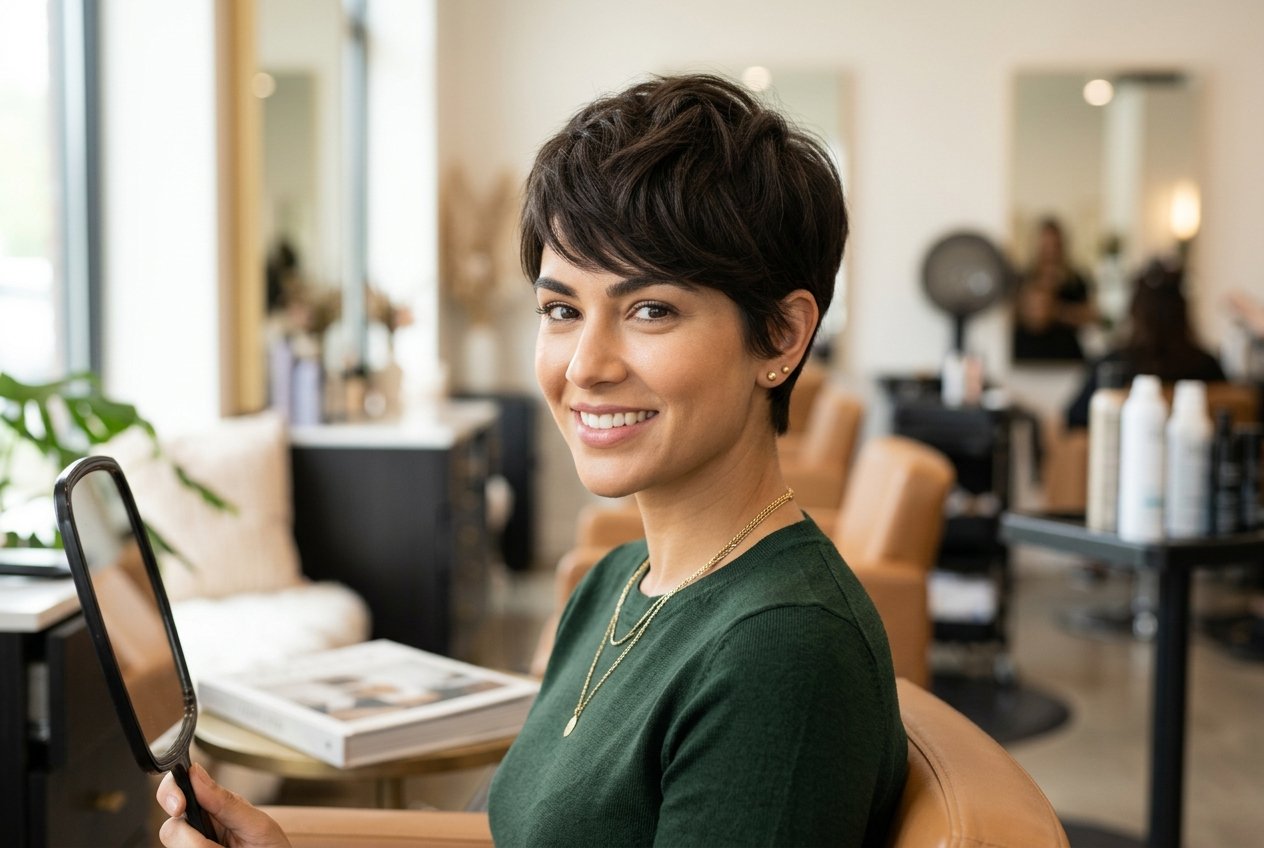
The goal is to choose a cut that works with your hair rather than constantly fighting it. Whether your hair is straight, wavy, curly, coarse, or very dense, there are low maintenance thick hair pixie cuts that can help control bulk while keeping the style modern and wearable.
What Makes a Pixie Cut Low Maintenance for Thick Hair?
A low-maintenance pixie usually means less effort in your everyday styling routine. It does not necessarily mean fewer salon visits.
For thick hair, haircut structure can make a major difference. Strategic layering, tapering, texturing, or weight removal can help create a shape that feels lighter and easier to style. The amount of length left on top and around the sides also affects how the hair behaves.

It is useful to separate two types of maintenance:
- Daily maintenance: How much washing, drying, brushing, and styling the haircut requires.
- Salon maintenance: How often the haircut needs reshaping to keep its intended silhouette.
A very short, precise pixie may be quick to style but need more regular reshaping. A longer pixie may offer a softer grow-out and more styling flexibility.
Thick hair can also benefit from going shorter when the cut is designed around its density and natural texture. The objective is not simply to remove as much hair as possible. It is to create a balanced shape that controls unwanted bulk without making the hair difficult to manage.
How to Choose a Pixie Cut for Your Hair Density and Texture
The same pixie cut can look and behave very differently depending on hair texture. Before choosing a photo, consider how your hair naturally dries and where it tends to create the most volume.

Thick, Straight Hair
Thick straight hair can hold a clean pixie shape well, but excess weight may create a dense or heavy appearance around the sides and crown.
A tapered pixie can help create a cleaner outline, while internal layering can provide movement without making the outer shape excessively short. A textured or choppy finish can also make the ends appear less heavy.
If you prefer a polished look, leaving some length on top gives you room to use a styling cream or matte product. If you want a simpler routine, ask your hairstylist how the cut will behave when air-dried.
Thick, Wavy Hair
Thick wavy hair can add natural movement to a pixie, but waves may also make the shape appear fuller as the hair dries.
A textured pixie with enough room for the natural wave pattern can be easier to manage than a highly precise shape that requires constant reshaping. The sides and nape can be tapered while the top remains long enough to show the texture.
For an easy routine, a lightweight styling cream or mousse may help define the natural wave without making the hair feel overly coated.
Thick, Curly Hair
A curly pixie should be planned around the curl pattern rather than treated like straight hair cut to the same length.
Curly thick hair can have significant natural volume, so the placement of layers and the amount of length left in different areas matter. A stylist familiar with curly hair can help determine where the shape needs more room and where reducing weight may be useful.
A curly pixie can work particularly well when the haircut allows the natural texture to become part of the finished style instead of requiring the curls to be straightened first.
Thick, Coarse or Very Dense Hair
Very dense or coarse hair can feel especially bulky when the haircut does not account for its internal weight.
Techniques such as internal layering, tapering, and controlled texturing may help create a more manageable silhouette. The goal is a shape that distributes the density rather than simply making every section extremely short.
If your hair tends to become puffy after drying, tell your stylist how it behaves naturally. That information can be more useful than showing a picture of a pixie worn on a completely different hair texture.
Pixie Cut Features That Help Control Thick-Hair Bulk
Several haircut features can be discussed with your stylist when your main concern is excess volume or weight.
| Haircut feature | What it can help with | Potential benefit |
|---|---|---|
| Tapered sides | Excess side volume | Cleaner silhouette |
| Tapered nape | Heavy or bulky neckline | More defined shape |
| Internal layering | Dense interior weight | More movement |
| Texturing | Heavy-looking ends | Softer finish |
| Longer top | Limited styling options | More versatility |
These techniques are not interchangeable, and more texturing is not automatically better. The right approach depends on your hair’s density, texture, growth pattern, and the shape you want to maintain.

For example, someone with thick straight hair may want a structured taper and controlled internal layering, while someone with thick wavy hair may want enough length to let the natural texture form the shape.
Low-Maintenance Pixie Variations to Consider
There is no single version of a low maintenance pixie cut for thick hair. Different variations can suit different textures, styling habits, and maintenance preferences.
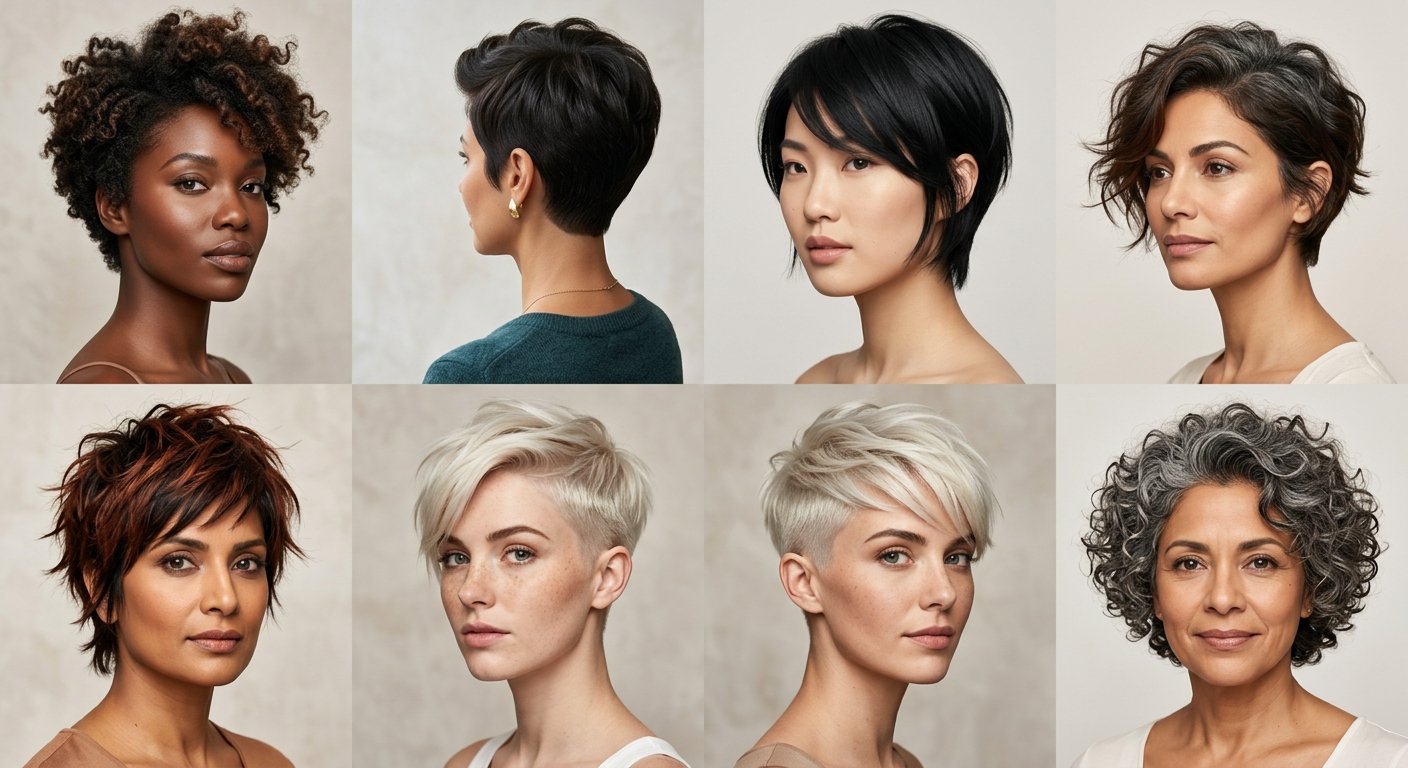
Textured Pixie
A textured pixie uses varied lengths and movement to create a less rigid finish. It can be useful when you want thick hair to look lighter and more piecey rather than forming one dense shape.
Good to discuss for: thick straight, wavy, or moderately coarse hair.
Bulk control: Moderate to high, depending on the haircut structure.
Daily styling: Often adaptable to a simple textured finish.
Trim considerations: The more defined the shape, the more noticeable changes may become as it grows.
Tapered Pixie
A tapered pixie keeps the sides and/or nape shorter while maintaining more length elsewhere. This can create a cleaner outline and help reduce fullness around the perimeter.
Good to discuss for: thick straight, wavy, and dense hair.
Bulk control: Strong around tapered areas.
Daily styling: Can be relatively simple when the top is allowed to follow its natural texture.
Trim considerations: A crisp taper may require reshaping more often than a softer grow-out style.
Longer Pixie
A longer pixie keeps additional length on top or around the sides. It can offer more styling flexibility and provide a useful middle ground between a traditional short pixie and a bixie.
Good to discuss for: people who want versatility or are nervous about going extremely short.
Bulk control: Depends on how the additional length is layered and shaped.
Daily styling: Offers more options, including textured, swept, or softer finishes.
Trim considerations: The shape may remain wearable as it grows compared with a highly precise short cut.
Choppy Pixie
A choppy pixie uses visible variation in length to create a casual, separated finish. On thick hair, the technique can help prevent the haircut from looking like one solid mass.
Good to discuss for: thick straight or wavy hair and anyone who likes a less polished finish.
Bulk control: Can help visually break up density.
Daily styling: Often works well with a small amount of texturizing product.
Trim considerations: The choppy effect can change as different sections grow.
Undercut Pixie
An undercut pixie keeps a selected area significantly shorter underneath the longer sections. It can be considered when excess density underneath contributes to unwanted fullness.
Good to discuss for: very dense hair where hidden weight is a concern.
Bulk control: Can reduce fullness in the specific area that is cut shorter.
Daily styling: The longer top may still require styling depending on its length and texture.
Trim considerations: The shorter section needs reshaping if you want to maintain a distinct undercut.
Curly or Wavy Pixie
A curly or wavy pixie is shaped around natural movement rather than relying on a straightened finish.
Good to discuss for: thick wavy and curly hair.
Bulk control: Depends heavily on curl pattern, length, and layer placement.
Daily styling: Can be simple when the natural texture is part of the intended shape.
Trim considerations: Your stylist may need to account for how the texture changes the visible length as it grows.
How Face Shape Can Influence Your Pixie Choice
Face shape can help guide the overall proportions of a pixie, but it should not be the only factor. Hair density, texture, hairline, growth pattern, and styling preferences also matter.
Round Face
If you have a round face, you may prefer a pixie that creates some visual height or length through the top. Keeping excessive fullness directly at the widest areas of the face may affect the overall balance.
Your stylist can adjust the top, sides, and fringe based on your facial proportions and natural hair density.
Oval Face
An oval face can work with many pixie proportions, which gives you room to focus more heavily on your hair texture and desired maintenance level.
For thick hair, the practical question is still how the cut will control bulk and behave between washes.
Square Face
For a square face, the balance between the sides, crown, fringe, and overall length can influence how the haircut frames the face.
Some people may prefer softer texture around the face, while others may like a sharper, more structured pixie. Your natural texture should be considered before deciding how much softness or definition to build into the cut.
Heart or Diamond Face
With heart- or diamond-shaped faces, the placement of volume and length can influence the overall balance of the haircut.
A longer top, textured fringe, or softer side shape may be considered depending on your features and hair texture. For thick hair, these choices should still be balanced with the need to manage density.
How Much Daily Styling Does a Thick-Hair Pixie Really Need?
A pixie can be quick to style, but the actual routine depends on your hair texture and the haircut’s structure.

Air-Drying
Air-drying may be a practical option when your haircut is designed to work with your natural texture. Thick wavy or curly hair may be shaped with a lightweight product while damp and then left to dry naturally.
Straight thick hair may also air-dry easily, but the finished shape depends on the cut and how the hair naturally falls.
Quick Blow-Drying
A short blow-dry can help direct thick hair into the desired shape. A nozzle and your fingers or a small brush can be used to guide the hair without turning the routine into a lengthy styling session.
Polished Styling
If you prefer a sleek or highly controlled pixie, expect more styling than someone who embraces natural texture. A styling cream, mousse, texturizing product, or matte paste can help create different finishes.
A simple low-effort routine might look like this:
- Wash or refresh the hair.
- Apply a small amount of lightweight styling product.
- Shape the top and fringe with your fingers.
- Air-dry or quickly blow-dry.
- Add a small amount of finishing product only where needed.
Before committing to a cut, ask: “Will this particular shape work with the way my hair naturally dries and the amount of styling I want to do?”
What to Ask Your Hairstylist Before Getting a Pixie
A good consultation can help you avoid choosing a pixie based only on how it looks in a photograph.
Useful terms to discuss include:
- Tapering: Gradually shortening an area, often around the sides or nape.
- Texturizing: Adjusting the appearance and feel of the hair to create movement or a softer finish.
- Internal layering: Creating variation within the interior of the haircut rather than relying only on the visible outer layers.
- Weight removal: Reducing excess density in selected areas while maintaining the overall shape.
You can also ask:
- Where does my hair carry the most weight?
- How will this cut behave with my natural texture?
- Which areas should stay longer to make styling easier?
- How will the cut look as it grows?
- Can I air-dry this shape?
- How much daily styling will it realistically require?
- Which areas will need the most frequent reshaping?
A useful salon consultation might sound like:
“I want to reduce the bulk of my thick hair and keep the daily styling simple while working with my natural texture.”
That gives your stylist information about both your hair and your lifestyle.

How Often Does a Thick-Hair Pixie Need a Trim?
There is no single trim schedule that works for every thick-hair pixie.
A very short or highly precise haircut may show changes in shape sooner as the hair grows. A longer or softer pixie may offer more flexibility during the grow-out period.
Your growth rate, haircut length, taper, texture, and preferred level of precision all affect how often you may want a reshaping appointment.
If maintaining a sharp silhouette is important to you, ask your stylist how quickly the particular shape is likely to lose its intended outline. If you prefer fewer salon visits, a softer pixie with a more forgiving grow-out may be worth discussing.
Styling Products That Can Keep a Thick Pixie Manageable
The best styling product depends on your texture and the finish you want. With thick short hair, using too much product can make the hair feel heavy or create unnecessary buildup.
Lightweight Styling Cream
A lightweight cream can be useful when you want some control without a stiff finish. It may work well for thick wavy or curly hair when the goal is to support natural movement.
Texturizing Products
Texturizing products can add separation and definition. They can be useful for choppy or textured pixie cuts when you want individual sections to look more defined.
Mousse
Mousse can provide lightweight styling support and may suit people who want movement without a heavy finish. The amount needed depends on hair density and length.
Matte Styling Products
A matte paste or similar product can help create definition in straight or textured pixies. Start with a small amount and add more only if necessary.
For thick hair, product choice should support the haircut rather than compensate for a shape that does not work with your natural texture.
Common Thick-Hair Pixie Problems and How to Prevent Them
Even a short haircut can become difficult to manage when its shape does not match the hair underneath it.
Excess Side Volume
If thick hair expands around the sides, the silhouette may look wider than intended. Discuss whether tapering or controlled weight removal could help.
Bulky Crown
Too much density around the crown can create unwanted fullness. Your stylist can assess whether internal layering or another structural adjustment would make the area easier to manage.
Puffy Shape
Hair that becomes larger after drying may need a shape designed around its natural behavior. This is particularly important for thick wavy or curly hair.
Difficult Nape
The nape can become heavy or unruly when thick hair grows out. A tapered or softer nape can be discussed depending on how often you want to maintain the cut.
Unwanted Triangle or Helmet-Like Silhouette
When the sides become wider while the top remains relatively flat, a pixie can lose its intended proportions. Showing your stylist how your hair normally dries can help them plan the shape around that behavior.
Styling Taking Longer Than Expected
A pixie may be short but still require daily styling if the haircut depends on heat tools, strong product, or precise shaping. Be honest about how much time you want to spend on your hair before choosing the cut.
What Happens When a Low-Maintenance Pixie Starts Growing Out?
Grow-out is part of the decision, especially if you do not want frequent salon appointments.
Thick hair can feel fuller during the transition because areas that were tapered or shortened begin gaining length. Your natural texture may also become more noticeable.
| Grow-out stage or feature | What you may notice |
|---|---|
| Very short sides | The shape may change quickly as length returns |
| Longer top | More styling flexibility |
| Thick sides | The sides may feel fuller during transition |
| Longer pixie stage | A possible bridge toward a bob |
| Natural texture | Texture may become more visible as length increases |
If you already know that you eventually want longer hair, tell your stylist before getting the pixie. A longer pixie can sometimes provide a more gradual transition than a highly cropped shape.
The grow-out does not have to be treated as an afterthought. It can be part of the original haircut plan.

How to Decide Which Thick-Hair Pixie Fits Your Lifestyle
Instead of choosing a haircut based only on appearance, match the cut to your routine.
If You Want the Shortest Routine
Consider a shape that works with your natural texture and does not require precise daily styling. Discuss how the hair will behave immediately after washing and as it dries.
If You Want Styling Flexibility
A longer pixie can leave more length for sweeping, texturing, or changing the direction of the top.
If You Prefer to Air-Dry
Your haircut should accommodate your natural texture. Wavy and curly hair may benefit from a shape that allows the texture to form naturally rather than requiring a smooth finish.
If You Exercise Frequently
Consider how often you wash, refresh, or restyle your hair. A simple textured pixie may fit a frequent-wash routine differently from a highly polished style.
If You Want Fewer Salon Visits
Ask about a softer shape that can remain wearable as it grows. Highly precise tapers and short outlines may need more frequent reshaping to maintain their original appearance.
If You Plan to Grow Your Hair Longer
Discuss the eventual grow-out before the first cut. A longer pixie or bixie-style transition may give you more length to work with as you move toward a bob or another longer style.
The most useful choice is the one that matches your hair, schedule, styling habits, and willingness to maintain the shape.
Mistakes to Avoid When Choosing a Pixie for Thick Hair
Choosing Solely From a Photo
A hairstyle photograph shows a particular person’s hair texture, density, growth pattern, and styling. Your hair may respond differently even when the haircut looks similar.
Ignoring Texture
Thick straight, wavy, curly, and coarse hair do not behave identically. Your natural texture should be part of the haircut decision.
Removing Too Much or Too Little Weight
Thick hair often needs thoughtful weight management, but removing more hair is not automatically the solution. The shape still needs enough structure to look balanced.
Assuming Short Means Maintenance-Free
A short haircut can reduce daily styling while still requiring regular reshaping. Make sure you understand both types of maintenance before committing.
Forgetting the Grow-Out
Think about what happens after the haircut is no longer at its freshest. If you want longer hair later, discuss that plan with your stylist.
Not Communicating Your Styling Habits
Tell your stylist whether you air-dry, blow-dry, use styling products, exercise frequently, or prefer to spend very little time on your hair. Those details can influence the most practical haircut structure.
Frequently Asked Questions About Low Maintenance Thick Hair Pixie Cuts
Is a pixie cut good for thick hair?
A pixie can work well with thick hair when its structure is designed around the hair’s density and texture. Tapering, layering, and controlled texturing may help manage unwanted bulk, but the right approach depends on the individual hair type.
What is the easiest pixie to maintain with thick hair?
There is no single easiest pixie for everyone. A textured or longer pixie may provide flexibility, while a tapered pixie can create a cleaner outline. The practical choice depends on how your hair behaves naturally and how much daily and salon maintenance you want.
How do you make thick hair less bulky in a pixie?
Discuss targeted weight removal, internal layering, tapering, or texturing with your stylist. The technique should be chosen based on where your hair is most dense and how it behaves as it dries.
Can thick curly or wavy hair work with a pixie?
Yes, a pixie can be designed around thick curly or wavy hair. The haircut should account for the natural texture, curl or wave pattern, and the way the hair changes as it dries.
How often should you trim a thick-hair pixie?
It depends on the haircut’s length and precision, your growth rate, and how closely you want to maintain the original shape. Very precise short styles may require reshaping sooner than longer, softer pixies.
Can a thick-hair pixie be air-dried?
It can be, provided the haircut is designed to work with your natural texture and desired finish. Wavy and curly hair may be especially suitable for a natural-texture approach, while straight thick hair may still need some direction or product depending on the shape.
Is a longer pixie easier to grow out?
A longer pixie can provide more length during the transition and may offer additional styling options. Whether it feels easier to grow out depends on your hair texture, density, desired final length, and how you manage the changing shape.
Final Takeaway: Choosing a Pixie That Works With Your Thick Hair
The right low maintenance thick hair pixie cut is less about choosing the shortest style and more about choosing a shape that works with your density, texture, styling habits, and maintenance preferences.
Thick straight hair may benefit from controlled structure and texture. Thick wavy or curly hair may work best when the cut respects natural movement. Very dense or coarse hair may need thoughtful weight management to prevent excessive bulk.

Face shape and personal style can help refine the choice, but they should come after practical considerations such as how your hair dries, how much styling you want to do, and how often you are willing to maintain the cut.
Before your appointment, tell your stylist how you normally wear your hair and how much time you want to spend on it. Discuss bulk control, natural texture, tapering, layering, and your preferred grow-out plan. A well-planned pixie should not simply look good on the day of the haircut—it should make sense for the way you actually live with your thick hair.

Harry is a hair and beauty content creator at HairGlowBlog, sharing practical tips on hairstyles, hair care, hair styling, and beauty trends. Her content focuses on easy hairstyle ideas, hair care routines, styling tips, and inspiration for different hair types and occasions.


Leave a Reply