

What Makes a Wolf Cut With Bangs So Popular?
A wolf cut with bangs blends shag-inspired layers, natural-looking texture, volume, and face-framing fringe into one versatile haircut. It can look soft and casual or bold and edgy depending on the length of the layers and the type of bangs.
Part of its appeal is how customizable it can be. A short, choppy version creates a more dramatic look, while longer layers and curtain-style bangs can feel softer and easier to wear. The cut can also be adapted to straight, wavy, curly, and coily hair.
The right version depends less on copying a specific photo and more on matching the cut to your hair texture, density, face shape, preferred length, and willingness to style it.
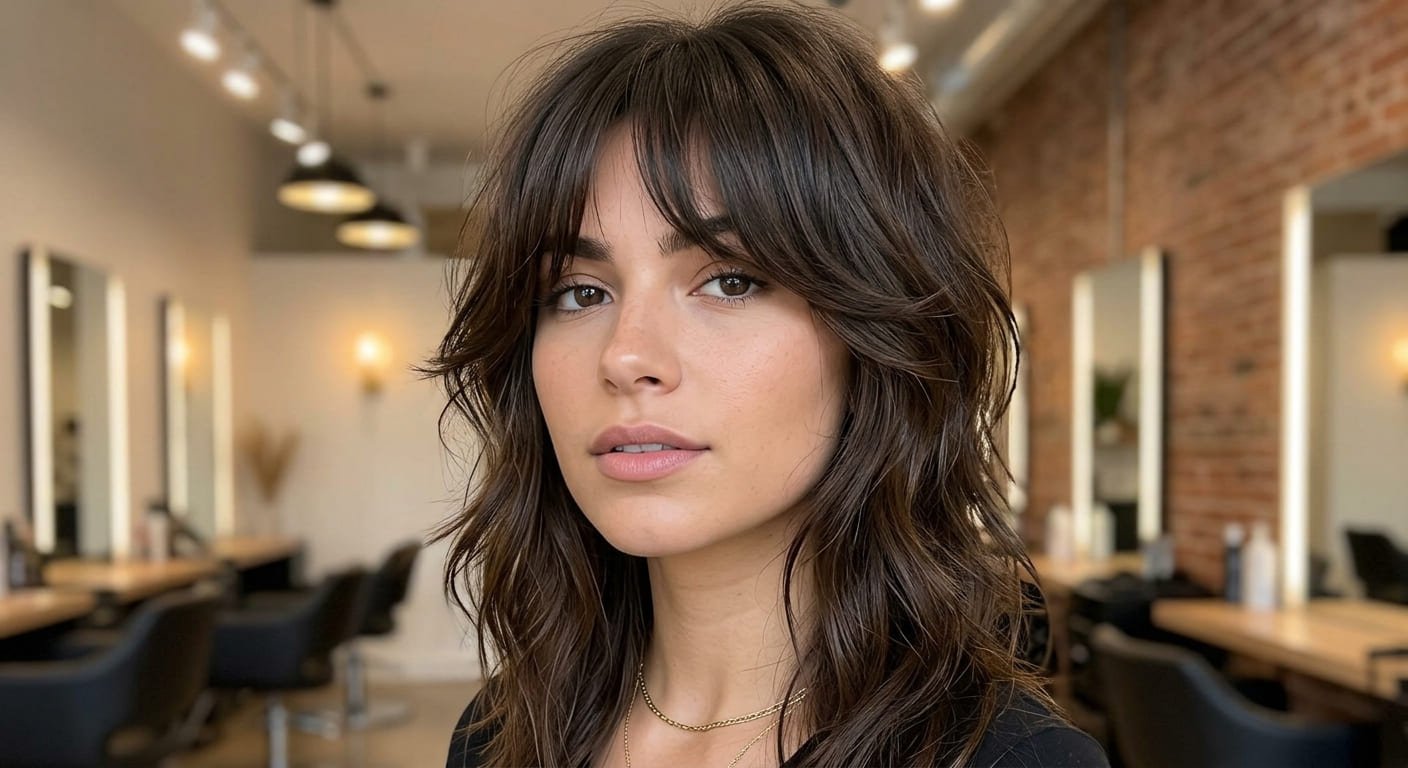
How to Choose the Right Wolf Cut With Bangs for You
Before choosing a specific style, consider five things: hair texture, hair density, face shape, current length, and maintenance preferences.
Someone with naturally wavy hair may be able to rely on their existing texture for movement, while someone with straight hair may need more styling to create a similarly tousled finish. Fine hair may also need a different layering approach than very thick hair.
Your lifestyle matters too. If you want a wash-and-go haircut, very short or highly structured bangs may require more daily attention than longer, softer fringe.
| What matters | What to consider |
|---|---|
| Hair texture | Straight, wavy, curly, or coily |
| Hair density | Fine, medium, or thick |
| Face shape | Round, oval, heart, square, long, or diamond |
| Hair length | Short, medium, shoulder-length, or long |
| Maintenance | How often you want trims and styling |
| Bang preference | Soft, wispy, curtain, blunt, or dramatic |
The best wolf cut is one that works with your natural hair rather than fighting it every morning.
Wolf Cut Bang Styles: Which Fringe Fits Your Look?
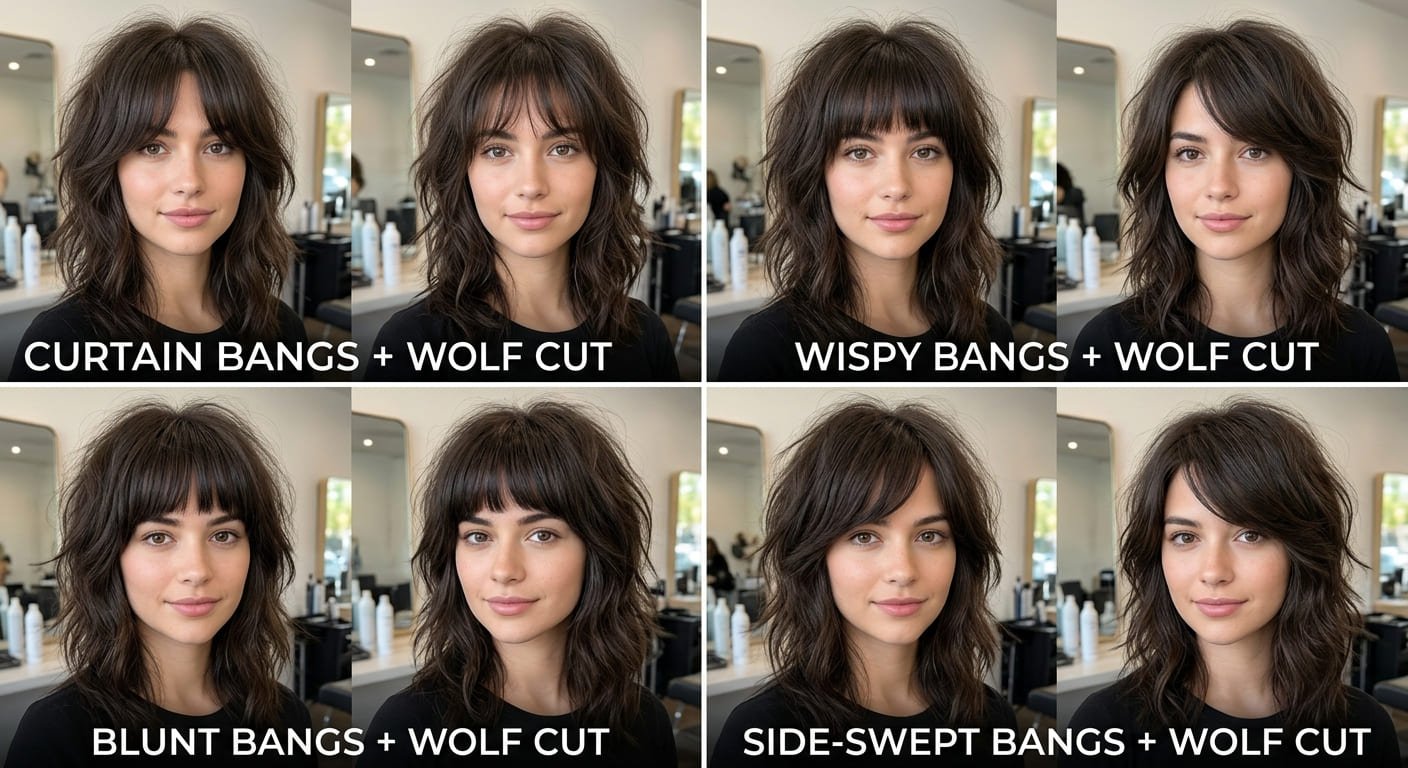
Curtain and Bottleneck Bangs
Curtain bangs and bottleneck bangs are useful choices when you want a softer transition between the fringe and the rest of the haircut. They can open around the forehead and blend into face-framing layers.
They are also worth considering if you’re unsure about committing to very short bangs. Longer sections around the face generally give you more flexibility as the fringe grows.
Wispy and Piecey Bangs
Wispy bangs create a lighter, less solid fringe. Piecey bangs can add separation and texture, which works naturally with the undone appearance often associated with wolf cuts.
This can be a good direction if you want bangs without creating a heavy line across the forehead.
Blunt, Baby, and Micro Bangs
Blunt, baby, and micro bangs create a much stronger visual statement. They can make the haircut feel more alternative or fashion-forward.
The trade-off is commitment. Short fringe has less room for styling adjustments while it grows, so it’s worth discussing the desired length carefully with your hairstylist before cutting.
Side-Swept and Longer Bangs
Longer, side-swept bangs offer another softer option. They can be incorporated into the surrounding layers and are often easier to transition if you eventually decide that you don’t want a defined fringe.
| Bang type | Visual effect | Maintenance | Styling effort | Grow-out |
|---|---|---|---|---|
| Curtain | Soft and face-framing | Low–medium | Low–medium | Easier |
| Wispy | Light and airy | Medium | Low–medium | Moderate |
| Bottleneck | Modern and tapered | Medium | Medium | Moderate |
| Blunt | Defined and bold | Medium–high | Medium | More noticeable |
| Micro | Dramatic and edgy | High | Medium | More challenging |
| Side-swept | Soft and flexible | Low–medium | Low | Easier |
These categories are general guidelines. Your hair texture, density, and styling routine can change how much work each variation requires.
The Best Wolf Cut With Bangs for Every Hair Texture
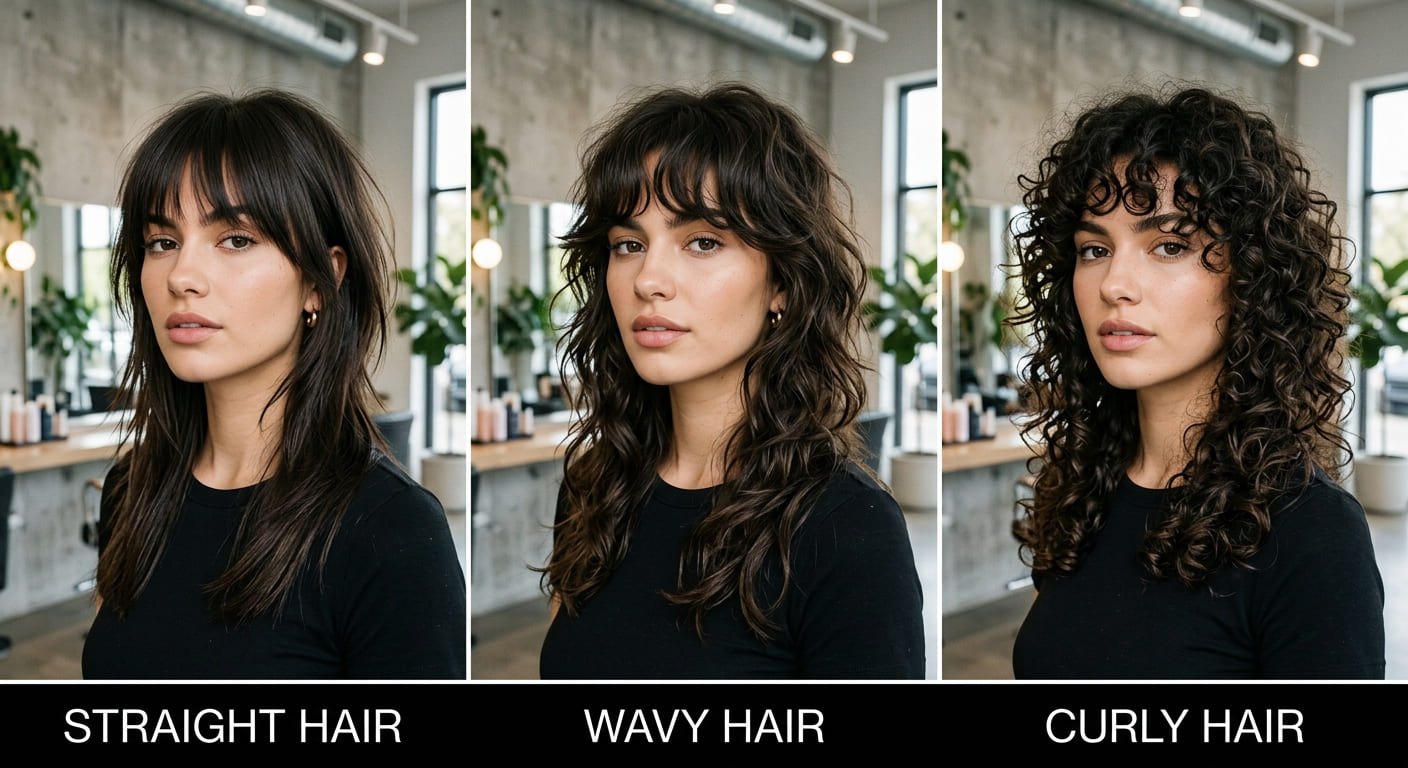
Straight Hair
Straight hair can make the layers and fringe of a wolf cut especially visible. If your hair naturally falls flat, your stylist may need to consider how much layering is appropriate for the amount of volume you have.
A texturizing product or light blow-drying can help create separation and movement when desired.
Wavy Hair
Wavy hair can naturally support the tousled movement associated with a wolf cut. The goal is usually to work with the existing wave rather than trying to make every section perfectly uniform.
A lightweight styling product can help define the natural pattern while keeping the layers from looking overly polished.
Curly and Coily Hair
Curly and coily hair can absolutely be adapted to a wolf-cut shape, but the haircut needs to account for the hair’s natural pattern and shrinkage.
Bang length is particularly important because curls can appear considerably shorter once they return to their natural shape. Your stylist should consider how your hair behaves when dry and styled, not just how long it appears when stretched or wet.
An individualized approach is especially important when working with highly textured hair.
Wolf Cut With Bangs for Fine, Medium, and Thick Hair
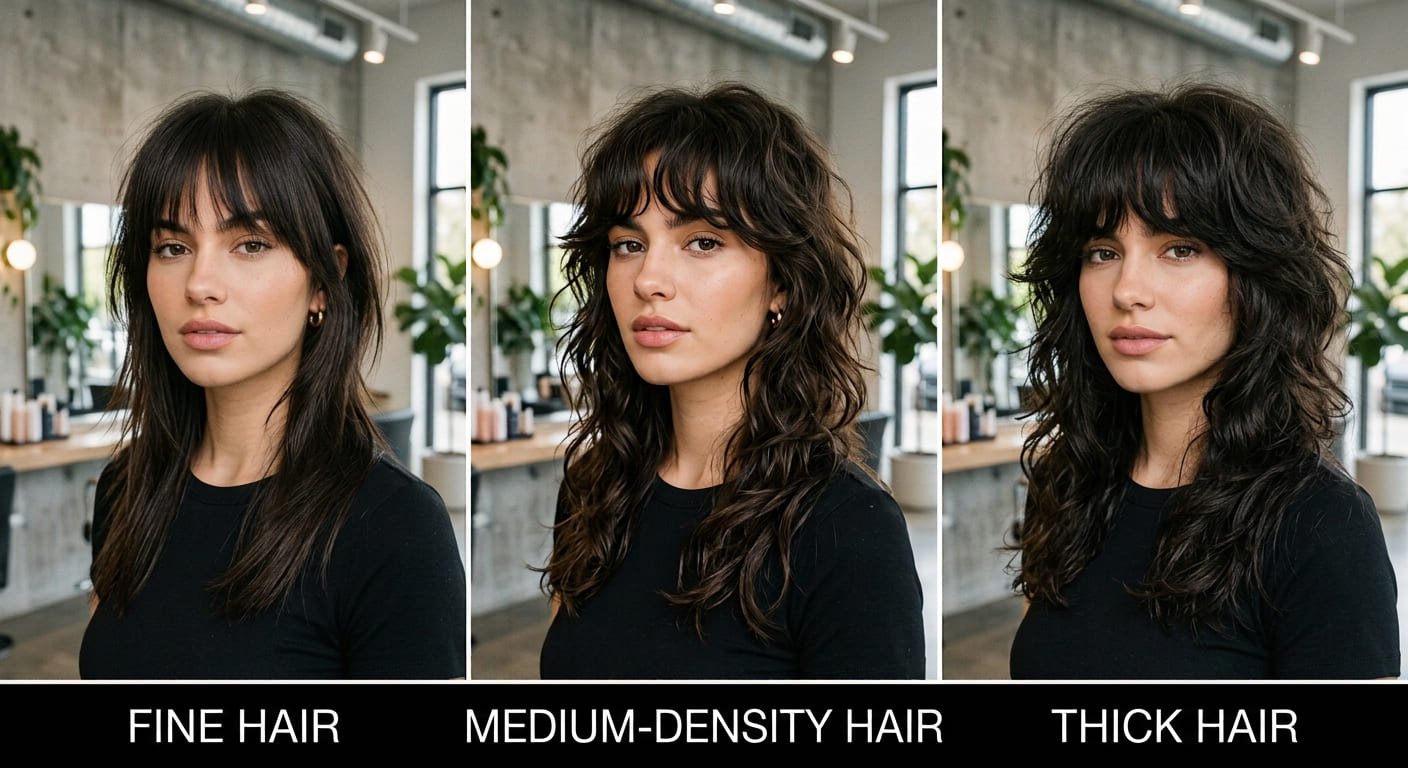
Hair texture and hair density are different things. Two people can both have straight hair while having very different amounts of hair.
With fine or low-density hair, excessive layering can sometimes remove too much visual fullness. A more controlled approach can preserve the appearance of density while still adding movement.
With medium-density hair, there is generally more flexibility in deciding how much texture and layering you want.
With thick hair, layers can help manage weight and create movement, but the placement and amount of layering should be tailored to the individual’s hair.
The goal isn’t simply to add as many layers as possible. It’s to create the desired shape while keeping the hair manageable.
Matching the Haircut to Your Face Shape
Round Face
If you have a round face, consider how the fringe and face-framing layers distribute visual weight around the face. Longer, softer pieces can create a more elongated-looking frame than a very wide, heavy fringe.
Oval Face
Oval faces can work with a broad range of fringe and layering approaches. Your choice can therefore focus more heavily on your preferred aesthetic and hair characteristics.
Heart-Shaped Face
A softer fringe and face-framing layers can help balance the visual proportions of the forehead and lower face. Curtain-style or tapered bangs may be worth discussing with your stylist.
Square Face
If you prefer a softer appearance, wispy or textured fringe can create a less rigid frame around the forehead and cheek area.
Long or Oblong Face
A fuller or more noticeable fringe can visually reduce the amount of forehead length that is exposed. The exact bang width and length should be adjusted to your proportions.
Diamond Face
Face-framing pieces can help emphasize the overall shape without creating excessive width at the cheekbones. A stylist can adjust the fringe and layers based on your individual proportions.
| Face shape | Bang considerations | Layering considerations |
|---|---|---|
| Round | Softer, longer, or more open fringe | Face-framing length can add vertical movement |
| Oval | Many options can work | Choose based on desired style |
| Heart | Soft or tapered fringe | Face-framing pieces can create balance |
| Square | Wispy or textured options | Softer movement can reduce a rigid effect |
| Long/oblong | Fuller or more noticeable fringe | Consider horizontal visual balance |
| Diamond | Flexible fringe with careful framing | Avoid unnecessary bulk around the widest areas |
These are starting points rather than strict rules. Individual facial proportions and personal style matter more than fitting neatly into one category.

Short, Medium, or Long: Which Wolf Cut Length Works Best?
A short wolf cut can feel bold and highly textured. It may suit someone who wants a noticeable transformation and doesn’t mind a stronger haircut shape.
A medium or shoulder-length wolf cut provides a middle ground. It can retain enough length for styling flexibility while still showing off the layered shape.
A long wolf cut keeps more length through the lower sections while adding shorter layers and movement higher up. This can be a useful choice for someone who wants the wolf-cut effect without giving up substantial length.
Your current haircut also matters. Moving from a very long, minimally layered style to a heavily layered short wolf cut is a much bigger change than adding subtle layers and longer bangs.
How Much Maintenance Does a Wolf Cut With Bangs Need?
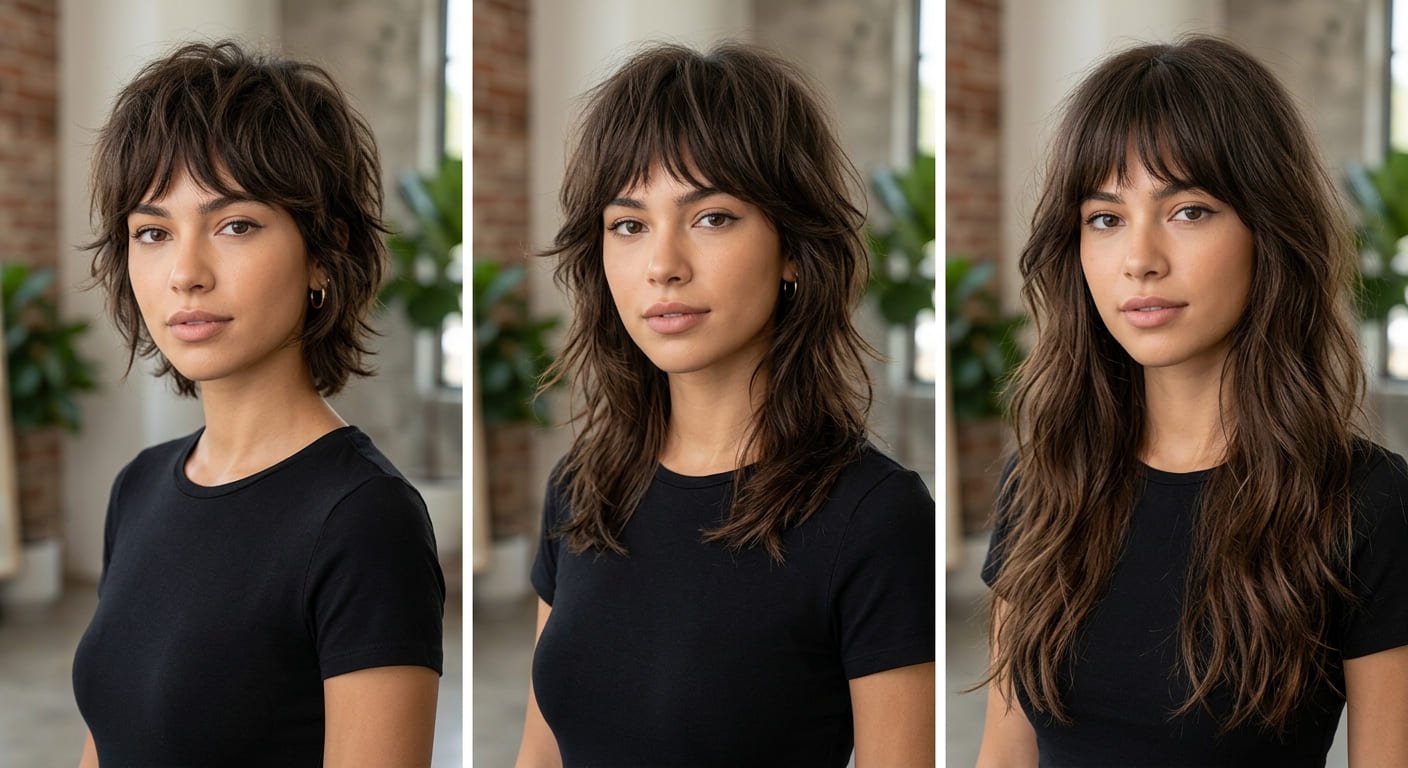
Maintenance depends heavily on the fringe and how precisely you want the haircut to retain its original shape.
Bangs often need attention sooner than the rest of the haircut because small changes in length can noticeably affect their appearance. Very short bangs typically require more commitment than longer curtain or side-swept styles.
The layers themselves can usually be allowed to grow, but the overall shape may gradually become softer and less defined.
| Variation | Bang maintenance | Overall maintenance | Styling effort |
|---|---|---|---|
| Long curtain fringe | Lower | Low–medium | Low–medium |
| Wispy fringe | Medium | Medium | Low–medium |
| Bottleneck fringe | Medium | Medium | Medium |
| Blunt fringe | Medium–high | Medium | Medium |
| Micro fringe | High | Medium | Medium–high |
| Highly textured wolf cut | Medium | Medium–high | Medium–high |
Your stylist can recommend a maintenance schedule based on how quickly your hair grows and how closely you want to maintain the original shape.
How to Style a Wolf Cut With Bangs at Home
Air-Drying for Natural Texture
If your hair already has waves or curls, air-drying can preserve the natural movement that makes a wolf cut look textured.
Apply a suitable styling product to damp hair, shape the bangs and layers with your fingers, and allow the hair to dry naturally if that works with your texture.
Blow-Drying for Volume and Shape
Straight or fine hair may benefit from blow-drying when you want more lift and movement.
A round brush can help shape the fringe, while directing the layers away from the face can emphasize the haircut’s face-framing structure. Keep the finish flexible rather than overly stiff if you want a relaxed appearance.
Enhancing Waves or Curls
For wavy or curly hair, use products designed for your natural pattern rather than trying to completely reshape the hair.
A curl cream or lightweight styling product can help enhance definition. The right product depends on your hair’s density and how much hold you prefer.
Refreshing Bangs on Second-Day Hair
Bangs can sometimes need refreshing before the rest of the haircut does. Lightly dampening the fringe and reshaping it with a brush or your fingers can help restore its intended direction.
Avoid applying heavy amounts of product directly to the roots unless your hair specifically needs it, since buildup can make the fringe look flat or greasy.

What to Tell Your Hairstylist Before Getting the Cut
Bring reference photos that show the shape, bangs, length, and texture you actually want. Ideally, choose images that have characteristics reasonably close to your own hair.
Tell your stylist:
- Your current hair length
- Whether your hair is straight, wavy, curly, or coily
- How much styling you normally do
- Whether you want dramatic or subtle layers
- How short you’re comfortable wearing your bangs
- How frequently you’re willing to get trims
- Whether you want to keep most of your existing length
Also ask how the haircut will look as it grows out.
A useful salon conversation isn’t simply:
“I want this exact haircut.”
Instead, explain what you like about the reference. For example, you might like the volume at the crown, the longer layers, or the soft curtain fringe while wanting to keep more length than the person in the photo.
Common Mistakes to Avoid With a Wolf Cut and Bangs
One common mistake is choosing a reference photo without considering how different your hair may be. Hair density, texture, length, and natural movement can all change the finished result.
Another is requesting heavy layering without discussing density. More layers don’t automatically create a better wolf cut.
Other mistakes include:
- Choosing bangs without considering their maintenance
- Cutting curly bangs to the same visual length as straight bangs
- Ignoring natural shrinkage
- Selecting a reference with a very different hair density
- Assuming the haircut will look identical without styling
- Cutting very short bangs without considering the grow-out period
- Expecting one fixed wolf-cut formula to work for every hair type
A good haircut is customized rather than copied.
How to Grow Out Wolf Cut Bangs Without Losing the Shape
Growing out bangs doesn’t mean you have to abandon the entire haircut.
As the fringe becomes longer, your stylist can gradually reshape it so that it connects more naturally with the face-framing layers. Curtain-style or side-swept styling can also make the transition less noticeable.
During awkward stages, changing the direction of the fringe can make a significant difference. Instead of trying to keep the bangs in their original position, you can work them into the surrounding layers.
If you’re certain you no longer want bangs, tell your stylist before your next trim. They can plan the transition rather than repeatedly cutting the fringe at the same short length.
Frequently Asked Questions About Wolf Cuts With Bangs
What is a wolf cut with bangs?
It is a layered, textured haircut that combines the shag-like movement of a wolf cut with a fringe across or around the forehead. The exact shape can range from soft and subtle to short and dramatic.
What type of bangs works best with a wolf cut?
There isn’t one universal choice. Curtain, wispy, bottleneck, side-swept, blunt, and micro bangs can all be incorporated depending on the desired look, hair characteristics, and maintenance preference.
Is a wolf cut good for thin or fine hair?
It can be, but the layering should be tailored to the amount of hair you have. Too much removal of length or density may not produce the fullness you want.
Can you get a wolf cut with curly or coily hair?
Yes. The cut can be adapted to natural curls and coils, but the stylist should account for shrinkage, curl pattern, density, and how the hair is normally worn.
Are wolf cuts with bangs high maintenance?
Some are, and some are relatively easy to maintain. Longer, softer bangs generally offer more flexibility, while short or highly defined fringe can require more frequent attention.
How often should wolf cut bangs be trimmed?
The ideal timing depends on the desired bang length and how quickly your hair grows. Shorter fringe becomes visibly longer sooner, while longer bangs can usually be allowed more time between adjustments.
Can you add bangs to an existing wolf cut?
Yes. A stylist can assess the existing layers and determine how a fringe can connect with the current shape. The amount of change will depend on the haircut you already have.
Which wolf cut is easiest to grow out?
Longer and softer versions, particularly those with longer curtain or side-swept fringe, generally provide more styling flexibility during grow-out than very short, defined bangs.
Can you air-dry a wolf cut with bangs?
Yes, particularly if your natural hair texture already provides the movement you want. Straight hair may need additional styling if you want more volume or definition.
Is a wolf cut suitable for every face shape?
A wolf cut can be customized for different face shapes, but the most flattering result depends on how the bangs and layers are positioned. Face shape should be considered alongside hair texture, density, and personal preference.
Is a Wolf Cut With Bangs Right for You?
A wolf cut with bangs can be highly customizable, but choosing the right version is more important than choosing the trendiest version.
If you want something softer and easier to transition, consider longer curtain, bottleneck, or side-swept fringe. If you want a stronger statement, shorter blunt or micro bangs can create a more dramatic effect.
Before making the change, consider:
- Hair texture: Will you work with your natural pattern?
- Hair density: Do you need to preserve fullness or remove bulk?
- Face shape: How should the fringe and layers frame your features?
- Length: How much hair are you comfortable removing?
- Maintenance: How often are you willing to trim and style it?
- Lifestyle: Does the haircut fit the way you normally wear your hair?
The best reference photo is one that communicates the overall shape you want while leaving room for your hairstylist to adapt it to your own hair.
Conclusion: Choosing a Wolf Cut With Bangs You Can Actually Maintain

The best wolf cut with bangs isn’t necessarily the most dramatic one or the one that’s trending most heavily. It’s the version that works with your hair texture, density, face shape, preferred length, styling routine, and maintenance tolerance.
Curtain and longer bangs can offer a softer, more flexible approach, while wispy, blunt, or micro fringe can create stronger looks. Similarly, a short wolf cut delivers a very different effect from a longer version with extended layers.
Before your appointment, bring a few useful reference photos, explain what you like about each one, and discuss how the haircut will behave with your natural hair. A customized cut will usually serve you better than trying to reproduce someone else’s hairstyle exactly.
When the layers, fringe, and styling routine are chosen with your actual hair in mind, a wolf cut with bangs can become more than a trend—it can be a haircut that feels natural to wear and maintain.
Harry is a hair and beauty content creator at HairGlowBlog, sharing practical tips on hairstyles, hair care, hair styling, and beauty trends. Her content focuses on easy hairstyle ideas, hair care routines, styling tips, and inspiration for different hair types and occasions.

Leave a Reply