

A wavy wolf cut is a layered haircut with short, textured layers around the crown and face and longer, wispy lengths at the back, shaped to work with natural 2A to 2C waves. If you have natural waves, you already have the hardest part of this cut: texture. The waves add bend, bounce, and separation to every layer, which gives the cut its tousled, lived-in look.

The catch is that waves don’t all behave the same way in layers. Fine 2A waves, springy 2C waves, and thick, frizz-prone hair each need slightly different choices. This guide shows you which version suits you, what to tell your stylist, and how to style and maintain it at home.
Quick answer: Is a wavy wolf cut right for you?
It usually works well if you have medium to thick waves, enjoy texture, and don’t mind a few minutes of styling each day. Fine hair can pull it off with softer layers. Very fine or barely wavy hair needs a more careful cut.
Key takeaways
- Your wave pattern (2A, 2B, or 2C) decides how short the layers should go.
- Waves shrink as they dry, so ask your stylist to plan for the dry length.
- Curtain bangs are the most forgiving option on wavy hair.
- A mousse or curl cream plus a diffuser or air-drying handles most daily styling.
- Hair grows about half an inch per month, so a wolf cut needs regular shaping to hold its form.

In this guide
- What Makes a Wavy Wolf Cut Different
- Who It Suits Best
- Length Options
- Bangs and Face-Framing
- Ideas to Save for Your Stylist
- How to Ask Your Stylist
- Daily Styling
- Frizz and Shape Fixes
- Best Products
- Maintenance
- Growing It Out
- Mistakes and When to Skip It
- Wolf Cut vs. Shag vs. Butterfly Cut
- FAQs
What Makes a Wavy Wolf Cut Different From a Standard Wolf Cut
A wolf cut blends two classic ideas: the volume and choppy layers of a shag, and the longer, wispy back of a mullet. The layers start short around the crown and face, then blend into longer lengths at the back.
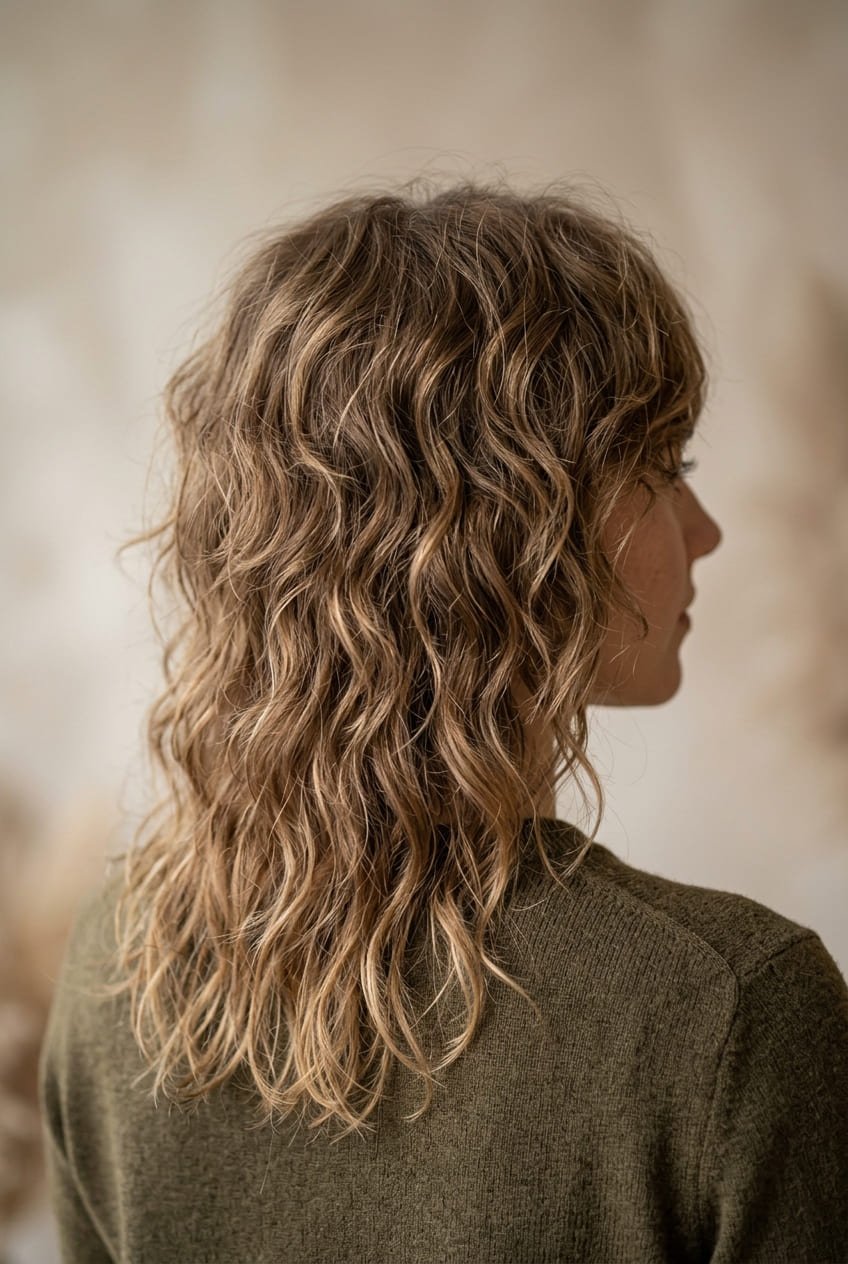
On straight hair, those layers rely heavily on products and tools to look textured. On wavy hair, your natural wave pattern does much of that work. Each layer bends and separates on its own, so the cut looks effortless instead of styled.
One thing to know before you book: wavy hair shrinks as it dries. Waves pull upward, so hair can look noticeably shorter dry than it did wet. A good stylist plans for this, which is why layer placement matters more here than on straight hair.
| At a glance | Wavy wolf cut |
|---|---|
| Typical length range | Short, medium, or long |
| Best wave types | 2A to 2C, with adjustments for each |
| Styling effort | Low to moderate |
| Maintenance level | Moderate, with regular trims to hold the shape |
| Signature look | Layered crown, wispy ends, textured movement |
Who a Wavy Wolf Cut Suits Best
This cut flatters many people, but it isn’t automatic. Your wave pattern, hair thickness, and face shape all affect the result. A few minutes of honest self-assessment can save you from a cut that doesn’t match your hair.
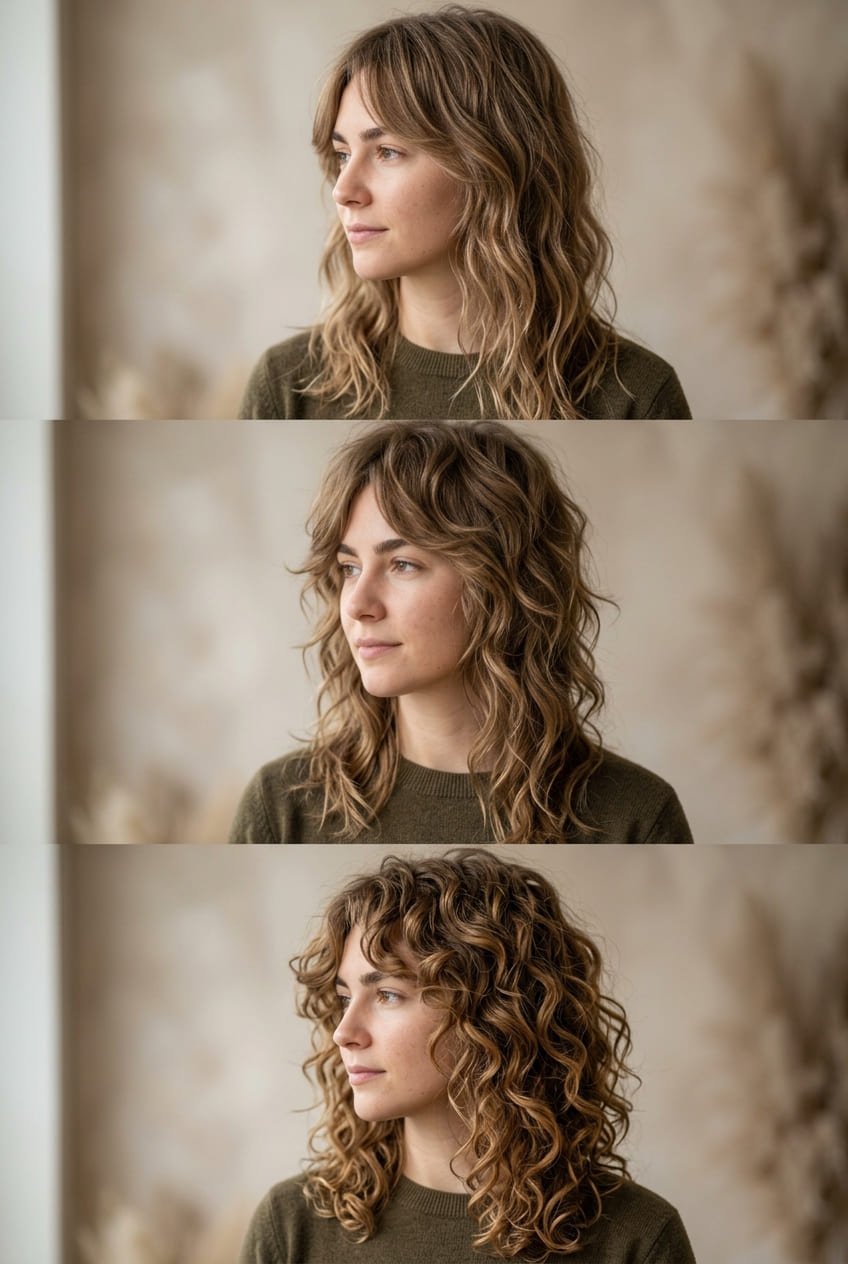
Wave Pattern: 2A, 2B, and 2C
Wavy hair is usually grouped into three types. Here’s how the wolf cut tends to behave on each.
| Wave type | What it looks like | How the wolf cut behaves | What tends to work |
|---|---|---|---|
| 2A | Loose, soft S-waves that sit close to the head | Can fall flat or look straight if layers are too short | Longer, softer layers and light texture products for volume |
| 2B | Defined S-waves, usually starting around mid-length | Holds its shape and shows clear movement | Balanced layering that keeps some length so the waves stay visible |
| 2C | Thicker, more defined waves that border on curls | Layers can puff up and look wide or triangular | Carefully blended layers plus moisture to control frizz |
As a general rule, 2B waves are the easiest starting point because they hold layers without much help. Many people have a mix of patterns on one head, such as looser waves at the front and tighter ones underneath. Tell your stylist, because it affects where layers should go.
Fine, Medium, and Thick Hair
Fine hair: The cut can add welcome body, but too many short, heavily thinned layers can leave the ends looking stringy. Ask for lighter layering that keeps some weight at the ends.
Medium hair: This is the easiest range to work with. Most layer patterns hold their shape and show movement without much effort.
Thick hair: Layers remove bulk and give waves room to move. The risk is a very wide, puffy shape, so the stylist should remove weight evenly rather than just adding short layers on top.
Face Shapes That Pair Well With It
No face shape is off-limits, but layer and bang placement can balance your features.
| Face shape | Helpful approach |
|---|---|
| Round | Longer face-framing layers that fall below the chin to add vertical lines |
| Oval | Most variations work, so choose based on hair type and lifestyle |
| Heart | Soft layers and side-swept or curtain bangs to balance a wider forehead |
| Square | Wavy layers around the jaw to soften angles |
| Long | Fuller layers at the sides and bangs to add width |
Wavy Wolf Cut Length Options: Short, Medium, and Long
Length changes both the look and the daily routine, so it deserves its own decision.

Short Wavy Wolf Cut
A short wavy wolf cut sits around the chin or above the shoulders. It feels playful and suits anyone who wants a dramatic change. Because short hair springs up more, waves look tighter and fluffier than you might expect. It also needs the most frequent trims to keep its shape. If you like edgy short styles, our guide to tomboy haircuts for girls has more ideas.
Medium Wavy Wolf Cut
A medium wavy wolf cut, roughly from the chin to just past the shoulders, is the safest starting point. You get visible layers and movement, plus enough length to tie your hair back. For most first-timers, this is the sweet spot.
Long Wavy Wolf Cut
A long wavy wolf cut keeps the length you may already have while adding shape and lift. The weight of long hair can pull waves out, so the crown layers need careful cutting to avoid a flat top. Long versions also take more time to dry and style.
| Length | Styling effort | Upkeep | Best for |
|---|---|---|---|
| Short | Moderate | Frequent trims | Bold changes, lower-weight hair |
| Medium | Low to moderate | Moderate | First-time wolf cut wearers |
| Long | Moderate | Moderate | Keeping length while adding texture |
Bangs and Face-Framing Options for a Wavy Wolf Cut
Bangs change the personality of this cut more than almost any other detail. Waves also make bangs less predictable than on straight hair, so it helps to know what to expect.

- Curtain bangs: The most forgiving option. They part in the middle and blend into the layers, so waves look intentional rather than messy.
- Wispy or short bangs: A more dramatic, trend-forward choice. On wavy hair they bounce up higher than expected, so many stylists cut them a little longer at first.
- Bottleneck bangs: Shorter at the center and wider toward the sides, they frame the face while keeping a soft shape.
- No bangs: A great choice if you don’t want to style a front section. Long face-framing layers can still give a similar effect.
Pro tip: Style your bangs first, while your hair is still slightly damp. Waves in the front section behave differently from the rest, and setting them early makes the whole style look more settled.
If your hairline has strong cowlicks, mention them at the consultation. Bangs can still work, but the stylist needs to cut around them. For more on this look, see our guide to the wolf cut with bangs.
Wavy Wolf Cut Ideas to Save for Your Stylist
Rather than scrolling through dozens of near-identical photos, think in styles. These are four distinct directions to look for when you collect reference pictures.
Soft and subtle. Longer, gentle layers with minimal bangs or light curtain bangs. This version works well on fine 2A hair, or for anyone easing into a bigger change.
Bold and shaggy. Shorter crown layers, choppy ends, and noticeable volume. It suits medium or thick 2B and 2C waves that can support the extra shape.
Polished and wearable. Blended layers with defined waves and a slightly smoother finish. A good fit for office settings or anyone who wants the cut without a messy look.
Colored accents. Highlights, money-piece strands, or face-framing color make the layers easier to see. Color-treated hair tends to be drier, so plan for extra moisture.
When you save photos, choose ones that match your own hair type as closely as possible. A reference with tight curls won’t translate to loose waves, and a stylist can only work with what your hair does naturally.
How to Ask Your Stylist for a Wavy Wolf Cut
A good consultation matters more than any product you’ll buy later. Most disappointing haircuts come from a mismatch between what you imagined and what the stylist understood.
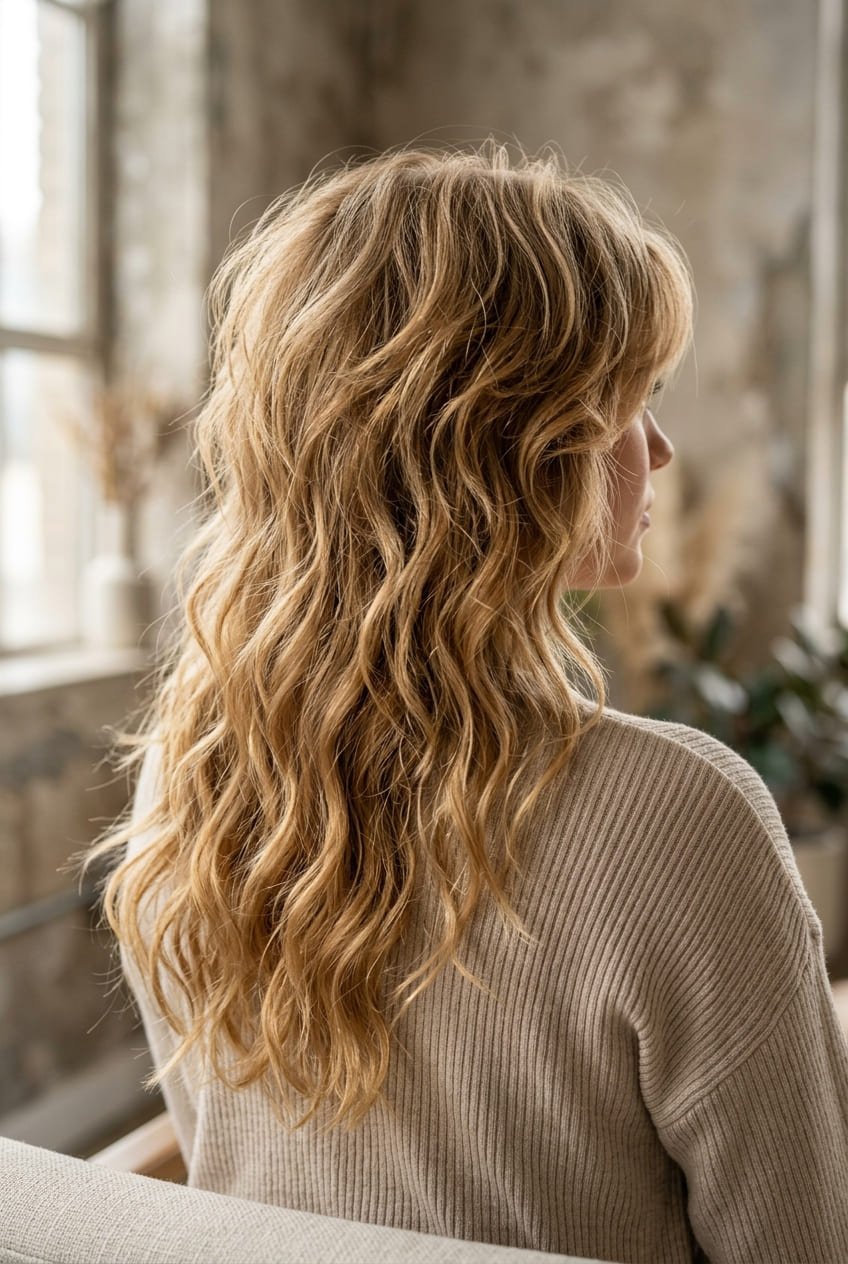
Bring two or three reference photos, ideally from different angles and on hair similar to yours. Then explain what you like about them, such as the length, the bangs, or the amount of volume.
Useful phrases:
- “Layers that start at the crown and blend into longer lengths at the back”
- “Face-framing layers that fall around the chin or lower”
- “Textured, but not too choppy”
- “Keep weight at the ends because my hair is fine” (or “remove bulk because my hair is thick”)
Questions worth asking:
- How will my wave pattern affect the layers?
- Will this be too short once it dries?
- How should I style it at home?
- How often should I come back for a trim?
A Quick Salon Checklist
- Arrive with your hair in its natural state, so the stylist can see your waves.
- Mention any past chemical treatments, color, or heat damage.
- Point out cowlicks, thin areas, and uneven growth patterns.
- Say how much time you’ll realistically spend styling each day.
- Ask the stylist to show you how to style the cut before you leave.
| Say this | Avoid saying this |
|---|---|
| “I want choppy layers that work with my natural waves” | “Just give me a wolf cut” |
| “Please keep it long enough that I can still tie it back” | “Make it shorter, whatever you think” |
| “My hair shrinks a lot when dry” | Nothing about how your hair dries |
How to Style a Wavy Wolf Cut Day to Day
This cut was designed to look relaxed. You don’t need perfect waves. You need enough definition and lift to keep the layers visible.
Air-Dry Routine
- Start with damp, not dripping, hair. Squeeze out extra water with a cotton t-shirt or microfiber towel.
- Work a lightweight mousse or curl cream through the mid-lengths and ends.
- Scrunch upward to encourage waves and add lift near the roots.
- Leave it alone while it dries. Touching it too much is a common cause of frizz.
Diffused Routine
- Apply the same products to damp hair.
- Attach a diffuser to your dryer, using low heat and low to medium airflow.
- Lift sections gently into the diffuser instead of rubbing them.
- Finish with a light texturizing spray or sea salt spray for definition.
Quick Refresh on Day Two
Mist your hair lightly with water, scrunch in a small amount of product, and let it dry or use a diffuser for a minute or two. Focus on the crown and bangs, which usually lose shape first.
| Air-dry | Diffused | |
|---|---|---|
| Time | Longer, but hands-off | Shorter, with some active effort |
| Tools | None | Hair dryer and diffuser |
| Finish | Softer, more natural | Fuller, with more lift |
| Best for | Low-heat routines | Extra volume, thicker hair |
Fixing Frizz, Flatness, and Shape Problems in a Wavy Wolf Cut
Even a good cut misbehaves sometimes. These are the most common issues and what usually helps.
| Problem | Likely cause | What helps |
|---|---|---|
| Frizz in the layers | Dryness, rough handling, or humidity | Moisturizing products, less touching while drying, a lightweight anti-frizz product |
| Flat crown | Crown layers too long, or product weighing hair down | Root lift with a diffuser, lighter products, and slightly shorter crown layers next time |
| Triangle shape | Too much volume at the bottom and not enough layering | A stylist adjusting layers to remove weight evenly through the mid-lengths |
| Limp ends | Over-thinning or heavy products | Skipping heavy creams on the ends and keeping some weight when cutting |
| Bangs that won’t sit right | Waves in the front, or cowlicks | Styling them first, and asking for a slightly longer bang cut |
If a problem keeps coming back, the cause may be the cut rather than your routine. Don’t hesitate to ask your stylist to adjust it.
Best Products for Wavy Wolf Cuts
You don’t need a long shelf of products. A few well-chosen ones, matched to your hair type, do most of the work.
| Product type | Best for | What it does |
|---|---|---|
| Mousse | Fine or flat-prone hair | Adds lift and light hold without much weight |
| Curl cream | Medium to thick, dry waves | Moisturizes and helps waves clump together |
| Sea salt spray | Most wavy hair, for a beachy finish | Adds grip and a rougher texture |
| Texturizing spray | Fine hair and day-two refreshes | Builds separation in the layers |
| Lightweight oil | Dry or frizz-prone ends | Smooths and adds shine in small amounts |
| Heat protectant | Anyone using a dryer or tools | Reduces heat stress on the hair |
Start with small amounts, since it’s easier to add product than remove it. Sea salt sprays can feel drying on already dry hair, so use them over a moisturizing product. If you color your hair, choose products made for color-treated strands.
How to Maintain a Wavy Wolf Cut
A wolf cut loses its shape as it grows, because the layers lengthen and blend together. Regular upkeep keeps the cut looking deliberate.
Trims: A common salon guideline is every six to ten weeks. Short versions usually need visits at the shorter end of that range. Trims won’t make hair grow faster, but they remove damaged ends and reduce breakage, according to board-certified dermatologist Dr. Hadley King in an interview with USA Today.
At-home care:
- Use a gentle shampoo and a moisturizing conditioner.
- Deep condition once a week, or as needed for dry or color-treated hair.
- Use a heat protectant before blow-drying.
- Sleep with your hair loosely tied up, or on a silk or satin pillowcase, to reduce frizz.
Color and highlights: Lightened or colored hair tends to be drier, so waves can look different and need more moisture. If you plan to color it, tell your stylist so the layering and color work together.
Growing Out a Wavy Wolf Cut
Eventually you may want to grow it out. A wolf cut is easier to grow out than a blunt style, because the layers already blend together.
According to the American Academy of Dermatology, scalp hair grows about half an inch per month, or roughly six inches per year. That means two months adds about an inch, so patience helps. Here’s what to expect:
- First couple of months: The shape stays mostly intact. Crown layers lengthen and the volume shifts down.
- Middle stage: The cut loses definition and the layers can feel uneven. A light trim to refresh the shape helps here.
- Late stage: The layers blend into a longer, softer style that can become a classic long layered cut with a stylist’s help.
To keep it looking intentional as it grows, use texturizing products, try different parts, and pin back bangs when needed. Book a trim when the ends look thin or the shape no longer frames your face, and ask for a reshape if you want to keep the wolf look.
Common Mistakes and When to Skip a Wavy Wolf Cut
A few mistakes come up again and again:
- Too many layers on thin hair. This can leave the ends looking sparse.
- Layers cut too short on 2C waves. Tight waves bounce up, so short layers end up looking much shorter than planned.
- Heavy products on fine hair. They flatten waves and make layers look greasy.
- Skipping heat protection. Heat damage makes frizz worse and layers harder to style.
- Cutting it yourself. Layering is hard to get right at home, especially at the back. If you’re tempted to DIY, get a professional cut first.
You might want to skip or modify this cut if:
- You want a wash-and-go style with zero effort.
- Your hair is extremely fine and you want lots of length at the ends.
- Your hair has very little natural wave and mostly sits straight.
- You’re not ready for shorter layers or visible texture.
A softer layered cut may suit you better in those cases. A good stylist will tell you honestly if a wolf cut isn’t the right match.
Wavy Wolf Cut vs. Shag vs. Butterfly Cut
These cuts overlap, which is why they’re easy to confuse. Here’s how they differ on wavy hair.
| Wavy wolf cut | Shag | Butterfly cut | |
|---|---|---|---|
| Layering | Short crown layers blending into longer back lengths | Layers throughout, often with a rounded shape | Long layers with shorter face-framing pieces |
| Shape | Shaggy and wispy, with a mullet-inspired back | Fuller and rounder overall | Soft, voluminous, and blown-out |
| Texture | Choppy and tousled | Lived-in and textured | Smooth and bouncy |
| Maintenance | Moderate | Moderate | Moderate to high, depending on styling |
| On waves | Shows off natural movement | Adds volume | Works best with some styling effort |
If you want the most dramatic shape, choose the wolf cut. If you prefer something softer and more balanced, a shag or butterfly cut may feel more comfortable.
Wavy Wolf Cut FAQs
What is a wavy wolf cut?
A wavy wolf cut is a layered haircut with short crown layers and longer, wispy lengths, shaped around natural 2A to 2C waves. The waves give the layers their texture and movement.
Is a wolf cut good for wavy hair?
Yes, a wolf cut is a good choice for wavy hair because natural waves add the texture and movement the cut depends on. The key is adjusting the layers to your wave pattern and hair thickness.
Does a wavy wolf cut work on fine or thin hair?
A wavy wolf cut can work on fine hair when the layers are soft and light and some weight stays at the ends. Heavy thinning or very short layers can make fine hair look sparse.
Which wave pattern works best for a wolf cut?
2B waves are generally the easiest starting point, but 2A and 2C can also look great with the right layering. 2A usually benefits from longer layers, while 2C benefits from blended layers and extra moisture.
How often should I trim a wavy wolf cut?
A common guideline is every six to ten weeks to keep the shape. Short versions usually need trims at the shorter end of that range.
Should I get bangs with a wavy wolf cut?
Bangs are optional with a wavy wolf cut. Curtain bangs are the most forgiving on waves, but the cut also looks great without bangs if you’d rather skip the extra styling.
How do I stop frizz in a wavy wolf cut?
To reduce frizz in a wavy wolf cut, moisturize regularly, use a lightweight anti-frizz product, avoid touching your hair while it dries, and apply heat protectant before using hot tools.
Can I get a wolf cut on short wavy hair?
A wolf cut works on short wavy hair as long as there’s enough length for the layers to show. Ask your stylist how short is too short for your wave type.
Is a wavy wolf cut suitable for women over 40?
Yes, a wavy wolf cut suits women over 40, because the choice depends on hair type, lifestyle, and comfort rather than age. Softer, longer versions are a common starting point.
Final Thoughts: Is the Wavy Wolf Cut Right for You?
A wavy wolf cut works best when the cut respects your hair. Your wave pattern, thickness, and daily routine matter more than any trend. If you have medium to thick waves and like texture, it’s likely a strong match. If your hair is fine or loosely wavy, a softer version can still deliver the look without overwhelming it.
Start by saving a few reference photos that resemble your own hair, then book a consultation and talk through length, layers, bangs, and upkeep. Pay attention to how your hair dries, and don’t be afraid to ask questions.
Once you have the cut, keep your routine simple. A little moisture, light product, and some patience go a long way. If you’re exploring more options, read our guide to the wolf cut with bangs next.
Sources
- American Academy of Dermatology, via its published guidance on hair growth (about half an inch per month)
- Dr. Hadley King, board-certified dermatologist, in USA Today’s “How fast does hair actually grow?” (trimming removes damaged ends but doesn’t speed growth)

Harry is a hair and beauty content creator at HairGlowBlog, sharing practical tips on hairstyles, hair care, hair styling, and beauty trends. Her content focuses on easy hairstyle ideas, hair care routines, styling tips, and inspiration for different hair types and occasions.



Leave a Reply