
You walk out of the barbershop with a fresh cut, and by lunchtime the hair is flat, stuck to his forehead, or sticking out at the back. If that sounds familiar, you’re not alone. Straight hair is easy to cut but surprisingly easy to get wrong, because it shows every uneven line and tends to lie flat without help.
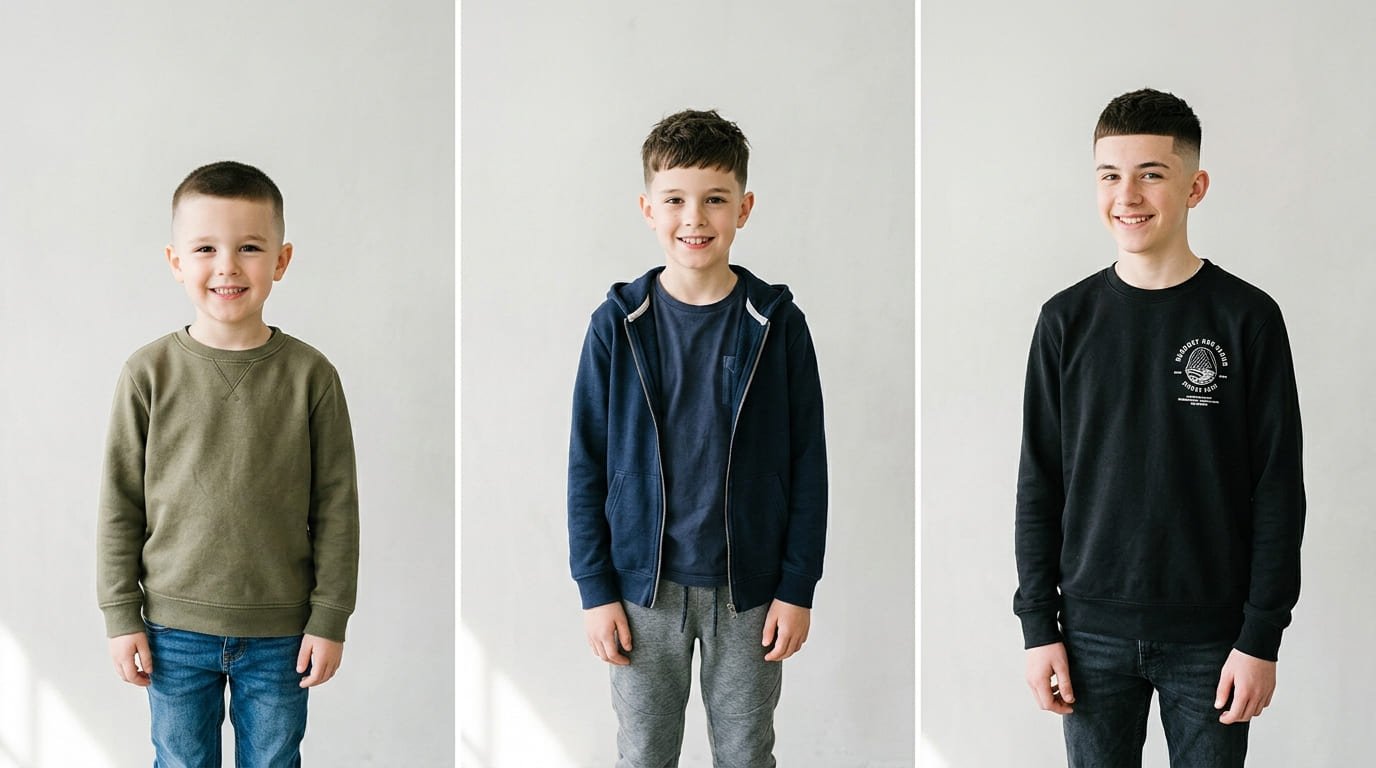
The good news is that short haircuts for boys with straight hair can look sharp, stay neat all week, and take about two minutes to style. This guide covers 15 styles, how to match them to hair thickness and age, what to say to your barber, and how to keep the cut looking good as it grows out.
Quick picks:
| If you need… | Top pick | Why it works |
|---|---|---|
| Fine, flat hair | Textured crop | Texture on top adds visual body |
| School-ready | Side part or ivy league | Neat, classic, dress-code friendly |
| Sports | Crew cut or low taper | Stays out of the eyes, handles sweat |
| Lowest maintenance | Buzz cut | Almost no styling |
| Teens who want a look | Mid fade with a textured top | Modern and easy to customize |
Why Straight Hair Needs a Different Approach to Short Cuts
Short cuts on straight hair need clean blending and some texture on top, because straight hair shows every uneven line and tends to lie flat.
Straight hair has no natural bend or wave to hide mistakes. A curly or wavy cut can look full even when the layers are slightly uneven. Straight hair falls in one direction, so a rough blend, a crooked line, or a heavy section on top is easy to spot.
A good short cut for straight hair usually has three things going for it:
- Texture on top. Cutting the top with some movement helps hair stand up instead of lying down.
- A clean taper or blend. Shorter sides make the top look fuller and keep the outline tidy.
- The right top length. Too short and there’s nothing to style. Too long and the hair falls into his eyes.
Straight hair at a glance: Straight hair shows uneven cuts easily, lies flat without texture, and usually holds a shape well once it’s cut properly. A skilled blend matters more here than on almost any other hair type.
How to Pick the Right Cut Before You Book the Barber

Choose by hair thickness first, then by growth quirks, age and daily routine. Those four factors narrow almost any list down to two or three cuts.
Fine, Medium or Thick Straight Hair
Fine hair looks fuller with shorter sides and some texture on top. Avoid heavy, long fringes that make it look thin.
Medium hair is the most flexible. Most short cuts work well.
Thick hair can look bulky when left long on top, so it often looks best with a defined taper and texturizing from the barber.
Cowlicks, Crowns and Hairline Quirks
A cowlick is a spot where hair grows in a different direction from the rest. On straight hair, it often shows up at the front hairline or the back crown. Instead of fighting it, ask the barber to cut with the direction of growth or keep that area shorter.
Face Shape and Head Shape
You don’t need to be an expert. As a rule of thumb, a round face looks balanced with a little height on top and shorter sides. A longer face can handle a softer fringe. If you’re unsure, a barber can see this in seconds.
Your Boy’s Age and Daily Routine
A five-year-old who hates sitting still needs something very different from a 15-year-old who wants a specific look. Pick for the routine, too. If he plays sports every day or won’t touch a comb, choose something easy.
| Hair Type or Challenge | Best Cut Type | Why It Works |
|---|---|---|
| Fine, flat hair | Textured crop, French crop, short quiff | Texture and a bit of height add body |
| Thick straight hair | Taper with a textured top, crew cut | Blends control bulk and keep the shape neat |
| Cowlick at the front | Short fringe or brush-up | Works with the growth direction |
| Hair falls in the eyes | Close crew cut, ivy league, side part | Keeps hair off the forehead |
| Very low effort wanted | Buzz cut, close-cropped crew | Almost no styling needed |
Classic Short Cuts That Always Work on Straight Hair
Crew cuts, Caesar cuts, ivy league cuts and side parts are the safest classics for straight hair. They’re neat, easy to explain to a barber, and forgiving as hair grows.

1. Crew cut
Short on the sides and back, slightly longer on top, and often brushed forward or up.
- Best for: sports, school, thick or medium hair
- Ask for: “A crew cut with a taper on the sides and about an inch on top.”
- Styling effort: Very low
2. Caesar cut
A short, even cut with a horizontal fringe that sits across the forehead. Because straight hair tends to fall forward on its own, it’s easy to wear this way.
- Best for: medium to thick hair, boys who like a clean look
- Ask for: “A Caesar cut with a short, even fringe and a light taper at the sides.”
- Styling effort: Low
3. Ivy league cut
Similar to a crew cut but a little longer on top, so it can be parted or brushed to the side.
- Best for: school photos, family events, boys who want a tidy but not-too-short style
- Ask for: “An ivy league cut, short on the sides, about an inch and a half on top so it can be parted.”
- Styling effort: Low to moderate
4. Side part
A short, neat cut with a visible part and a bit more length on top.
- Best for: school, formal events, straight hair that holds a part well
- Ask for: “A short side part with a tapered back and sides. Please cut the part in.”
- Styling effort: Moderate
If you’re torn between a Caesar cut and a French crop, our Caesar cut vs French crop comparison breaks down the difference.
Modern Short Styles with Texture and Movement
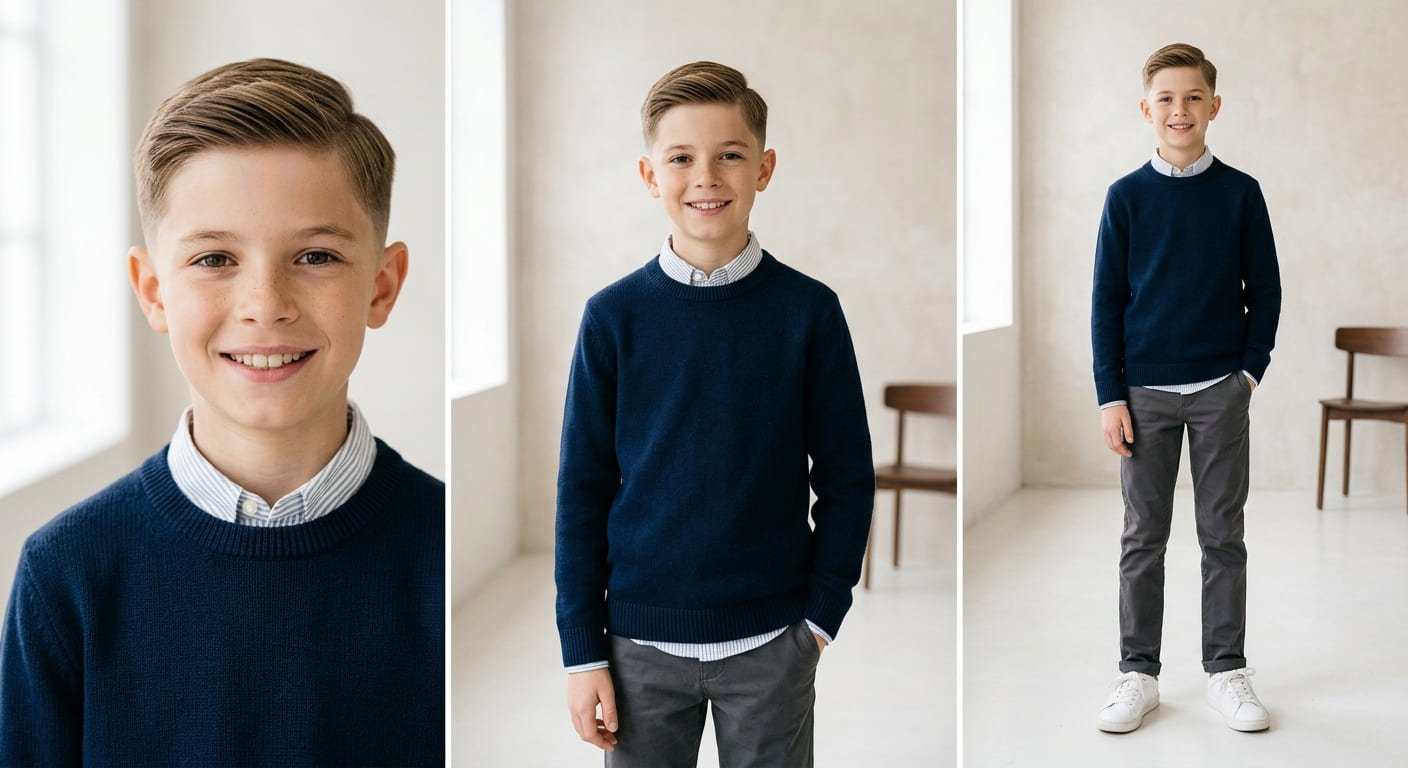
If hair looks flat or he wants something less traditional, textured crops, French crops, short quiffs, brush-ups and messy fringes add body without much length.
5. Textured crop
Short, choppy layers on top with a clean taper on the sides. The texture does the work of hiding flatness.
- Best for: fine hair, boys who want a modern look
- Ask for: “A textured crop with a low taper and about an inch and a half on top, cut with texture.”
6. French crop
Short and blunt on top with a straight, short fringe, and faded or tapered sides.
- Best for: thick or medium hair, boys with a strong forehead line
- Ask for: “A French crop with a short, straight fringe and tapered sides.”
7. Short quiff
Hair is a bit longer at the front and brushed up and slightly back for height.
- Best for: teens, medium-to-thick hair
- Ask for: “A short quiff with a mid taper and about two inches at the front to style up.”
8. Brush-up
The top is cut so it can be pushed upward with fingers and a little product. It’s a good option for fine hair that needs lift.
- Best for: fine to medium hair, hair that tends to lie flat
- Ask for: “A short brush-up with a taper and some texture on top.”
9. Messy fringe
A short, loosely textured fringe that doesn’t need to be perfect. It’s casual and forgiving.
- Best for: medium hair, relaxed style, kids who run their fingers through their hair
- Ask for: “A short, textured fringe, not too heavy, with tapered sides.”
Low-Maintenance Short Cuts for Busy Families
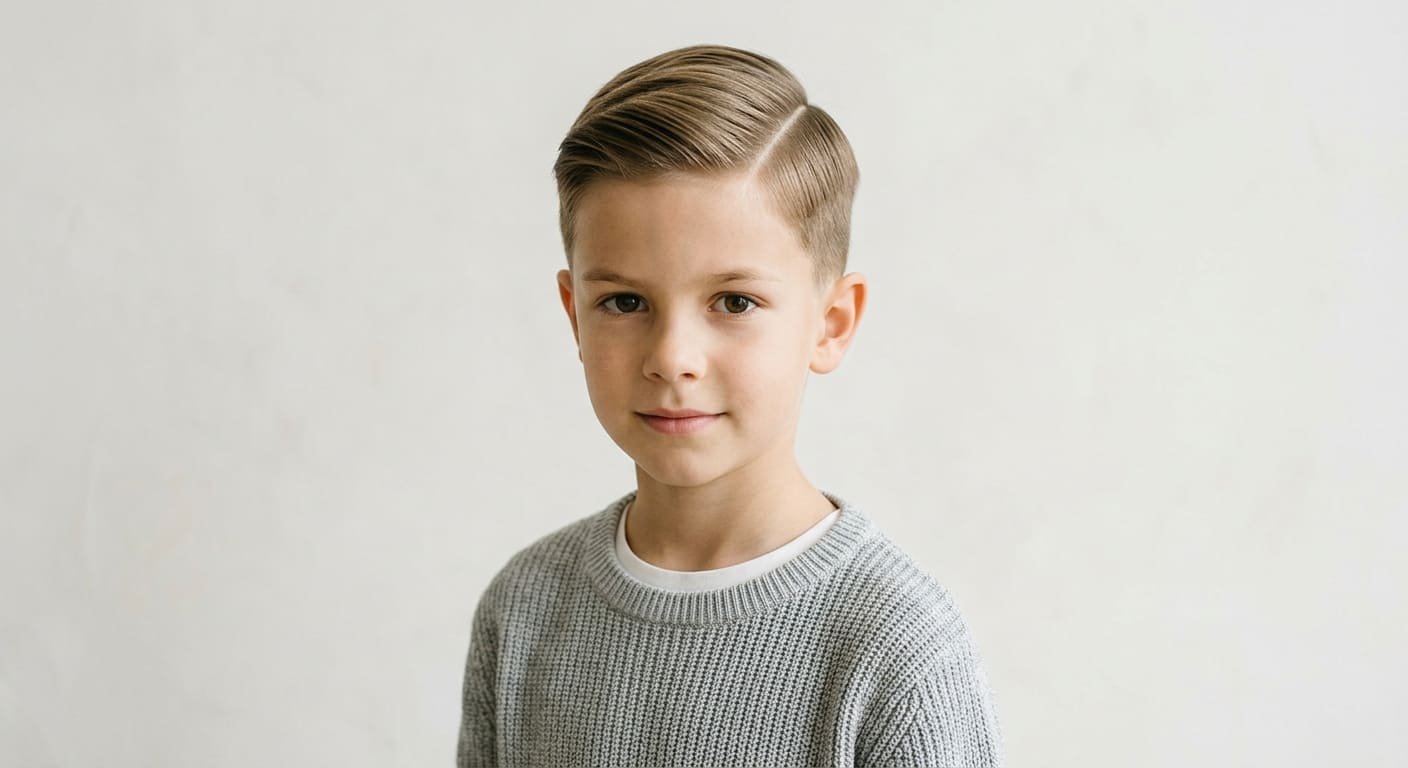
A buzz cut is the lowest-maintenance option, followed by a close-cropped crew and a simple taper. All three need little or no styling and forgive missed trims.
10. Buzz cut
One clipper guard length all over, or slightly shorter on the sides. Straight hair usually grows back evenly.
- Ask for: “A buzz cut with a #3 guard all over.”
- Guard reference: a clipper guard is the attachment that sets length. On standard clipper sets, #1 is about 1/8 inch, #2 about 1/4 inch, #3 about 3/8 inch and #4 about 1/2 inch. Brands can differ, so check your barber’s guard chart.
11. Close-cropped crew
A shorter, tidier version of the crew cut, kept very low on top. It suits boys who sweat a lot or have hair that won’t stay down.
- Ask for: “A close crew cut, about half an inch on top, with a clean taper.”
12. Simple taper
The sides and back gradually get shorter, while the top stays a bit longer. It looks polished without being extreme.
- Ask for: “A classic taper on the sides and back, with about an inch and a half on top.”
| Cut | Upkeep Level | Typical Trim Frequency | Daily Styling Time |
|---|---|---|---|
| Buzz cut | Very low | Every 4 to 6 weeks | None |
| Close-cropped crew | Low | Every 4 to 6 weeks | Under 1 minute |
| Simple taper | Low to moderate | Every 3 to 5 weeks | 1 to 2 minutes |
| Textured crop | Moderate | Every 3 to 5 weeks | 2 minutes |
| Side part | Moderate | Every 4 to 6 weeks | 2 to 3 minutes |
Trim timing varies with hair growth and how crisp you want the cut. These are general guidelines.
Fade and Taper Options for Straight Hair

Fades work well on straight hair, but straight hair shows blends clearly, so the blend has to be clean. Expect more frequent touch-ups than with a simple taper.
Taper vs. Fade: What’s the Difference?
A taper gets gradually shorter toward the neckline and around the ears, usually leaving some length. A fade blends down to very short hair, sometimes to the skin. Tapers are softer and easier to live with. Fades are sharper but need more frequent touch-ups.
Low, Mid and High Fade: Which Suits Which Age?
13. Low fade: The blend starts low, near the ears and neckline. It’s subtle and works for almost every age.
14. Mid fade: The blend starts around the middle of the sides. It gives more contrast and suits school-age boys and teens.
15. High fade: The blend starts high on the head and shows the most contrast. It’s a bold look that usually appeals most to teens.
Are Fades Appropriate for Toddlers and Young Kids?
Usually yes, if he can sit still, but a simple taper or scissor cut is often easier. Clippers can feel loud and buzzy near the ears. If you do choose a fade, a low one is usually the gentlest option. Let the barber know it’s his first time with clippers so they can go slowly.
Best Short Haircuts by Age

Toddlers need comfort and speed, school-age boys need neat and easy, and teens usually want a specific look. Match the cut to the stage.
Toddlers and Little Boys (Ages 2 to 5)
Short scissor cuts, a simple taper, or a classic crew cut keep hair out of the eyes and need almost no styling. Skip anything that needs long sitting time or many products.
School-Age Boys (Ages 6 to 12)
This is where school rules, sports and personal taste start to show up. Side parts, ivy league cuts, crew cuts and low tapers are strong picks. Let him help choose, as long as the style fits the dress code.
Teen Boys (Ages 13 to 17)
Textured crops, short quiffs, mid fades and French crops give teens room to express a style without very long hair. A little styling product usually becomes part of the routine at this stage.
| Age Group | Priorities | Good Cut Options |
|---|---|---|
| Toddlers (2 to 5) | Comfort, speed, no fuss | Simple taper, crew cut, short scissor cut |
| School-age (6 to 12) | Neat, sporty, easy | Ivy league, side part, low taper, crew cut |
| Teens (13 to 17) | Style and self-expression | Textured crop, short quiff, mid fade, French crop |
School-Ready and Sports-Friendly Short Cuts
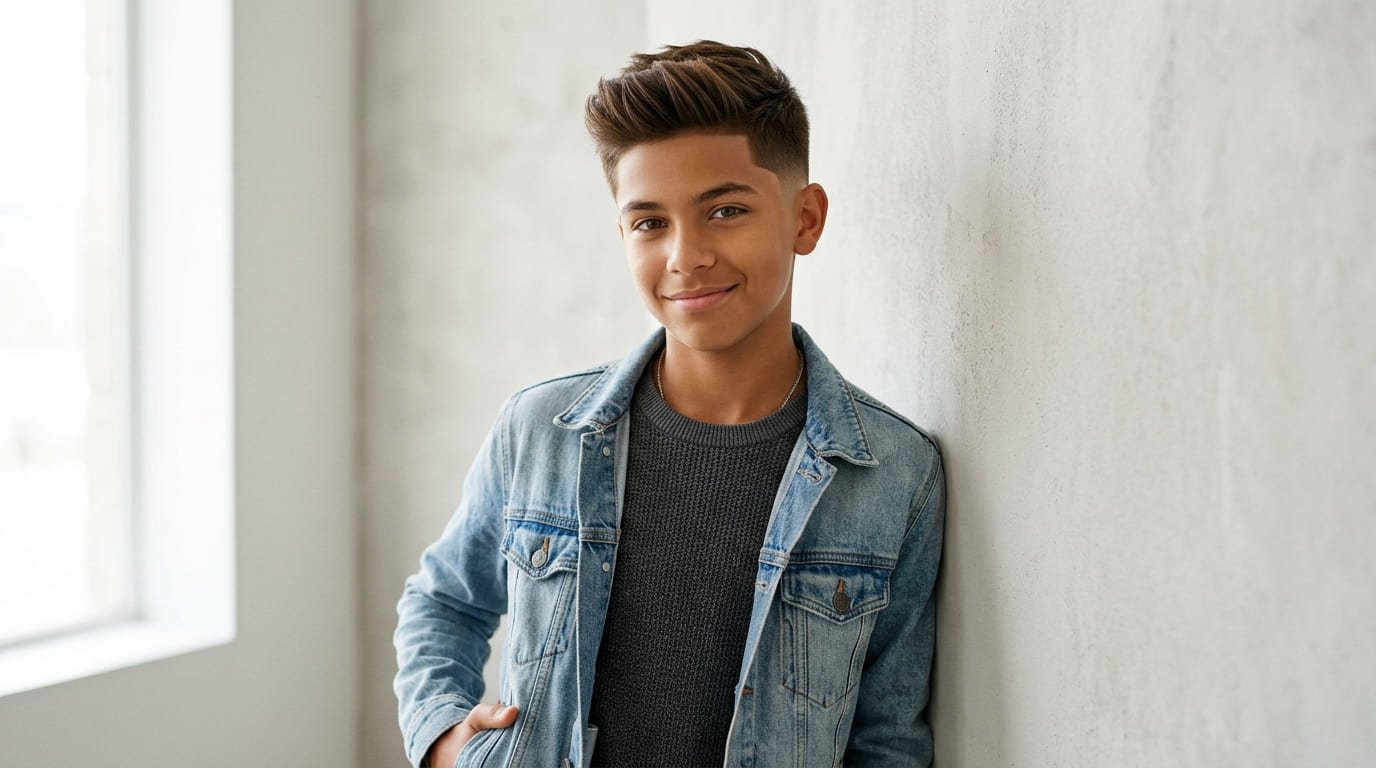
A side part, ivy league cut or short crew cut is nearly always school-safe, and a crew cut or low taper works for most sports. Check your school’s dress code first.
Many schools have rules about hair length, extreme fades, or shaved designs. For sports, practicality wins: hair needs to stay out of the eyes, fit under a helmet or cap, and dry quickly.
- Soccer or basketball: a crew cut or low taper stays out of the way and handles sweat.
- Swimming: a short crew cut or buzz dries fast and doesn’t tangle in goggles.
- Football or baseball (helmet or cap): a short taper or close-cropped crew sits flat under headgear.
- Wrestling: a very short cut, such as a buzz, helps keep hair from getting caught or pulled.
If your son switches between school and sports, a taper with a short, brushed-forward top is a safe middle ground.
Fixing Common Straight-Hair Problems in Short Cuts
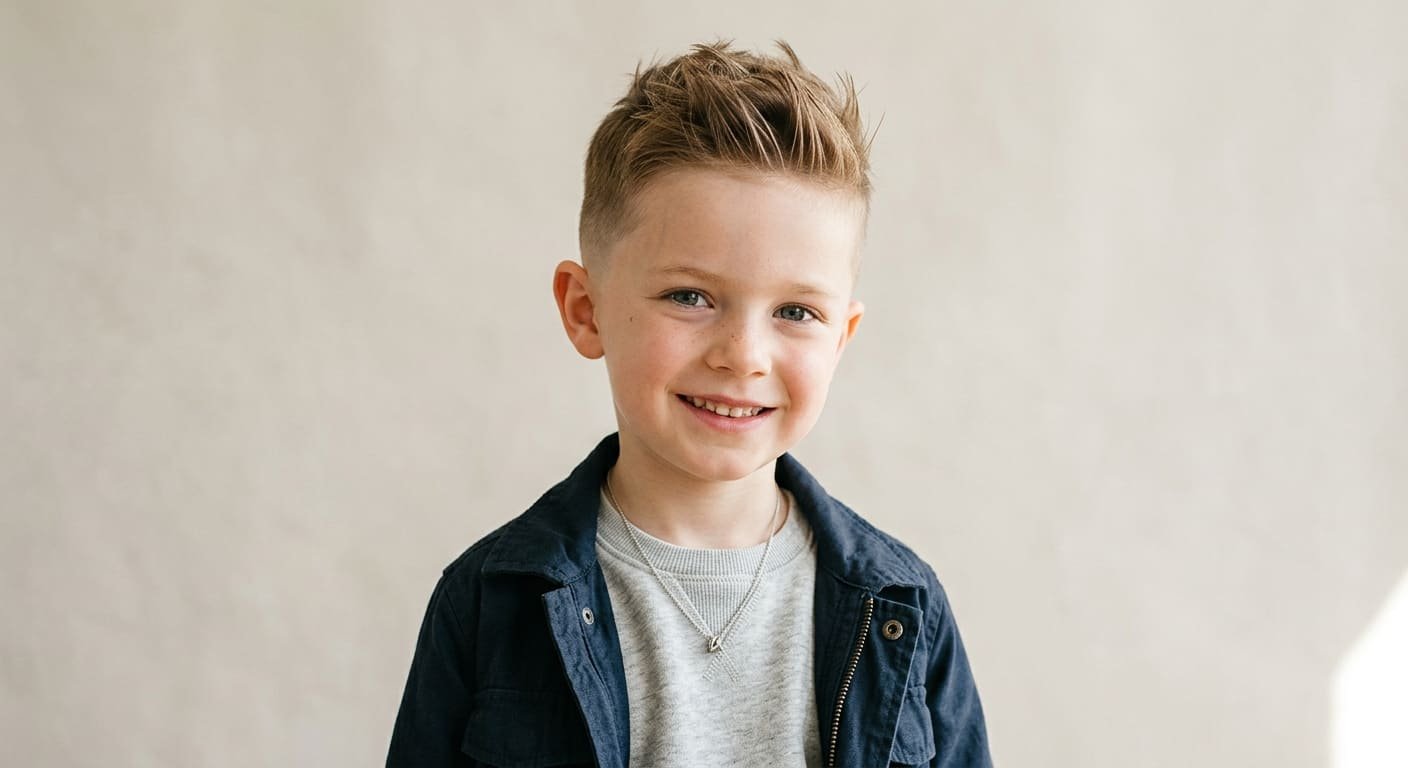
Most straight-hair complaints (flat, sticking out, cowlicks, thin-looking hair) are solved by the right cut plus one small styling habit.
Hair That Looks Flat or Limp
Flat hair usually needs shorter sides and texture on top. Ask the barber to add texture with scissors, and style with a small amount of light texture product when needed.
Hair That Sticks Out or Won’t Lie Down
If hair sticks out near the crown or the back, a slightly shorter length there can help. Often it’s simply a matter of wetting the hair and combing it into place before styling.
Cowlicks and Double Crowns
Work with the direction of growth. Keep the hair short in that area or style it the way it wants to go. Cutting against a strong cowlick usually makes it more obvious.
Very Fine or Thin-Looking Hair
Shorter cuts almost always look better than longer ones on fine hair. A textured crop or short brush-up creates the look of more body without any product at all.
| Problem | Cut-Based Fix | Simple Styling Fix |
|---|---|---|
| Flat or limp | Textured crop, shorter sides | Light texture spray on damp hair |
| Sticks out | Slightly shorter back and crown | Wet and comb before styling |
| Cowlick | Short fringe or brush-up, cut with the growth | Style in the natural direction |
| Fine or thin-looking | Short, textured top with a taper | Skip heavy products |
How to Ask Your Barber for the Right Short Cut
Bring a reference photo, name the style, and give the top length and side treatment. “Just a short cut” can mean five different things.
What to bring and say:
- A reference photo of the cut, ideally on someone with straight hair
- The style name, such as crew cut, Caesar cut or textured crop
- The length on top, in inches or by pointing at the photo
- The sides and back: taper, low fade, mid fade or scissor cut
- Any special needs, such as a cowlick, school rules or sensitivity to clippers
Copy-and-paste barber script:
“My son has fine, straight hair, and I’d like a short textured crop. Please taper the sides and back with a low fade, leave about an inch to an inch and a half on top, and add some texture so it doesn’t lie flat. He has a cowlick at the front, so please cut with the direction it grows.”
Common mistakes to avoid:
- Saying only “short” or “same as last time”
- Skipping the reference photo
- Forgetting to mention a cowlick or a school dress code
Barber terms, in plain English:
- Guard number: the clipper attachment that sets length. Higher numbers leave more hair.
- Taper: sides gradually get shorter.
- Fade: sides blend down to very short or skin-level hair.
- Texturizing: cutting that adds movement and removes bulk.
Simple Styling Routine for Short Straight Hair
Style short straight hair in about two minutes: damp hair, a pea-sized amount of light product, shape the top, and finish loosely.
- Start with damp hair. Dry hair can be hard to shape, and soaking wet hair is just as hard.
- Use a small amount of product. A pea-sized amount of a light styling product is plenty. Add more only if needed.
- Work it through. Rub it between your hands and run your fingers through the hair, front to back.
- Shape the top. Push the hair up for a brush-up or quiff, forward for a Caesar or French crop, or comb to the side for a part.
- Dry if needed. A quick blast from a hair dryer on low heat can lift the roots, especially on fine hair.
- Finish lightly. If the hair looks stiff, run your fingers through it once more to loosen it.
Wet or damp hair is best for shaping, while dry hair is best for adding texture at the end. For kids who skip styling altogether, a good cut does most of the work.
Kid-Safe Products and Tools for Short Straight Hair
Many boys with short straight hair need no product at all. When you do use one, choose a light, water-based option made for their age group and patch-test it first.
Avoid heavy, sticky or strongly scented products for younger children. Always read the label, and do a patch test on a small area first, especially if your child has sensitive skin or allergies. If you’re unsure about a product, ask your child’s pediatrician or a pharmacist.
For tools, a basic comb and a soft brush are enough. Older boys may add a small amount of texture spray, light paste or matte clay as they get more interested in styling. No product guarantees a particular result, and what works for one boy may not suit another.
Keeping the Cut Fresh: Trim Frequency, Grow-Out and Home Care
Most short cuts need a trim every 3 to 6 weeks. Fades and tapers need it sooner than crew cuts or buzz cuts.
Hair grows roughly half an inch a month on average, though it varies from person to person. Short cuts change shape quickly, and straight hair shows it.
How often to trim:
- Fades and tapers: about every 3 to 5 weeks
- Crew cuts, ivy league cuts and side parts: about every 4 to 6 weeks
- Buzz cuts: about every 4 to 6 weeks, or less often if he doesn’t mind it growing out
| Time Since Cut | What to Expect |
|---|---|
| Week 2 | Cut still looks crisp, with just a little softening around the edges |
| Week 4 | Sides start to grow out, and tapers lose some definition |
| Week 6 | Top may fall into the eyes, and the shape looks rounder and less defined |
Between cuts, keep the neckline and ears tidy with a gentle clean-up if you’re comfortable doing it. A home trim can work for a simple buzz cut, but if you’re not experienced, a barber visit is usually the safer and neater choice. Wash regularly with a mild shampoo to keep straight hair from looking flat and oily.
Common Questions About Short Haircuts for Boys with Straight Hair
What is the best short haircut for a boy with straight hair?
Crew cuts, Caesar cuts, French crops, ivy league cuts and textured crops all work well. The best choice depends on his hair thickness, age and how much styling he’ll tolerate.
What haircut works for fine straight hair?
Short, textured cuts such as a textured crop, French crop or short brush-up tend to work well. Shorter sides and a bit of texture on top help fine hair look fuller.
Do fades work on straight hair?
Yes. Straight hair shows blends clearly, so a clean, well-blended fade can look excellent. Just expect to return for touch-ups more often than with a simple taper.
How do I stop my son’s hair from looking flat?
Choose a cut with texture on top and shorter sides, and style on damp hair with a small amount of a light product. A quick blow-dry at the roots can help too.
What is the easiest short haircut to maintain?
A buzz cut or close-cropped crew cut needs almost no styling and tolerates missed trims better than most.
How do I handle a cowlick with a short cut?
Keep the hair short in that spot or cut and style it in the direction it grows. Tell the barber about it before the cut starts.
How often should a boy get a haircut?
Roughly every 3 to 6 weeks, depending on the style. Fades and tapers need more frequent visits than crew cuts or buzz cuts.
Which short cuts are best for school?
A side part, ivy league cut, crew cut or low taper is usually safe. Check your school’s dress code for specifics about fades and designs.
What products are safe for kids’ hair?
Light, water-based products made for the child’s age group are usually the best starting point. Check the label, do a patch test, and ask a pediatrician or pharmacist if you’re unsure.
Final Thoughts: Choosing the Short Cut That Fits Your Boy
The best short haircut for a boy with straight hair isn’t the trendiest one. It’s the one that suits his hair thickness, fits his daily routine, and makes him feel good when he looks in the mirror.
Start with the hair itself: fine, medium or thick. Then think about age and lifestyle, whether that means school rules, sports or a teenager’s sense of style. Finally, bring a reference photo and clear instructions to the barber so the result matches the plan.
Save this guide for your next barber visit, share it with another parent who’s been in the same spot, and explore more of our boys’ and short-haircut guides on the site for even more ideas.

Harry is a hair and beauty content creator at HairGlowBlog, sharing practical tips on hairstyles, hair care, hair styling, and beauty trends. Her content focuses on easy hairstyle ideas, hair care routines, styling tips, and inspiration for different hair types and occasions.



Leave a Reply