
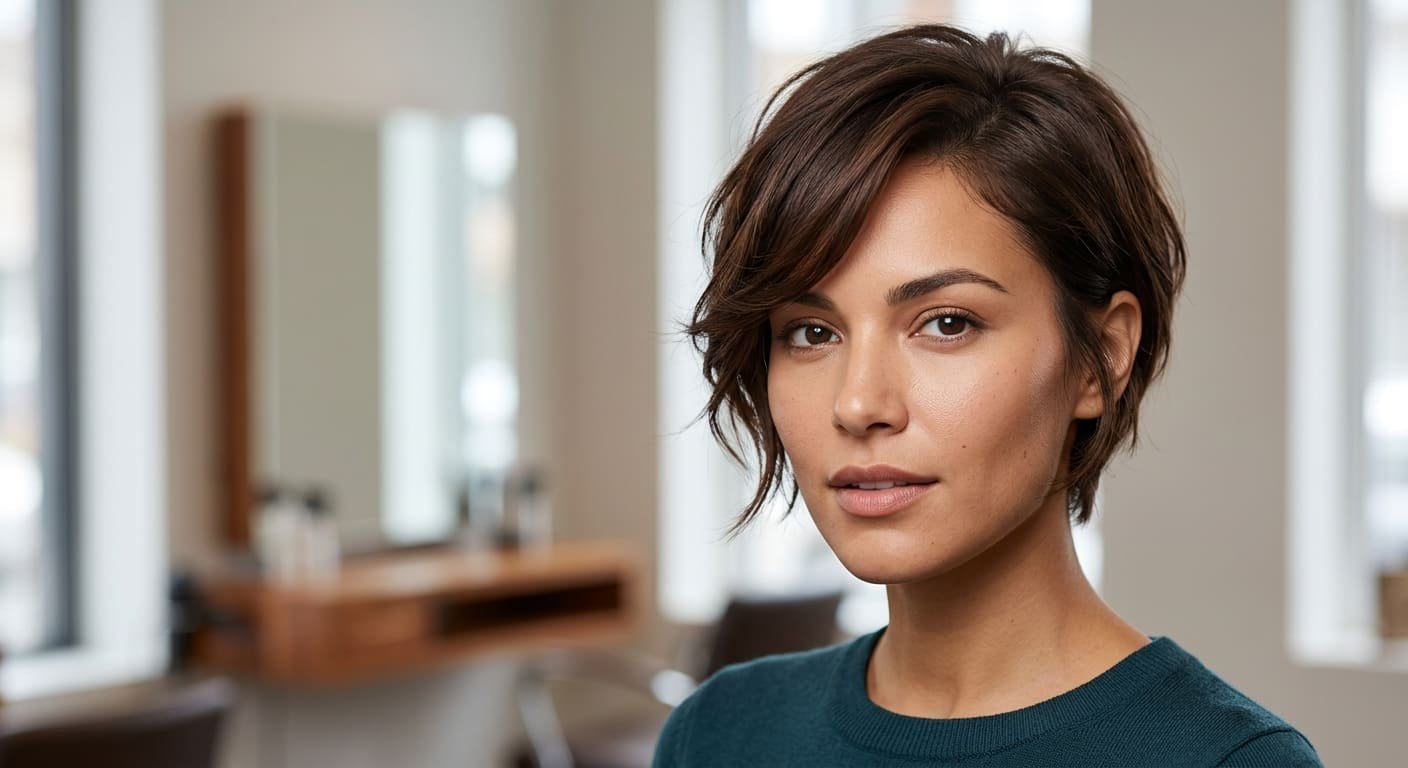
A pixie cut for heart shaped face can be incredibly flattering when the cut works with your forehead, cheekbones, chin, hair texture, and natural hairline.
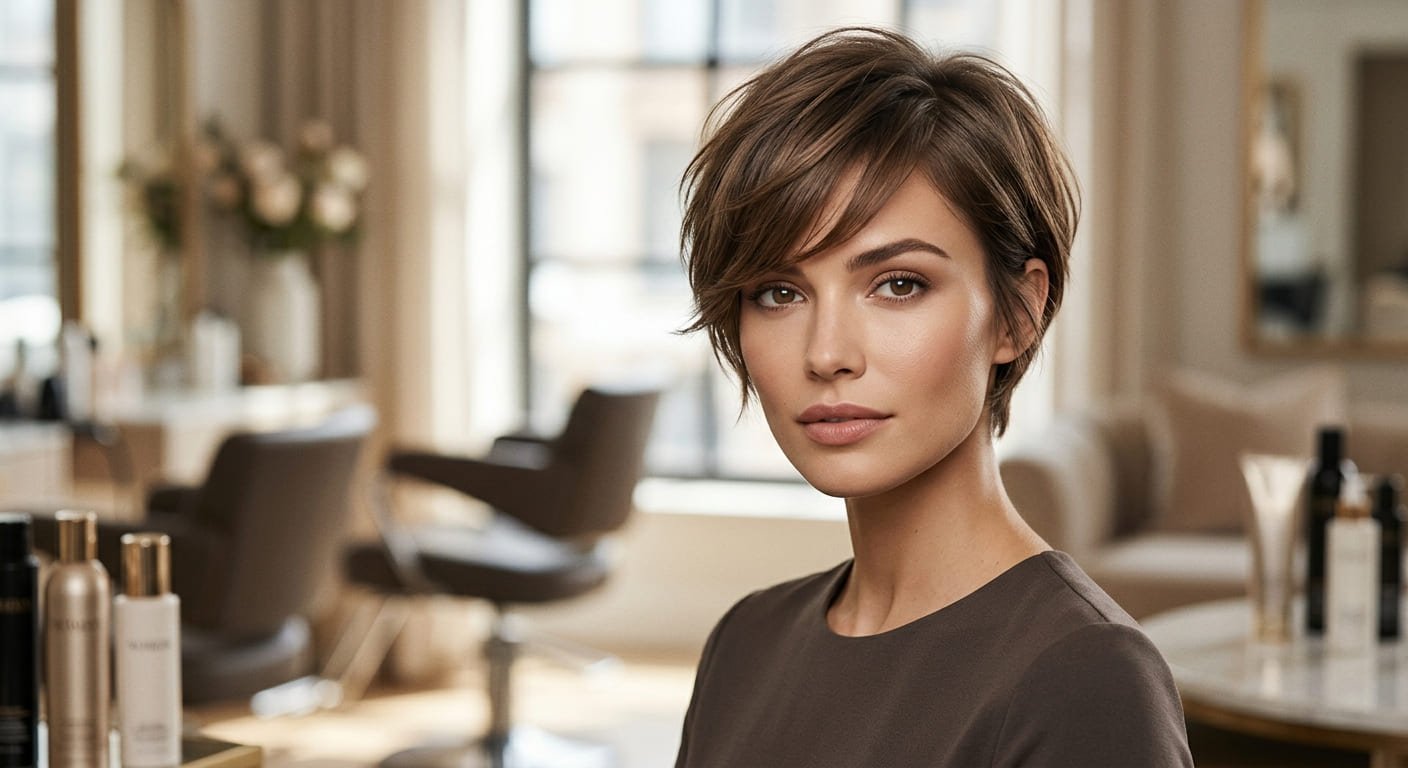
From soft side-swept fringes and longer pixies to curly crops and bixies, there are plenty of options. The key is understanding where the hair sits, how much volume it creates, and how much styling you’re willing to do.
Pixie Cut for Heart Shaped Face: 25 Flattering Styles
Yes. A pixie can flatter a heart-shaped face when its fringe, length, and volume complement the face’s proportions. A heart-shaped face is typically wider through the forehead and cheekbone area and narrower toward the chin, so some pixie shapes use softness, diagonal fringe, texture, or extra length to create a balanced overall look.
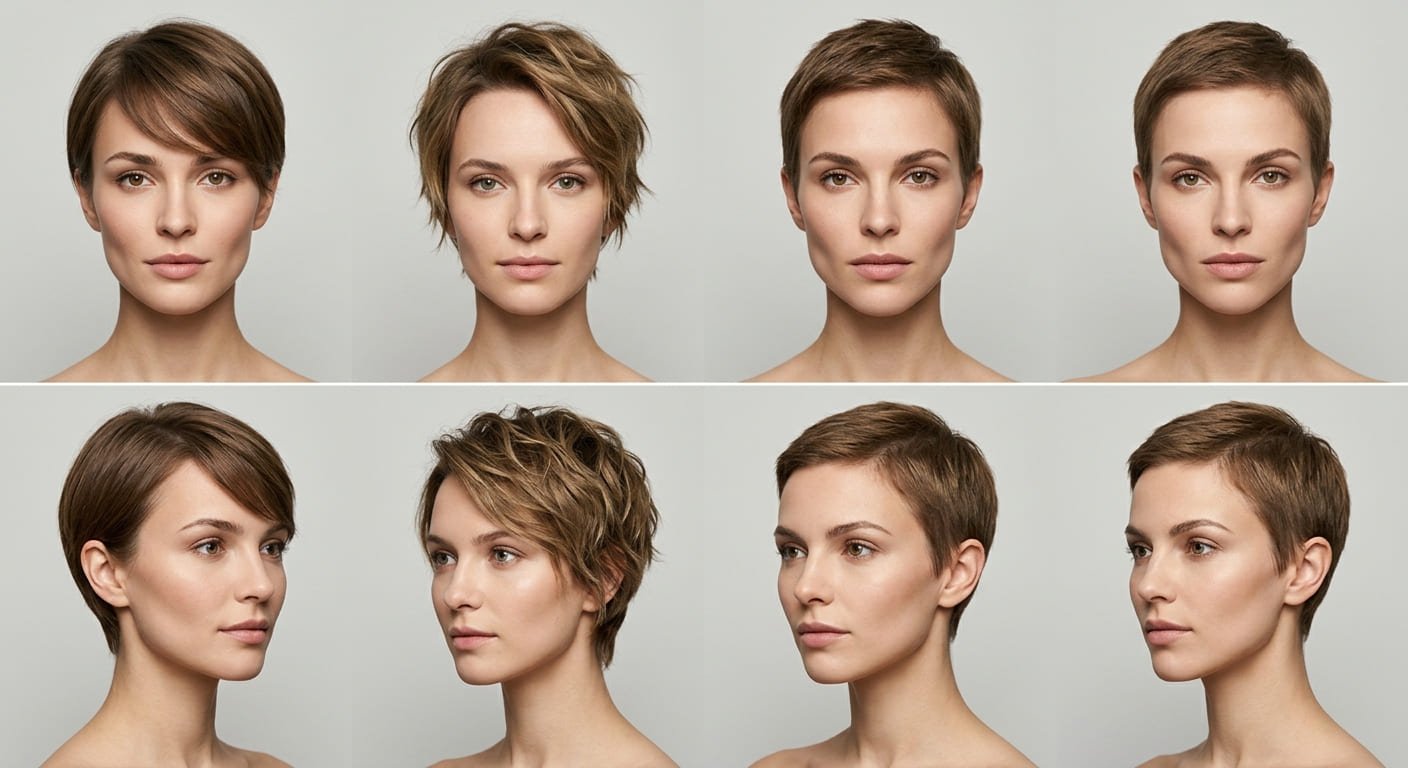
That doesn’t mean every heart-shaped face needs the same pixie. Your hair density, natural texture, hairline, styling habits, and preferred level of maintenance matter just as much.
For example, someone with fine, straight hair may prefer a softly textured long pixie, while someone with naturally curly or coily hair may get a better result from a shape designed around their curl pattern.
The best pixie is the one that works with your actual features and your everyday routine—not simply the label of your face shape.
How to Tell If You Have a Pixie Cut for Heart-Shaped Face
Before choosing a haircut, make sure you’re reasonably confident about your face shape. Face shapes aren’t exact categories, and many people sit somewhere between two descriptions.

Key Features to Look For
A heart-shaped face often has several of these characteristics:
- A forehead that appears wider than the lower face
- Noticeable or prominent cheekbones
- A narrower jaw
- A chin that looks relatively narrow or pointed
- A face that gradually becomes narrower toward the chin
Look at your face from the front with your hair pulled away from your face. Comparing the width of your forehead, cheekbones, jaw, and chin can be more useful than trying to match your face to a single picture.
Don’t force the heart-shaped label if your features don’t fit it. A haircut should respond to your proportions, not make you work around an inaccurate category.
Heart-Shaped vs. Inverted-Triangle Face
These two face shapes can look similar because both may appear wider at the top and narrower toward the chin.
The distinction is mainly about where the width is most noticeable. A heart-shaped face often has a more defined forehead and cheekbone area, sometimes with a narrower or pointed chin. An inverted-triangle face may appear broader through the upper face with a more pronounced taper toward the jaw.
The difference can be subtle, and the same pixie principles can often work for both.
What Makes a Pixie Work for This Face Shape?
The most useful way to choose a pixie is to think about weight distribution rather than following rigid face-shape rules.
A cut can change the way the face appears by controlling:
- Where the hair has volume
- How the fringe crosses the forehead
- How much length remains around the temples and cheeks
- Where the front of the haircut ends
- How much texture is created
- How closely the sides and nape are tapered
For a heart-shaped face, a diagonal or soft fringe can create movement across the forehead, while longer pieces around the front can give you more styling flexibility.
Texture can also make a short cut feel less severe. On the other hand, removing too much weight can sometimes make a very short pixie harder to style, especially if your hair is fine or naturally difficult to control.
A useful principle for your salon consultation is:
Don’t ask only, “Does a pixie suit my face shape?” Ask, “Where should the length, texture, and volume sit on my particular face?”
That’s a much more personalized question.
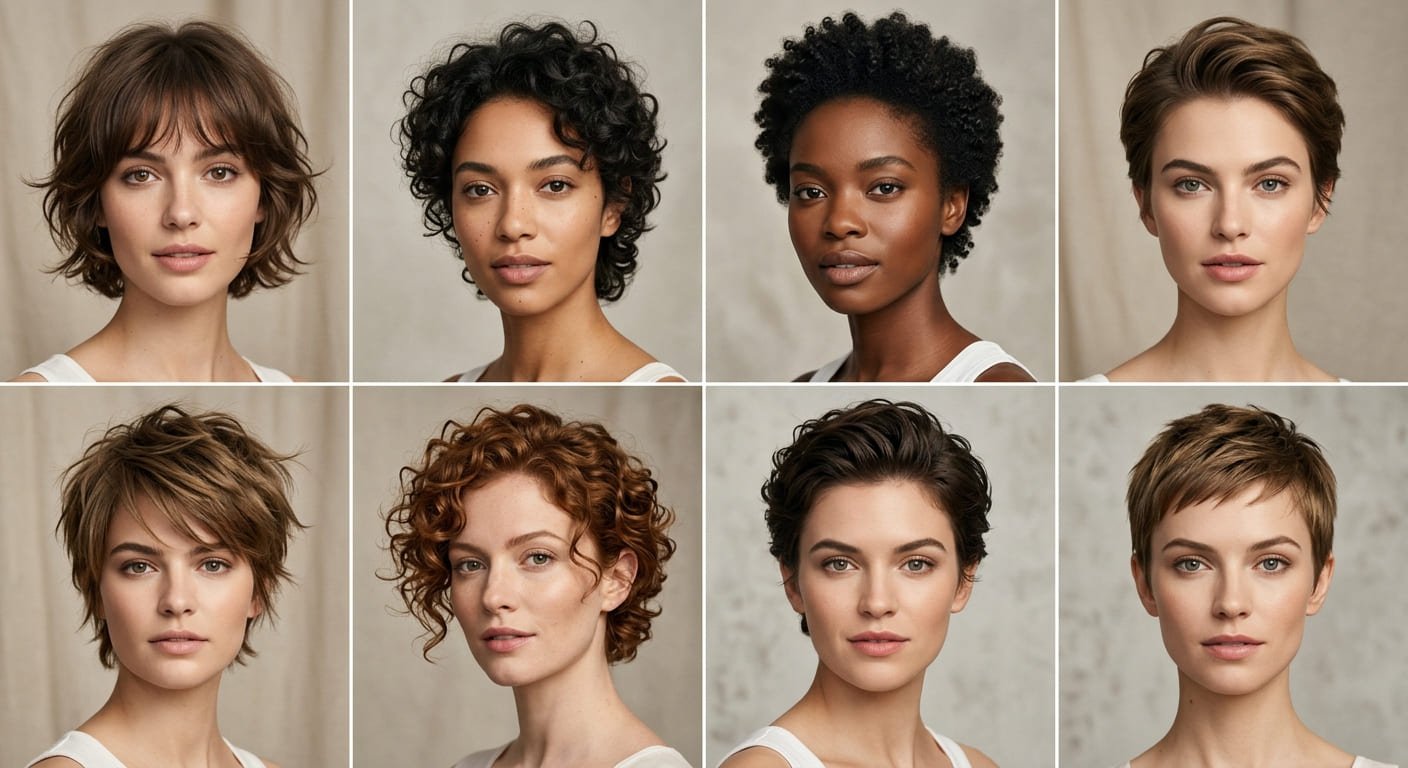
25 Pixie Ideas to Consider for a Heart-Shaped Face
There isn’t one universally best pixie cut for a heart-shaped face. The following options cover different lengths, fringe styles, textures, and commitment levels so you can compare what fits your features and lifestyle.
Soft and Fringe-Focused Pixies
1. Side-Swept Fringe Pixie
Best for: Anyone who wants softness around the forehead.
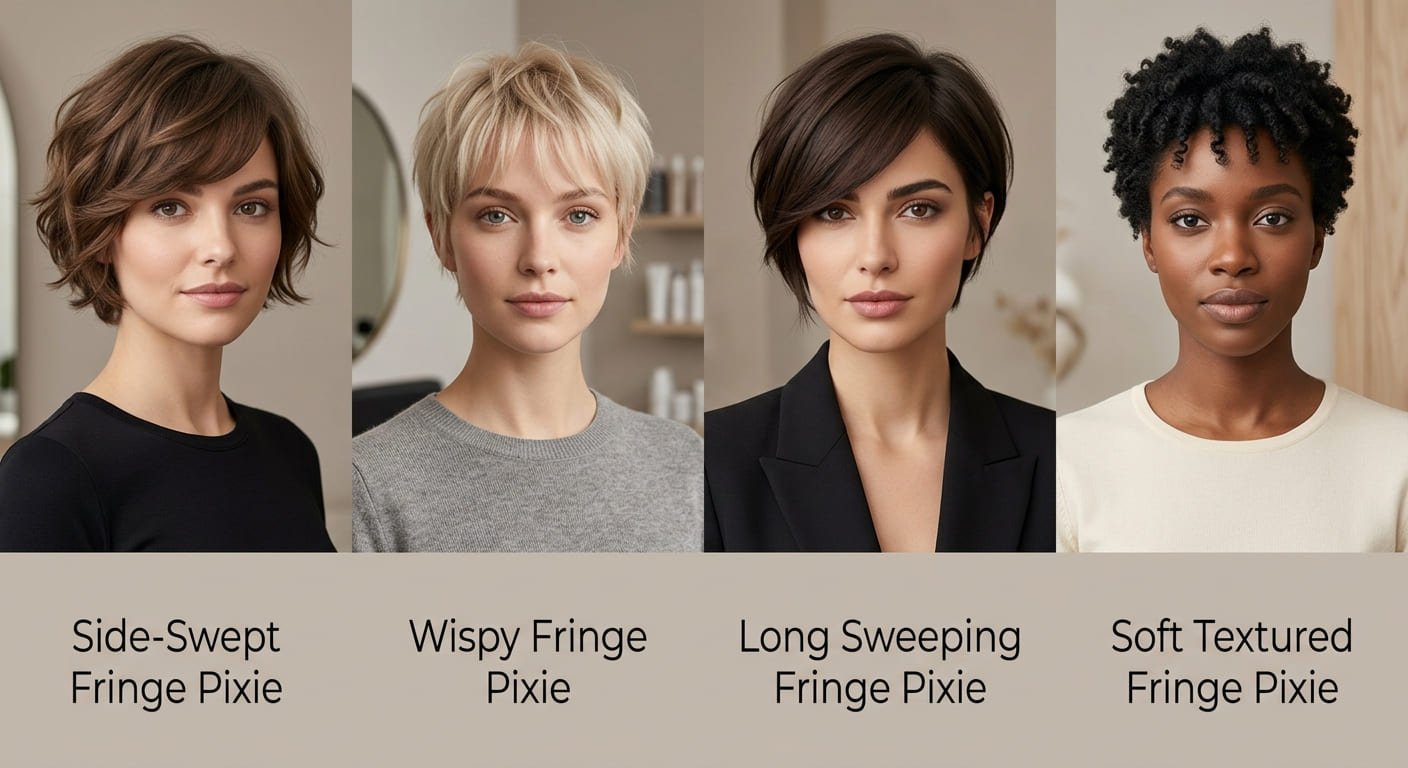
A side-swept fringe creates a diagonal line rather than a straight horizontal one. That can make the front of the haircut feel lighter and more dynamic.
Styling level: Easy to moderate
Consideration: Your natural part and hairline can affect which direction the fringe sits best.
2. Wispy Fringe Pixie
Best for: Fine hair or anyone who wants a lighter fringe.
Wispy pieces can soften the front of a short haircut without creating a heavy block of hair across the forehead.
Styling level: Easy
Consideration: Very fine hair may need light styling to keep wispy pieces from separating too much.
3. Long Sweeping Fringe Pixie
Best for: People who want a short haircut without feeling fully committed to a cropped fringe.
A longer sweeping fringe gives you more ways to style the front. You can wear it across the forehead, sweep it to the side, or allow it to blend into the rest of the cut.
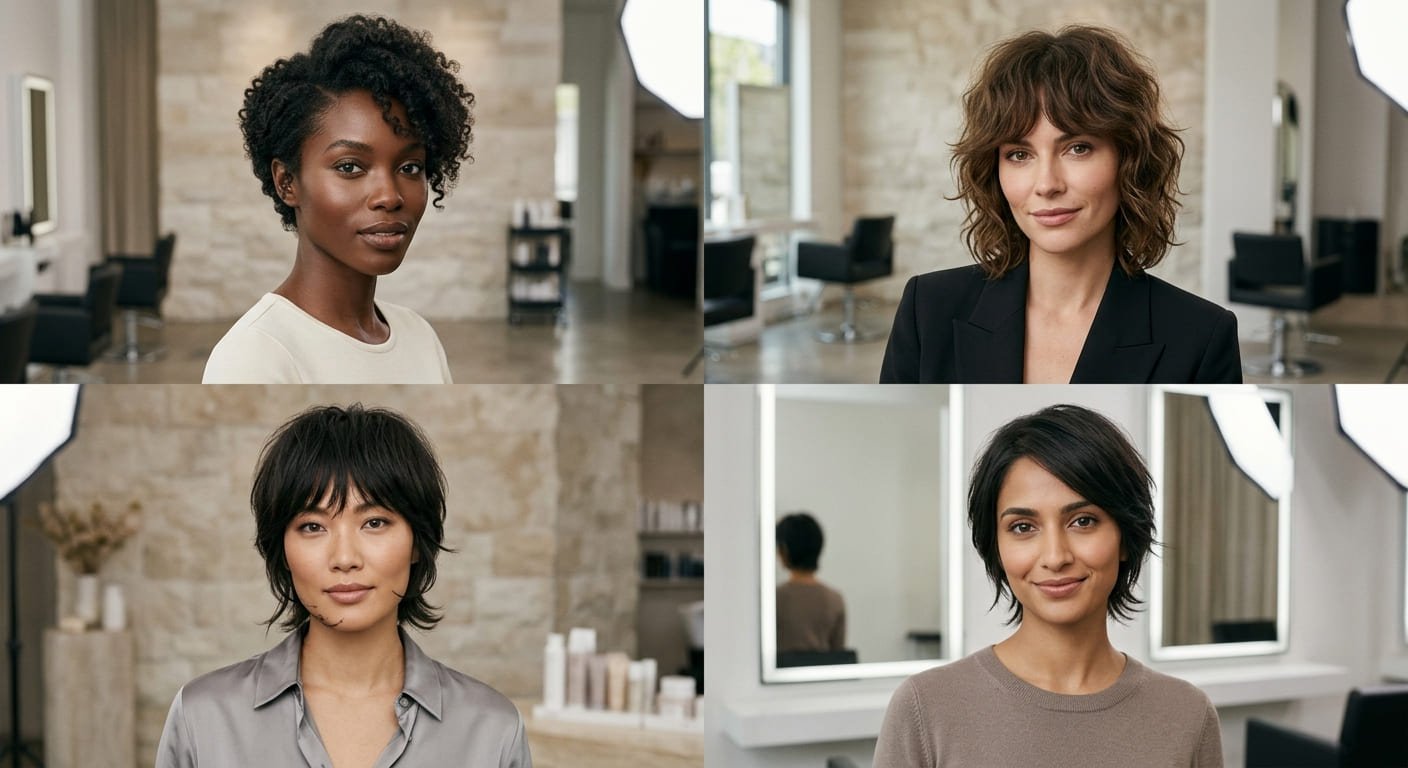
Styling level: Moderate
Consideration: The longer front usually requires more styling control.
4. Curtain-Fringe Pixie
Best for: Someone who likes softer, parted fringe.
A curtain-style fringe divides the front rather than creating one solid line. On a pixie, it can create a softer transition between the forehead and the shorter sides.
Styling level: Moderate
Consideration: Your hair needs enough length in front to create the parted effect.
5. Soft Textured Fringe Pixie
Best for: Anyone who wants movement rather than a polished, structured finish.
Small amounts of texture can make a pixie look relaxed and modern. The texture can also help prevent the haircut from looking too rigid.
Styling level: Easy to moderate
Consideration: Too much texturizing can remove useful fullness from fine hair.
Longer Pixies and Bixie-Inspired Cuts
6. Long Pixie
Best for: First-time pixie wearers or anyone who wants more styling flexibility.
A longer pixie leaves additional length through the top and front. That makes it easier to change the part, create a sweeping fringe, or move gradually toward a bob during grow-out.
Styling level: Moderate
Consideration: More length can mean more daily styling if your hair doesn’t naturally fall into place.
7. Pixie Bob or Bixie
Best for: Anyone nervous about going very short.
A bixie sits between a traditional pixie and a bob. It gives you more length around the sides and front while still delivering the lighter shape of a short haircut.
Styling level: Moderate
Consideration: It can require shaping during the grow-out phase to prevent the silhouette from becoming uneven.
8. Chin-Framing Pixie
Best for: Anyone who wants extra length around the front.
Longer front pieces can create a gentle frame around the lower face and give you more styling options.
Styling level: Moderate
Consideration: The exact ending point matters. Your stylist should consider your chin and jaw proportions rather than copying a fixed length.
9. Grown-Out Pixie
Best for: People who prefer relaxed styling and easier transitions.
A grown-out pixie allows extra length around the sides, fringe, and nape. It can feel softer and less structured than a freshly cropped cut.
Styling level: Easy to moderate
Consideration: Regular shaping may still be useful if you want the cut to look intentional.
10. Deep-Side-Part Pixie
Best for: Anyone who likes an asymmetrical, sweeping shape.
A deep side part changes the direction of the hair and can create an interesting diagonal line through the front.
Styling level: Moderate
Consideration: A strong natural cowlick may affect how easily the part holds.
Textured and Layered Pixies
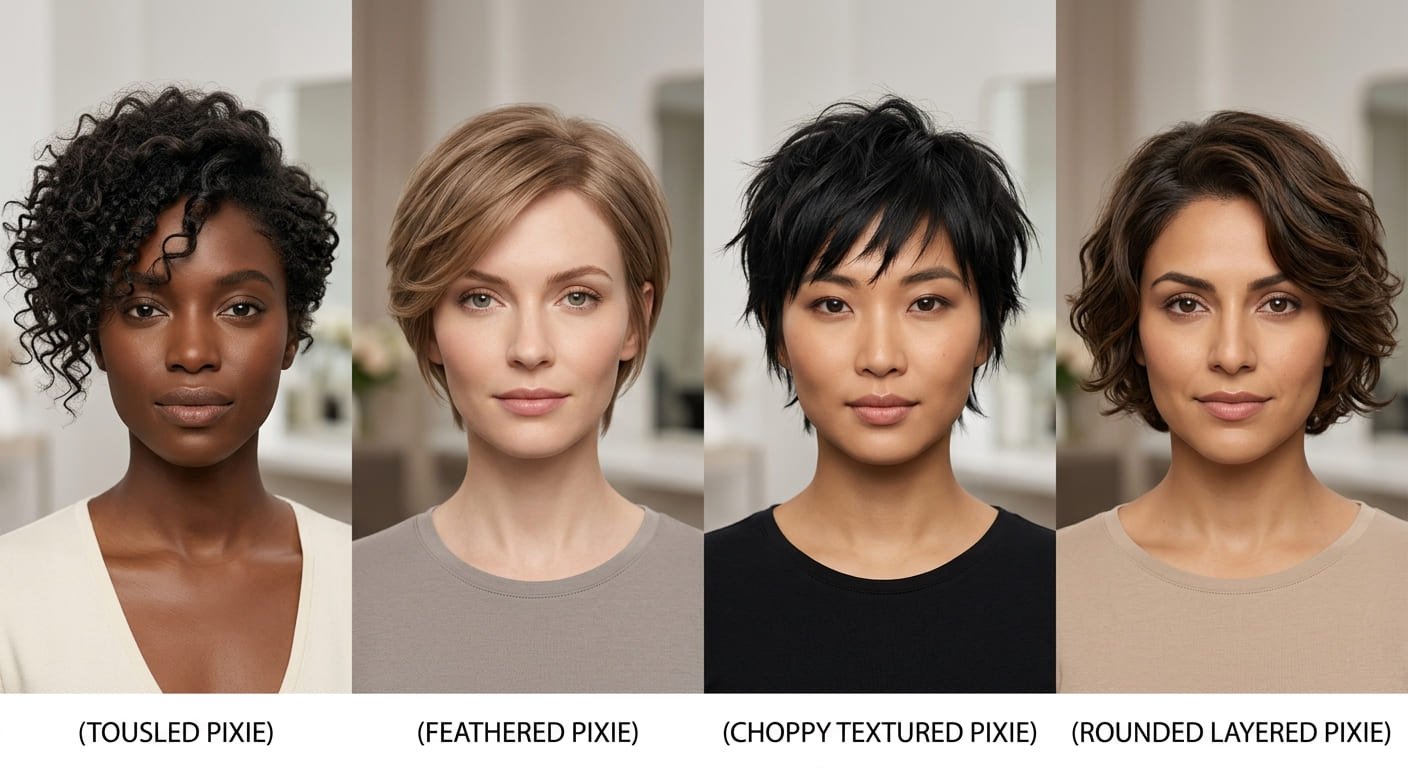
11. Tousled Pixie
Best for: Relaxed, textured styling.
A tousled pixie uses movement instead of a perfectly smooth finish. It can work particularly well for hair that already has some natural wave or texture.
Styling level: Easy to moderate
Consideration: The haircut should retain enough structure to avoid looking shapeless as it grows.
12. Feathered Pixie
Best for: A softer, layered finish.
Feathered pieces can create movement around the face while keeping the haircut from appearing overly blunt.
Styling level: Moderate
Consideration: Excessive layering can make fine hair appear less full.
13. Choppy Textured Pixie
Best for: A modern, piecey look.
Choppy layers create visible separation between sections of hair. A small amount of styling product can emphasize individual pieces.
Styling level: Moderate
Consideration: The more pronounced the texture, the more important product choice and styling technique become.
14. Rounded Layered Pixie
Best for: People who want a softer overall silhouette.
A rounded shape can create a more blended transition between the crown, sides, and front.
Styling level: Moderate
Consideration: The amount of crown volume should match your natural density and the look you prefer.
15. Piecey Pixie
Best for: Anyone who likes defined texture.
Piecey styling separates sections of the haircut without requiring a dramatic shape change. It can make a simple pixie feel more individualized.
Styling level: Easy to moderate
Consideration: Use enough product to define the pieces without making the hair look heavy.
Curly, Wavy, and Coily Pixies
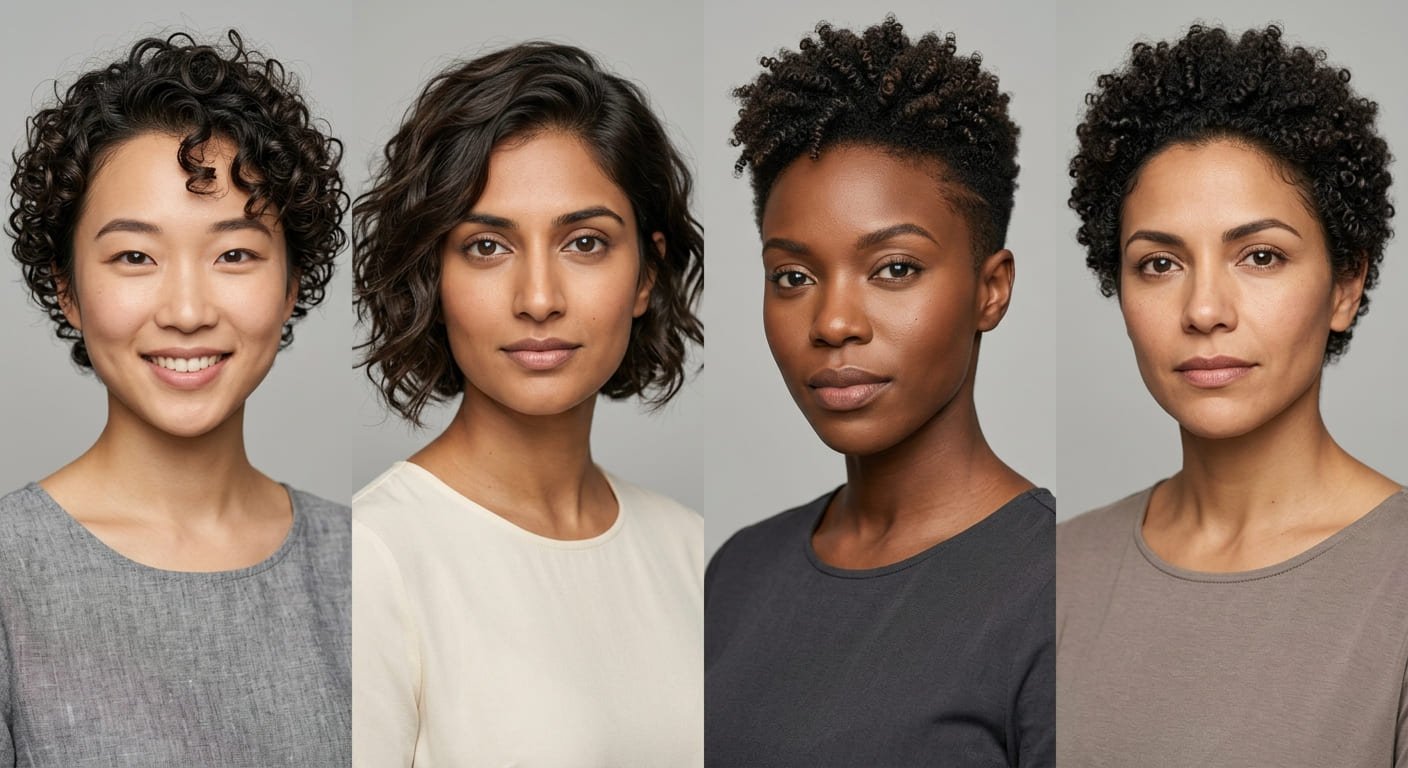
16. Curly Pixie
Best for: Naturally curly hair.
A curly pixie can show off natural curl pattern while keeping the haircut short. The shape should be designed around how the curls actually behave when dry.
Styling level: Depends on curl pattern
Consideration: Shrinkage can make the finished length look considerably shorter than the wet length.
17. Wavy Textured Pixie
Best for: Naturally wavy hair.
Waves can provide movement without requiring as much artificial texture. A good cut can allow the natural pattern to become part of the shape.
Styling level: Easy to moderate
Consideration: Ask your stylist to account for your natural wave pattern rather than styling the hair completely straight first.
18. Coily Tapered Pixie
Best for: Coily or tightly textured hair.
A tapered pixie can keep the sides and nape shorter while leaving more shape through the top. This can create a clean silhouette while allowing the natural texture to remain the focus.
Styling level: Depends on routine and texture
Consideration: Curl shrinkage and density should be considered before deciding on the final length.
19. Low-Volume Curly Pixie
Best for: Anyone who wants curls without a large rounded silhouette.
Keeping the shape controlled can create a shorter, cleaner appearance while still showing the curl pattern.
Styling level: Moderate
Consideration: The shape should be customized to your curl density rather than copied from a straight-hair reference photo.
20. Natural-Texture Pixie
Best for: People who want their natural hair pattern to determine the finished shape.
Instead of forcing curls, coils, or waves into a uniform shape, this approach works with their natural direction and movement.
Styling level: Depends on texture
Consideration: Bring a reference photo with a texture similar to your own whenever possible.
Short and Statement-Making Pixies
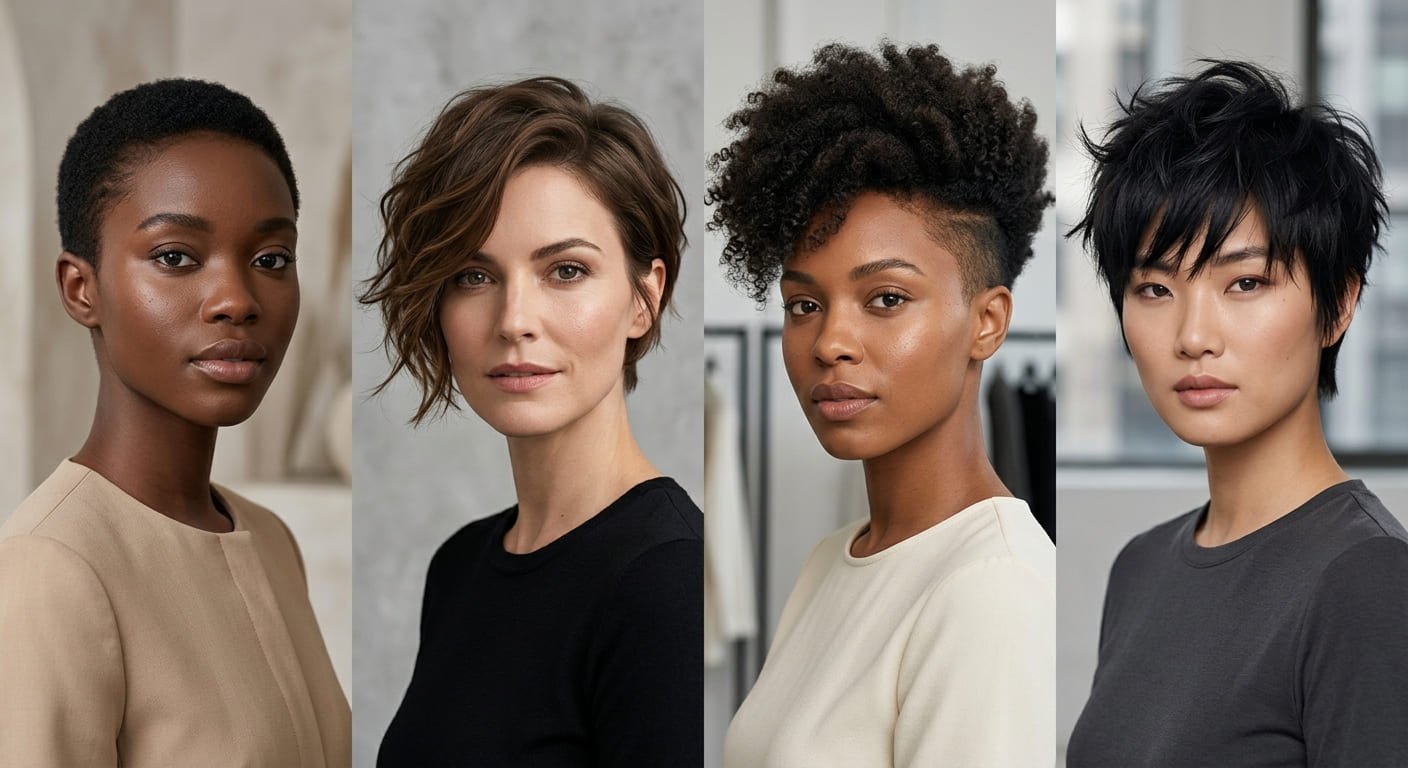
21. Classic Cropped Pixie
Best for: Anyone who wants a genuinely short, low-haircut option.
A classic crop keeps the silhouette compact and clean.
Styling level: Low to moderate
Consideration: Shorter cuts usually make changes in the hairline, growth, and shape more noticeable.
22. Asymmetrical Pixie
Best for: People who want a more distinctive haircut.
An asymmetrical pixie uses different lengths from one side to another. The difference can be subtle or dramatic.
Styling level: Moderate
Consideration: Uneven lengths may require more frequent shaping to maintain the intended design.
23. Long-Top Undercut Pixie
Best for: Anyone who wants a bold shape with length on top.
The shorter sides create contrast while the longer top gives you styling flexibility.
Styling level: Moderate
Consideration: An undercut is a stronger commitment because the contrast can become obvious during grow-out.
24. Bold Textured Crop
Best for: Anyone who prefers a short, modern and visibly textured haircut.
This style uses short length and defined texture to create a statement shape.
Styling level: Moderate
Consideration: It may require more product or styling than a simple cropped pixie.
25. Short Bixie/Pixie Hybrid
Best for: Someone who wants a compromise between a classic pixie and a bixie.
This hybrid keeps the haircut relatively short but retains enough length for movement and styling.
Styling level: Moderate
Consideration: It can be a useful middle ground if you’re unsure about going extremely short.
Choosing Your Pixie Based on Forehead, Chin, and Hairline
Your face shape gives you a starting point, but individual features often make a bigger difference when choosing the final cut.
| Facial feature | Pixie characteristic to consider | What it can accomplish |
|---|---|---|
| Wider-looking forehead | Side-swept or soft fringe | Creates a diagonal visual line |
| Narrow chin | Longer front or softer face-framing pieces | Adds flexibility around the lower face |
| Prominent cheekbones | Controlled side volume | Keeps the silhouette from feeling overly wide |
| High hairline | Longer fringe options | Provides more coverage and styling choices |
| Widow’s peak | Customized fringe direction | Works with the natural hairline instead of fighting it |
| Cowlick | Adjustable fringe or part | Makes daily styling more manageable |
These aren’t rules. They’re starting points.
If you have a strong cowlick, unusual hairline, or different densities around the temples, your stylist may recommend a shape that differs from a standard “Pixie Cut for heart-shaped face” recommendation.
Finding the Right Pixie for Your Hair Type
Fine or Thinning Hair
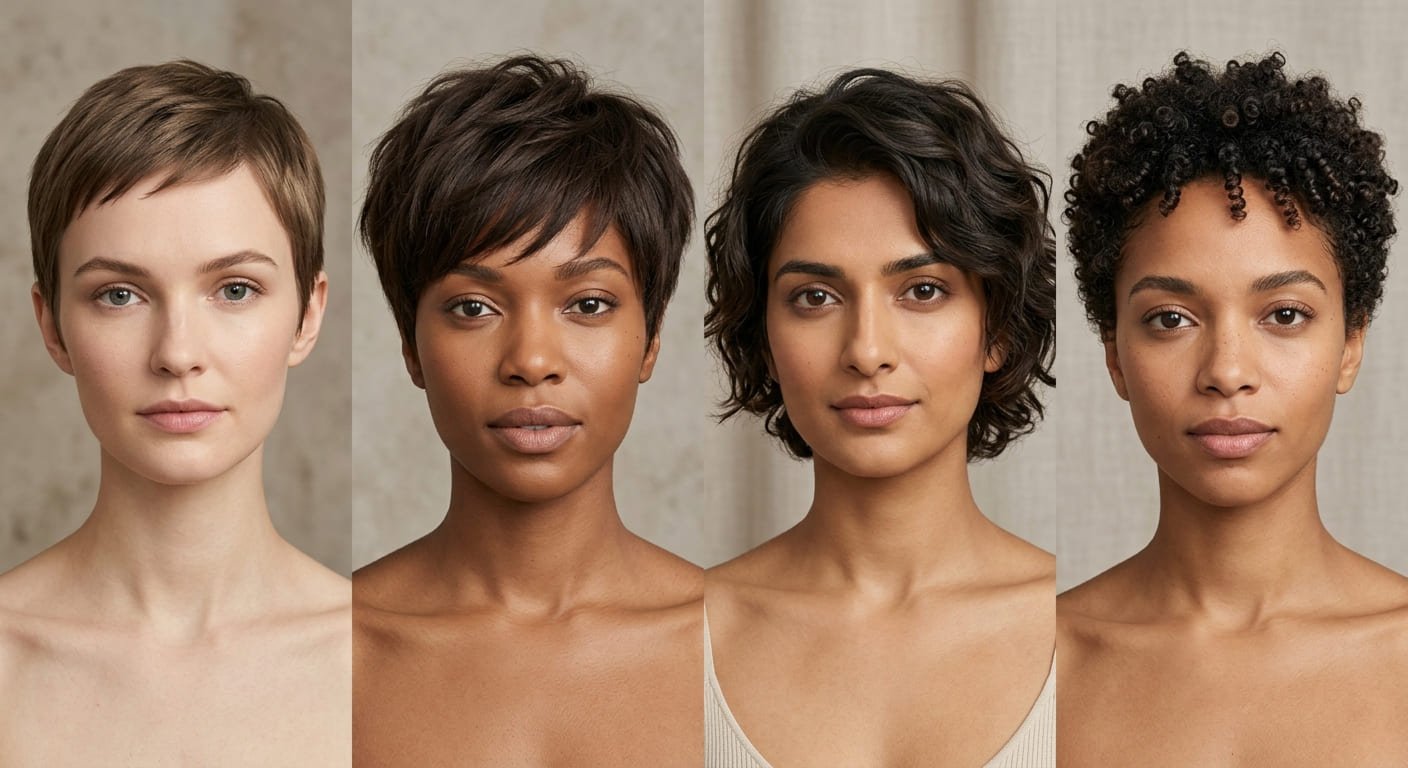
Fine hair often benefits from preserving useful weight rather than removing too much of it.
A softly layered pixie, longer pixie, or bixie can provide styling flexibility without relying on excessive texturizing.
If your hair is thinning, discuss density and scalp visibility with your stylist before choosing a very short or heavily layered cut.
Thick or Dense Hair
Thick hair can support strong pixie shapes, but excess weight may need to be managed.
Your stylist may use internal layering, shaping, or tapering to control bulk while keeping the haircut full enough to maintain its intended silhouette.
Straight and Wavy Hair
Straight hair shows the haircut’s lines clearly, so the shape and finishing details matter.
Wavy hair can naturally add movement, which may reduce the need for aggressive texturizing.
If you’re bringing a reference photo, choose one showing hair with a similar texture to yours.
Curly and Coily Hair
Curly and coily hair should be considered in its natural state.
Shrinkage, curl pattern, density, and direction can all change how a short haircut looks once dry. Ask your stylist how much length you’ll actually see after the hair settles into its natural pattern.
Short Pixie, Long Pixie, or Bixie: Which Commitment Fits You?
If you’re unsure about going very short, don’t assume you have to choose between a full pixie and keeping your hair long.
| Cut | Styling flexibility | Maintenance | Grow-out | Commitment |
|---|---|---|---|---|
| Cropped pixie | Lower | Higher shape upkeep | More noticeable | High |
| Long pixie | Higher | Moderate | More flexible | Moderate |
| Bixie | High | Moderate | Generally more gradual | Lower |
| Curly pixie | Texture-dependent | Texture-dependent | Depends on shrinkage | Moderate |
| Asymmetrical pixie | Moderate | Moderate to high | More noticeable | High |
A long pixie or bixie can be a sensible starting point if you’re nervous about losing length. You can always go shorter later.
The reverse isn’t as immediate: once a large amount of hair has been cut off, you’ll need time to grow it back.
Choosing a Pixie Based on Your Lifestyle
Your haircut should work on ordinary mornings—not only after a professional blow-dry.
If You Want Minimal Daily Styling
Choose a shape that works with your natural texture and preferred part.
A low-maintenance pixie isn’t necessarily the shortest pixie. A slightly longer cut that falls into place naturally may be easier than a very short cut that needs frequent styling to look polished.
If You Don’t Mind Styling
You can consider longer fringe, asymmetry, defined texture, or more directional shapes.
These options give you more room to change the look from day to day.
If You Need a Professional Everyday Style
A softly textured long pixie, classic crop, or polished bixie can offer structure without looking overly dramatic.
If You Want a Fashion-Forward Look
An asymmetrical pixie, undercut pixie, or bold textured crop can create more visual contrast.
If You Prefer Wash-and-Go Hair
Talk honestly with your stylist about what your hair does without heat styling or extensive product.
A haircut that requires a flat iron every morning isn’t genuinely low-maintenance if you don’t want to use one.
Pixie Features That May Require Extra Consideration
Certain features aren’t automatically wrong for a Pixie Cut for heart-shaped face, but they may need more thoughtful customization.
Excessive Crown Volume
A lot of height at the crown can dramatically change the silhouette. If you already have strong natural volume, discuss how much height you actually want.
Very Blunt, Heavy Fringe
A dense straight fringe can create a strong horizontal line across the forehead. If you want softness, a lighter or more directional fringe may be worth discussing.
Extremely Short Sides
Very close sides create a stronger contrast with the top and can make the haircut feel more dramatic.
That can absolutely work if it’s the look you want, but it’s a higher-commitment choice than a softer, longer pixie.
Too Much Texture
Texture can create movement, but removing too much weight may make fine hair look less full.
The goal is intentional texture, not maximum texture.
How to Style a Pixie to Complement a Pixie Cut for Heart-Shaped Face
A good haircut is only part of the result. Styling can change the overall appearance of the same pixie.
Control Rather Than Maximize Volume
If your goal is a balanced silhouette, you don’t necessarily need maximum volume everywhere.
Use your styling product to direct the hair where you want it rather than automatically lifting every section.
Style the Fringe With Your Natural Part
If you have a strong natural part, working with it may be easier than forcing the fringe in the opposite direction.
For a side-swept pixie, use a small amount of product and direct the fringe diagonally while the hair dries.
Keep Texture Intentional
For a piecey pixie, apply a small amount of styling product to the ends and separate selected sections with your fingers.
Avoid coating the entire haircut if your hair is fine.
Work With Your Hair Texture
Straight hair may benefit from lightweight styling products that add movement.
Wavy, curly, and coily hair may need products that support the natural pattern rather than flattening it.
A Simple Everyday Routine
For an easy routine:
- Start with damp or freshly washed hair.
- Apply a small amount of appropriate styling product.
- Direct the fringe and front pieces where you want them.
- Let your natural texture develop or use a dryer if needed.
- Finish by separating only the pieces that need definition.
The simplest routine is usually the one you’ll actually maintain.
What to Ask Your Hairstylist Before Getting the Cut
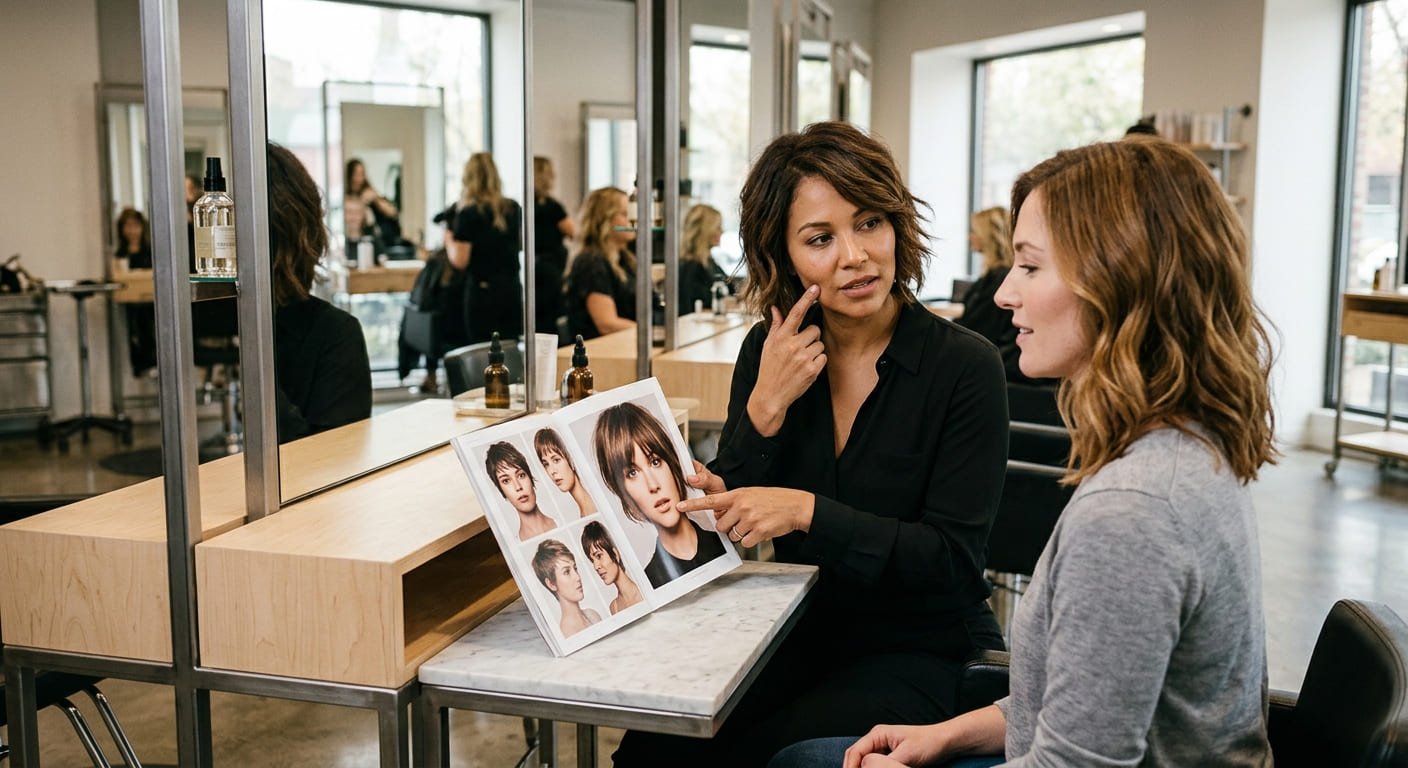
Take reference photos, but don’t ask your stylist to copy a picture without discussing whether the shape works with your hair.
Use these questions during your consultation:
- Where should the shortest part of my pixie sit?
- What fringe length would work with my hairline?
- How much length should I keep around my face?
- Will this cut work with my natural texture without daily heat styling?
- How will this haircut look as it grows out?
Also tell your stylist how much time you’re realistically willing to spend styling your hair.
A photo of a perfectly styled pixie can look very different from the same cut on a busy weekday morning.
Pixie Maintenance, Trims, and Growing It Out
Short hair doesn’t automatically mean zero maintenance.
The shorter and more structured the cut, the more noticeable changes in length can become as the hair grows.
Your maintenance needs will depend on:
- How short the sides and nape are
- How quickly your hair grows
- How precise you want the shape to remain
- Whether your fringe needs regular reshaping
- How much variation you’re comfortable with between trims
If you eventually want longer hair, ask your stylist to plan the grow-out before the first cut.
A pixie can transition into a longer pixie, bixie, or bob rather than growing out as one uncontrolled shape.
Planning those stages can make the process much easier.
Frequently Asked Questions About Pixie Cuts for Heart-Shaped Faces
Is a pixie cut actually flattering for a Pixie Cut for heart-shaped face?
Yes. A pixie can work very well with a Pixie Cut for heart-shaped face when the fringe, length, texture, and volume are customized to the individual’s proportions. A side-swept fringe, longer front, or softer texture may be useful options, but there isn’t one universally best pixie.
Which pixie length is easiest to wear with this face shape?
A long pixie or bixie often gives the most styling flexibility because it leaves extra length around the front and sides. A shorter pixie can also work, but it creates a stronger, more defined silhouette.
Are bangs a good choice with a Pixie Cut for heart-shaped face?
They can be. Side-swept, wispy, curtain-style, and longer fringes can provide different ways to shape the front of the haircut. The best choice depends on your forehead, hairline, density, and styling preferences.
What pixie works best for fine hair?
A pixie that preserves useful fullness and avoids excessive texturizing can be a good starting point. A longer pixie, bixie, or softly layered shape may offer more flexibility than a heavily thinned crop.
Can curly or coily hair work with a pixie?
Absolutely. Curly and coily hair can look striking in a pixie, but the haircut should account for curl pattern, shrinkage, density, and natural direction. A reference photo with similar hair texture is especially helpful.
Is a bixie a better first step than a very short pixie?
It can be if you’re nervous about losing length. A bixie retains more hair around the front and sides, giving you additional styling and grow-out options.
How often does a pixie need professional trimming?
It depends on the haircut and how precise you want the shape to remain. Very short, structured, or asymmetrical pixies generally show growth more quickly than longer, softer shapes.
Which pixie is easiest to grow out?
A longer pixie or bixie generally provides more transition options because it already has additional length. Your stylist can also shape the haircut through different stages instead of allowing every section to grow at the same rate.
How do I know whether I have a heart-shaped or inverted-triangle face?
Look at where your face appears widest and how sharply it narrows toward the chin. The two shapes can overlap, so don’t worry about getting the label perfect. Focus on your actual forehead, cheekbone, jaw, and chin proportions when choosing the haircut.
Can a heart-shaped face wear a very short pixie?
Yes. A very short pixie can work if you like a bold look and the shape suits your hairline and proportions. Because less hair remains to modify the silhouette, the final cut should be planned carefully with your stylist.
What pixie works with a high forehead?
A longer, side-swept, wispy, or otherwise customizable fringe can give you more styling options around a higher forehead. The right choice also depends on your hairline and natural growth pattern.
Can I wear a pixie if I have a widow’s peak?
Yes. A widow’s peak doesn’t automatically rule out a pixie. Your stylist can decide whether to work with the natural point, soften it with fringe, or use a part that follows the direction of your hair.
Is a long pixie easier to grow out than a short pixie?
Usually, a longer pixie gives you more options during the transition because you start with more length. Your stylist can gradually reshape it into a bixie or bob as it grows.
Can a heart-shaped face wear an undercut pixie?
Yes, but an undercut creates a stronger contrast and is therefore a more committed style. If you like dramatic shapes, it can be an option; if you want easier grow-out, a softer taper may be preferable.
Final Takeaway: Choose the Pixie That Fits Your Features and Lifestyle
The best pixie cut for a heart shaped face isn’t determined by face shape alone.
Start with your forehead, cheekbones, chin, and hairline. Then consider your hair texture, density, preferred length, styling habits, and willingness to maintain a short haircut.
If you’re unsure, a long pixie or bixie can give you more flexibility than immediately choosing an ultra-short crop. If you’re confident about going short, a textured, fringe-focused, curly, coily, or asymmetrical pixie can be tailored to your individual features.
Most importantly, bring reference photos, explain how you normally style your hair, and ask your stylist how the cut will behave as it grows.
Your face shape is a useful starting point—not a rulebook. The right pixie is the one that fits your features, your hair, and the way you actually live.
Harry is a hair and beauty content creator at HairGlowBlog, sharing practical tips on hairstyles, hair care, hair styling, and beauty trends. Her content focuses on easy hairstyle ideas, hair care routines, styling tips, and inspiration for different hair types and occasions.


Leave a Reply